Contact us today:

(847) 934-4500
tdaro@bernardandcompany.com
Contact us today:
(847) 934-4500
tdaro@bernardandcompany.com
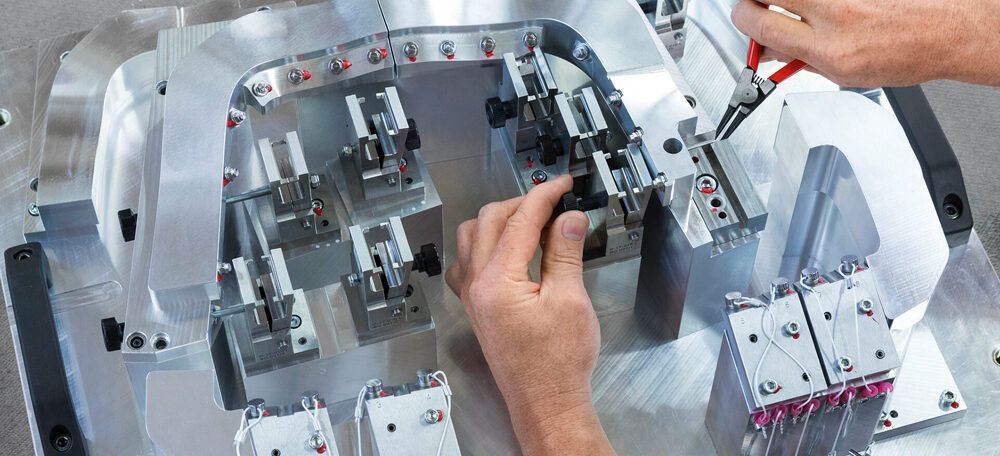
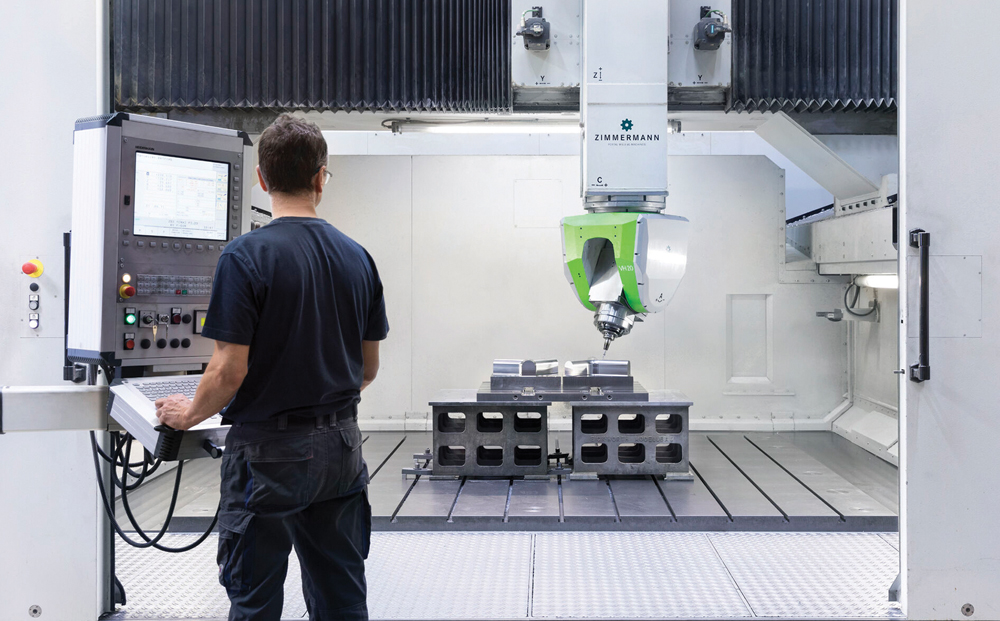
Zimmermann Machining Solutions, a leading global high-tech supplier of portal milling machines, recently sold an FZP27 portal milling machine to Max Eickworth.
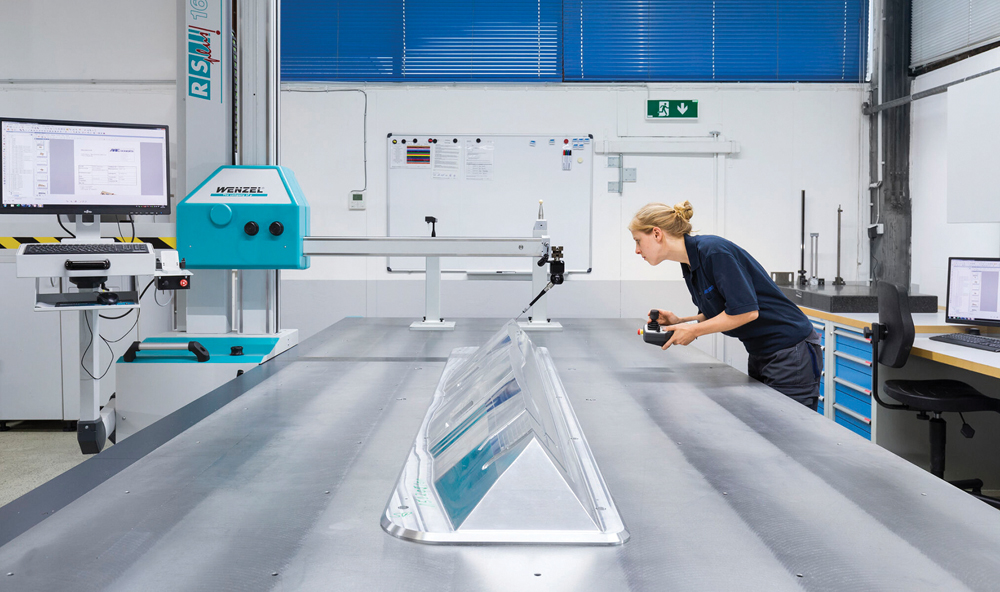
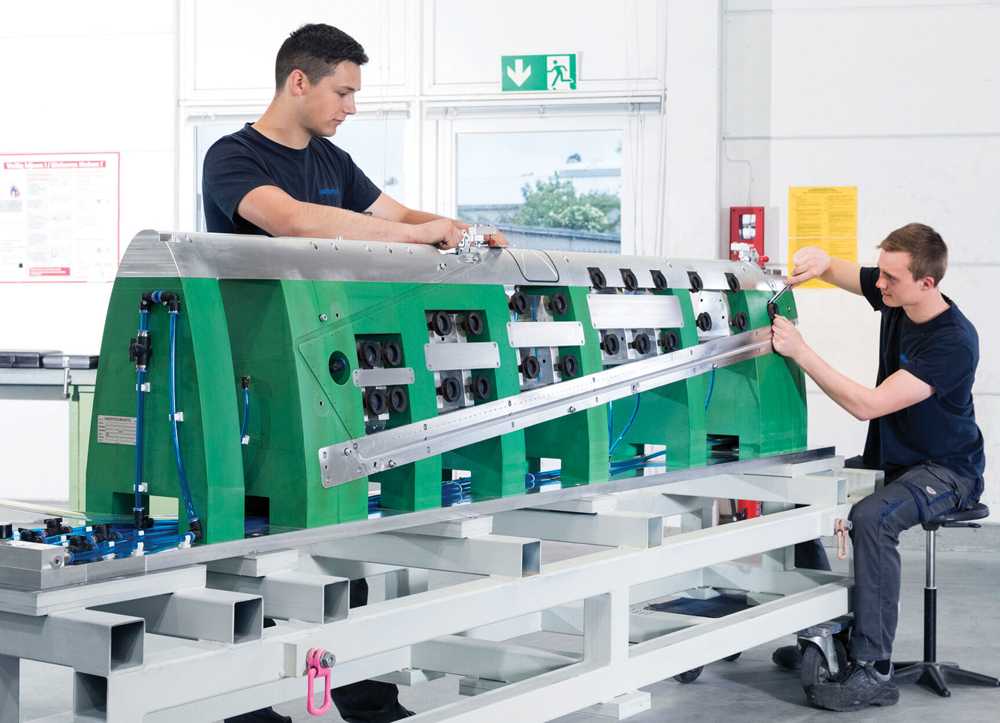
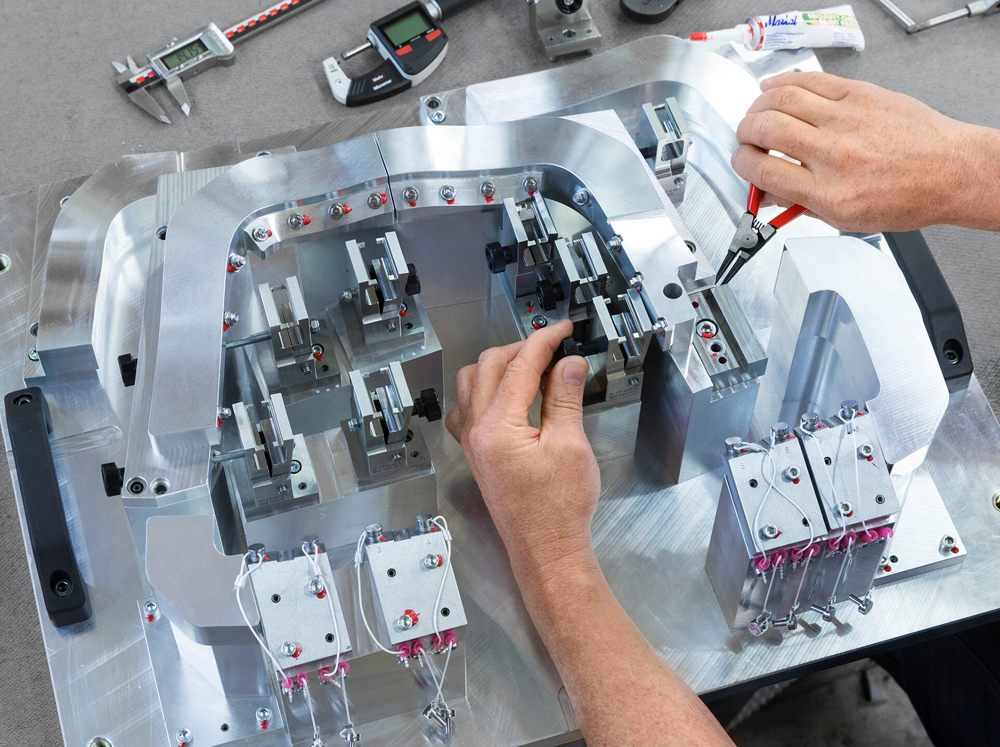
Located in Bremen-Arsten, Germany, the company handles test equipment construction, fixture construction, model making, toolmaking, CAD/CAM and metrology. With a manufacturing range both broad and specialized, Max Eickworth designs, manufactures and tests equipment for the automotive, aerospace, wind energy and shipping industries.
Celebrating 106 years of quality, precision and reliability, the company purchased a CNC 5-axis gantry machine FZP27 to expand their production capabilities. Equipped with a machining center for large volume components in aluminum or ureol, the machine features a robust construction with a top travelling gantry for precise material processing. Its working range is 118.11 – 787.40 inches in the X-axis, 98.43 – 157.48 inches in the Y-axis and59.06 – 78.74 inches in the Z-axis. The spindle power is 24 kW at 18,000 rpm with a Heidenhain TNC7 control. Various 2-axis milling heads are available including the S2, C2, C3 and VH10.
Its sophisticated, well-engineered modular system ensures optimum adaptation to every machining case and workpiece size. Applications range from 1:1 models in automotive design to large aircraft parts and boat hulls, all the way to components for railcar manufacturing. The machine can be used for both prototypes and production parts.
Cornelius Kiesel, president of North America for Zimmermann said, “This is the fourth portal milling machine Max Eickworth has purchased from Zimmermann. A clear sign of trust, quality and proven cooperation.”
About the company
Zimmermann is based in Germany and is a leading global high-tech supplier of portal milling machines. These are characterized by huge workspaces, substantial machining dynamics and cutting performance. The company, founded in 1933 by Friedrich Zimmermann, now has over 200 employees worldwide. With its product range, our innovative company has one goal above all: to offer the right solution for our customers and thus be able to guarantee high economic efficiency. “Quality made in Germany and supported locally” is our motto. The company’s special machines are used worldwide in the automotive, aerospace, moldmaking, transportation, off-highway and mechanical engineering sectors. The company has its North American headquarters in Wixom, Michigan, near Detroit, where it operates a full tech center, offering engineering assistance, commissioning, parts and retrofit services, as well as multiple machines for demonstration purposes. Zimmermann Inc. is headed by President Cornelius Kiesel.
For more information, please contact:
ZIMMERMANN INC.
30587 Century Drive
Wixom, MI 48393
Phone: 248-956-8511
www.zimmermann-inc.com
Ms. Lena Kiesel, Marketing Manager
lena@zimmermann-inc.com

Since 1992, Sawyer Composite has specialized in producing Advanced Composite laminates and assemblies for aerospace. Based in Fort Worth, Texas, the company is ISO 9001 and AS9100 certified, providing customers turnkey solutions in the design, engineering, manufacture and qualification of advanced composite tooling and structures.

In 2024, the FZU22 portal milling machine was launched by Zimmermann onto the U.S. market and Sawyer was among the first customers. After a little over a year in operation, J.R. Tubb, CNC programmer at Sawyer, shares an initial assessment in the following Q&A…
Question: What challenges were you looking to solve when investing in a new portal milling machine?
Tubb: Our older machines increasingly struggled with accuracy, throughput and downtimes. The FZU22 provided immediate improvement. It runs reliably, delivers impressive precision, and its rigid monoblock design allows for significantly faster machining. As a result, our throughput has increased and the amount of required rework has dropped considerably.
Question: What impressed you most about the FZU22?
Tubb: The enclosed workspace is a major advantage. When milling composite materials, the carbon dust stays within the machine and doesn’t reach sensitive components. We’re also very pleased with the minimum-quantity lubrication (MQL) system. It has reduced our lubricant consumption, leading to lower costs, less waste and a much cleaner working environment. On top of that, the Siemens Sinumerik ONE CNC control system can be operated quickly and intuitively, just perfect for our 5-axis machining at Sawyer.
Question: What impact does the new machine have on daily production?
Tubb: We have a program for a component that runs on every machine. When we machined this part on the FZU22, we finished almost 30 minutes faster and with much better surface quality. The finishing work now takes only half as long. An outstanding result and perfect interaction between operator and machine. As another example, we had a series of aluminum plates to machine. Thanks to Zimmermann and their service team advice, we now achieve the required tolerance on the first run, without necessary adjustments or rework. That saves a tremendous amount of time and resources. Choosing the FZU22 was absolutely the right decision for our company.
Cornelius Kiesel, president of North America for Zimmermann believes the FZU22 is a perfect example of productivity without compromise, as it offers compact, precise state-of-the-art control technology. The results obtained by Sawyer demonstrate how well the FZU22 performs in practical operations as well as across multiple industries. “By implementing the FZU22, our customers can make their manufacturing more flexible, accelerate processes and improve quality at the same time. The strong performance in the U.S. market reinforces our promise of going ‘beyond precision’.”
Kiesel added, “The example of Sawyer shows that, despite the current circumstances, there is significant potential in the North American market and customers are willing to invest when quality and service meet expectations.”
About Zimmermann
Zimmermann is based in Germany and is a leading global high-tech supplier of portal milling machines. These are characterized by huge workspaces, substantial machining dynamics and cutting performance. The company has its North American headquarters in Wixom, Michigan, near Detroit, where it operates a full tech center, offering engineering assistance, commissioning, parts and retrofit services, as well as multiple machines for demonstration purposes. Zimmermann Inc. is headed by President Cornelius Kiesel.
Zimmermann, founded in 1933 by Friedrich Zimmermann, now has over 200 employees worldwide. With its product range, our innovative company has one goal above all: to offer the right solution for our customers and thus be able to guarantee high economic efficiency. “Quality made in Germany and supported locally” is our motto. The company’s special machines are used worldwide in the automotive, aerospace, moldmaking, transportation, off-highway and mechanical engineering sectors.
For more information, please contact:
ZIMMERMANN INC.
30587 Century Drive
Wixom, MI 48393
Phone: 248-956-8511
www.zimmermann-inc.com
Ms. Lena Kiesel, Marketing Manager
lena@zimmermann-inc.com
Since 1958, Schütz has focused on the processing of metal and plastic materials. The company headquarters in Selters, Germany not only makes new products but also develops and builds various machines and production lines in-house, employing 7,000 people across 55 production and service locations worldwide. Recognized as a leading international producer of industrial packaging for liquid filling products, the Schütz portfolio includes Intermediate Bulk Containers (IBC’s), canisters and drums.
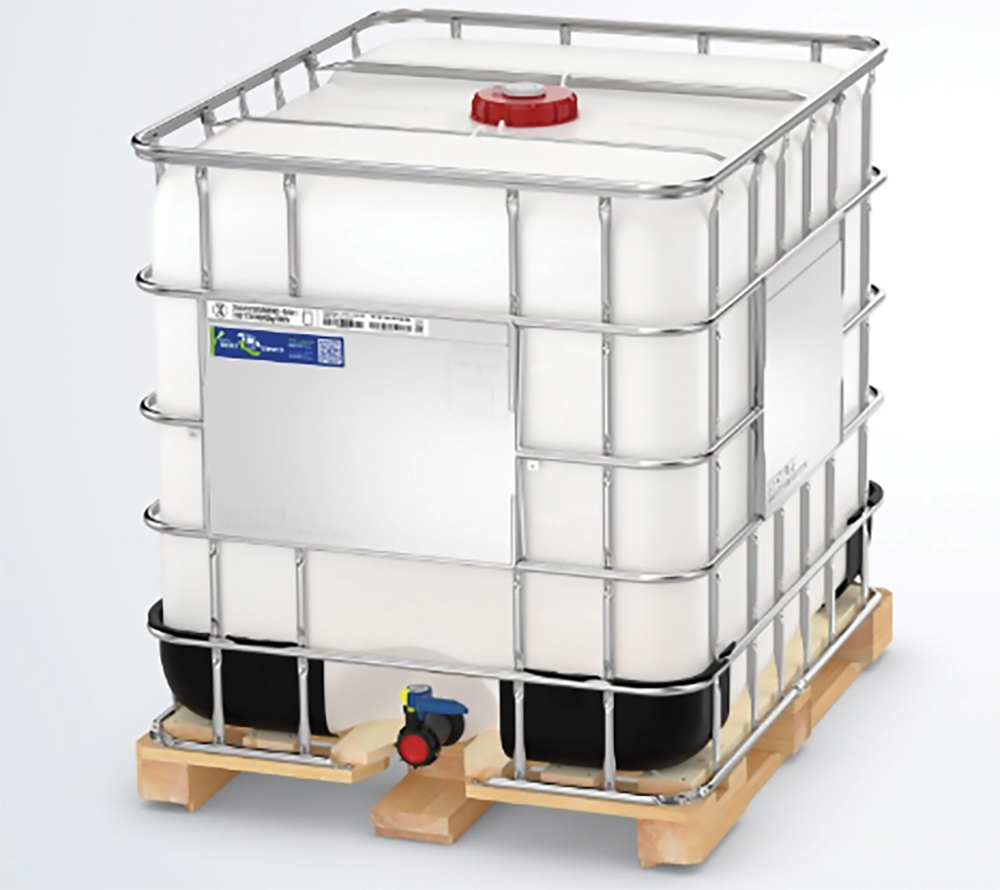
“Almost everyone knows it, the Intermediate Bulk Container (IBC),” explains Eduard Tom, machining specialist at Schütz. “With the invention of the IBC, our company founder revolutionized liquid packaging and the transport sector. Today, there are many variants of IBC’s and we are the world leader in their production.” A typical Schütz IBC consists of a multi-layer inner container and a robust steel cage with a pallet base, now used worldwide in the chemical and food industries. The inner container is made from HDPE (High-Density Polyethylene). “The container is produced by blow molding,” says Tom. “For that process, we manufacture all our molds and tools in-house. Even the smallest deviations can lead to material defects later,” Tom adds. “We’re working in the thousandth dimension range.”
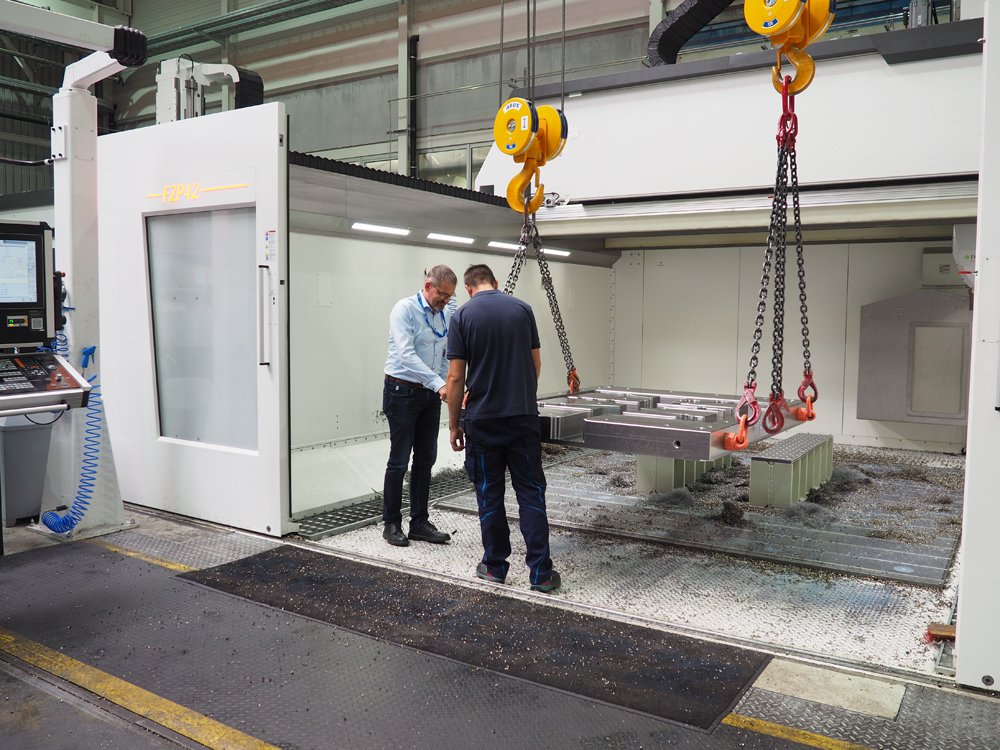
The previously used machines were increasingly reaching their limits: failures, quality deviations and extensive reworking processes had led to significant delays. Looking for a solution, Schütz connected with Zimmermann, the portal milling machine builder, at a trade show.
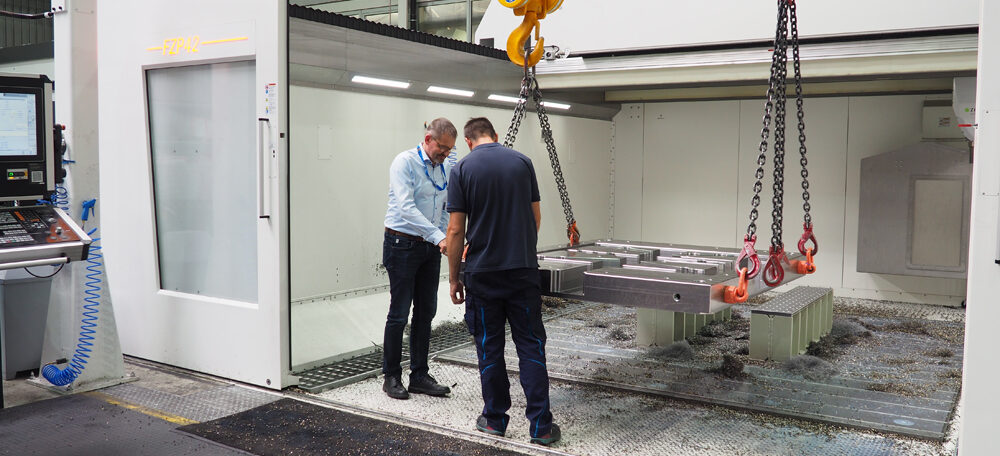
After extensive testing, the company finally selected two machines: an FZP42 for rough machining and an FZP37 for precision finishing. Both offer motion ranges of 4,000 x 3,500 x 1,500 mm. The FZP42 is equipped with the powerful dual-axis fork head VH60 and a 63-kW spindle, while the FZP37 features a slim VH30 head and a 70-kW spindle, ensuring optimum accessibility when machining fine structures. The result? Increased dynamics, shorter machining times, and outstanding surface quality.
The special construction concept, a thermo-symmetrical box-in-box design, ensures maximum stability. “This construction minimizes thermal influences and the machine geometry remains constant,” explains Rüdiger Hellwig, Sales Manager at Zimmermann. “This keeps the tool precisely positioned at all times, which is reflected in long-term accuracy and stability.” In addition to this unique construction, the machine’s dynamics were also compelling for Schütz. Due to a lower moving mass, it can operate faster and with greater precision, according to Hellwig.
Thanks to the 5-axis technology, cooling channels can be drilled flexibly and with perfect contour accuracy into the molds. This enhances tool cooling, reduces cycle times and significantly boosts long-term process reliability.
This technology was on display when Schütz used the FZP42 to rough one half of the mold from a 2.2-ton aluminum block, while the FZP37 performed the finishing and drilling operations. This opens up new possibilities in tool manufacturing as cooling channels can now be positioned more flexibly and closer to the contour. The system is no longer limited to fixed angles, enabling bores with an inclination of 0.6 degrees over 1.4 meters. Consequently, part quality is improved and cycle times are noticeably reduced. As Tom noted, “With the new Zimmermann machines, we now have entirely new options for adapting the cooling channels in the tool, so we’re significantly more flexible now.”
The configuration features a combined cooling and lubrication system, high-pressure pumps for deep-hole drilling, minimum-quantity lubrication, chip conveyor and air cooling, as well as a 121-position tool changer. The machines operate almost around the clock, says Tom. Thanks to significantly reduced rework, processing times and overall effort in tool manufacturing have dropped substantially, he notes.
To simplify service, each Zimmermann machine is equipped with a QR code. Scanning the code automatically generates a service email with all relevant machine data, enabling the Zimmermann support hotline to respond quickly and efficiently.
About Zimmermann
Zimmermann is based in Germany and is a leading global high-tech supplier of portal milling machines. These are characterized by huge workspaces, substantial machining dynamics and cutting performance. The company has its North American headquarters in Wixom, Michigan, near Detroit, where it operates a full tech center, offering engineering assistance, commissioning, parts and retrofit services, as well as multiple machines for demonstration purposes. Zimmermann Inc. is headed by President Cornelius Kiesel.
Zimmermann, founded in 1933 by Friedrich Zimmermann, now has over 200 employees worldwide. With its product range, our innovative company has one goal above all: to offer the right solution for our customers and thus be able to guarantee high economic efficiency. “Quality made in Germany and supported locally” is our motto. The company’s special machines are used worldwide in the automotive, aerospace, moldmaking, transportation, off-highway and mechanical engineering sectors.
For more information, please contact:
ZIMMERMANN INC.
30587 Century Drive
Wixom, MI 48393
Phone: 248-956-8511
www.zimmermann-inc.com
Ms. Lena Kiesel, Marketing Manager
lena@zimmermann-inc.com
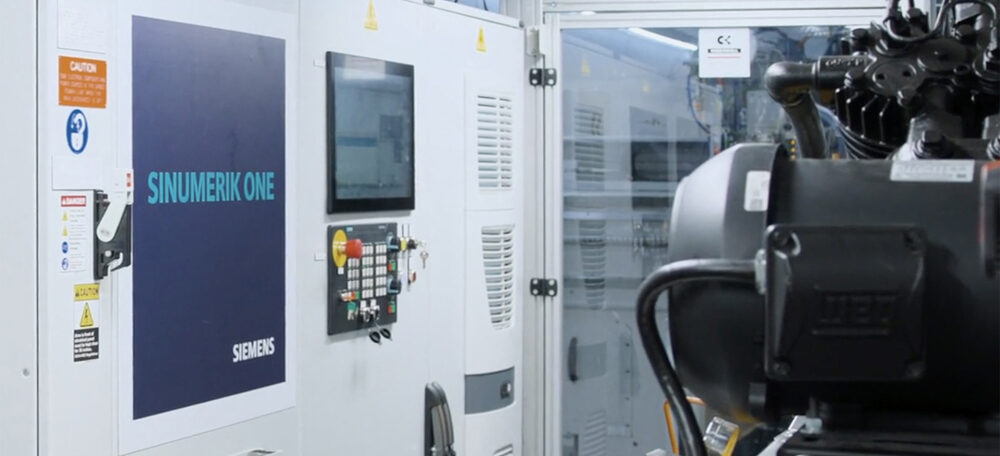
Powered by the SINUMERIK ONE CNC platform and Ingersoll’s MasterPrint® industrial 3D printer, a new generation of deployable machines is bringing additive and subtractive manufacturing directly to the point of use.
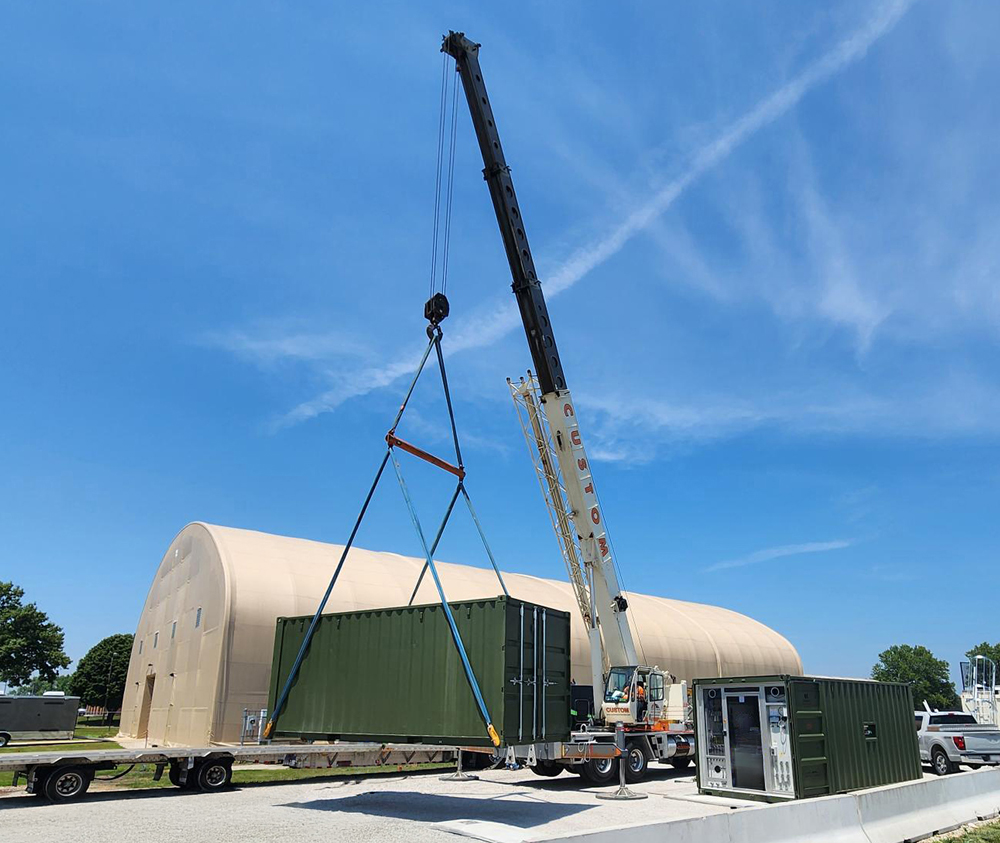
Siemens and Ingersoll, a 133-year-old Rockford, Illinois builder of high-quality, large-format machine tool solutions, have enjoyed a long-standing relationship of business cooperation, engineering dynamism and executed achievements in automated machine technology. That tradition continues today with Ingersoll’s new generation of its “machine in a box” concept, the MasterPrint® Deployable, designed to be an application-specific, portable machine tool, featuring the company’s unique combination of high-speed additive manufacturing and precise 5-axis milling. MasterPrint® Deployable is compactly housed in two 20-foot containers and allows Ingersoll’s customer to send the unit to its point of use as a free-standing manufacturing entity, with all the necessary hardware, software and tools onboard to complete a specific function.
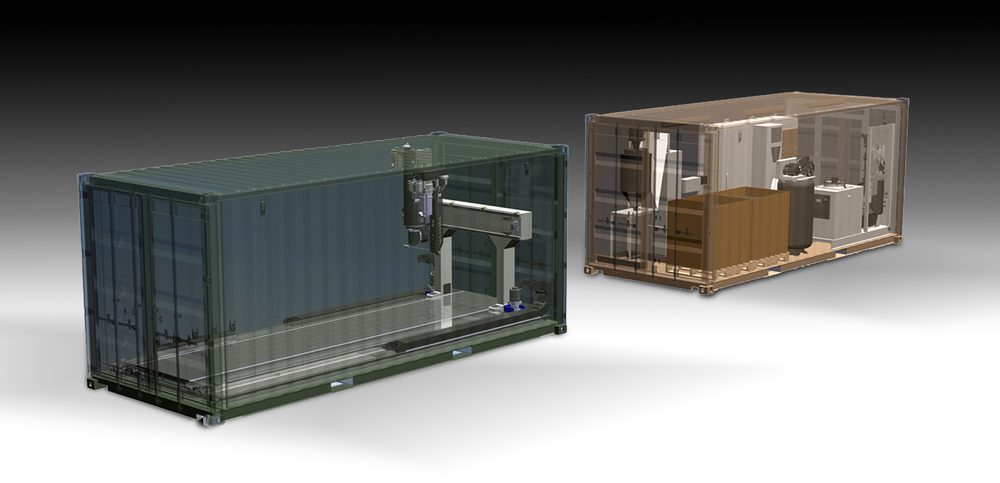
Powered by the digital-native SINUMERIK ONE CNC, MasterPrint® Deployable “opens the possible,” as Zach Gray, Additive Business Development Manager at Siemens, notes. “We were challenged by Ingersoll, as we always are, to think outside the box and yes, that’s a pun, in this case, given the nature of the final machine.” For the initial project, the machine needed to incorporate an additive material extruder, designed by a third party, with full environmental and motion control, plus a gantry and milling head for material removal and finishing, with full capability for onsite adaptation to various conditions and climates.
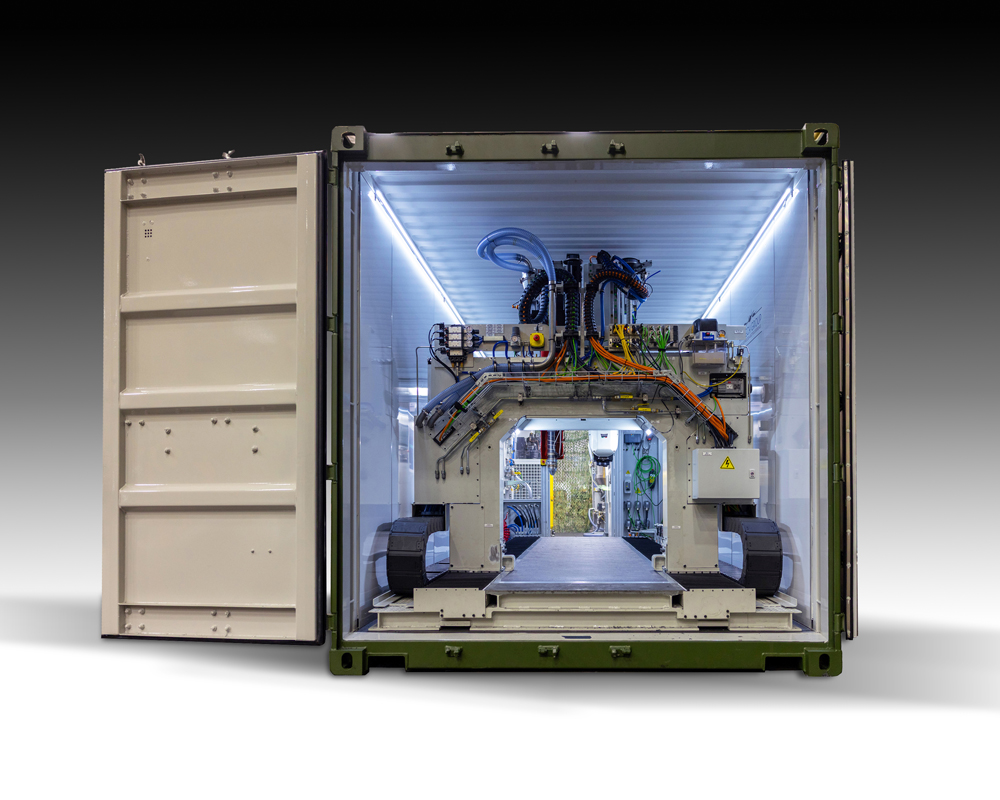
As Jason Melcher, Vice President and Sales Director of Composite and Additive Technology at Ingersoll, comments, “On the first project, we knew very little about the application, as it was confidential, so we had the empty space of a Conex box as our starting point.” The Conex box is a commercially available item, heavily altered by Ingersoll. The innovation comes with the alterations to make this structure and space a plausible environment capable of carrying a large industrial 3D printer, CNC milling machine, controls and power supply to the point of use. Melcher continues, “Cooperation with our key suppliers was vital on this project and we knew we could rely on our years of experience with Siemens to assist us. As usual, our Siemens partners had less concern about the end-product and put greater emphasis on the process. This gave us confidence that we could journey together in the creation of this unique machine.”
In future applications, the same MasterPrint® Deployable technology might be used with thermoplastic or metal additive materials, applied through cold spray, Directed Energy Deposition (DED), blown powder, Wire Arc Additive Manufacturing (WAAM), friction stir or other technologies, then milled on the same machine to produce the final part. A Deployable Automated Composite solution is also possible. Applications could range from aerospace and defense to energy, R&D and even disaster relief uses in very hostile environments. Also, through the power of the CNC, robotics can also be integrated and controlled. Keeping the machine technically competent under all such circumstances is a challenge for both the Ingersoll and Siemens teams. That’s where the “future ready” technology of SINUMERIK ONE really shine. With its high-fidelity digital twin technology, the entire process can be programmed and visualized with real time operation virtually, before the machine is built. This provides Ingersoll the ability to offer the MasterPrint® Deployable solution for various applications, across a wide range of industries, including the marine industry and residential construction.
Andrew Ramirez, Siemens Account Manager for Ingersoll, adds, “Our relationship with this customer presents us new and exciting challenges all the time, and that’s very rewarding … and fun, because we can leverage our technical knowledge and collaborate with our engineering teams to address the job at hand. When it works as well as it does on MasterPrint® Deployable, that’s very satisfying as an account manager who gets to see innovative solutions come to life.”
Melcher echoes that thought, “We know Siemens has decades of experience in CNC, software development and problem-solving in the machine tool world. They bring a very open-ended attitude to our needs and, together, we produce solutions that benefit our Ingersoll customers in many ways.” In this case, it was necessary to have modifications made to the process and the combination of Ingersoll machine technology and engineering, with the Siemens control environment helps to produce a functional and flexible ecosystem for manufacturing in the field. The Siemens SINUMERIK ONE CNC, Melcher notes, incorporates all the variables and can work up solutions, prove them out virtually, then produce a functioning machine, with the added benefit of accepting variables onsite and adapting the control parameters to manage them.
A further testament to the Siemens value at Ingersoll, is training, according to Jason Melcher. “We’ve worked with all the major CNC control manufacturers and we’ve seen Siemens expand its technology, but also its training mindset. Today, they provide us training both on the operation of the control and the integration of it into the manufacturing process, something we can then share with our customers to get them running more efficiently from the start.”
On the MasterPrint® Deployable application, Zach Gray cites three key concerns.
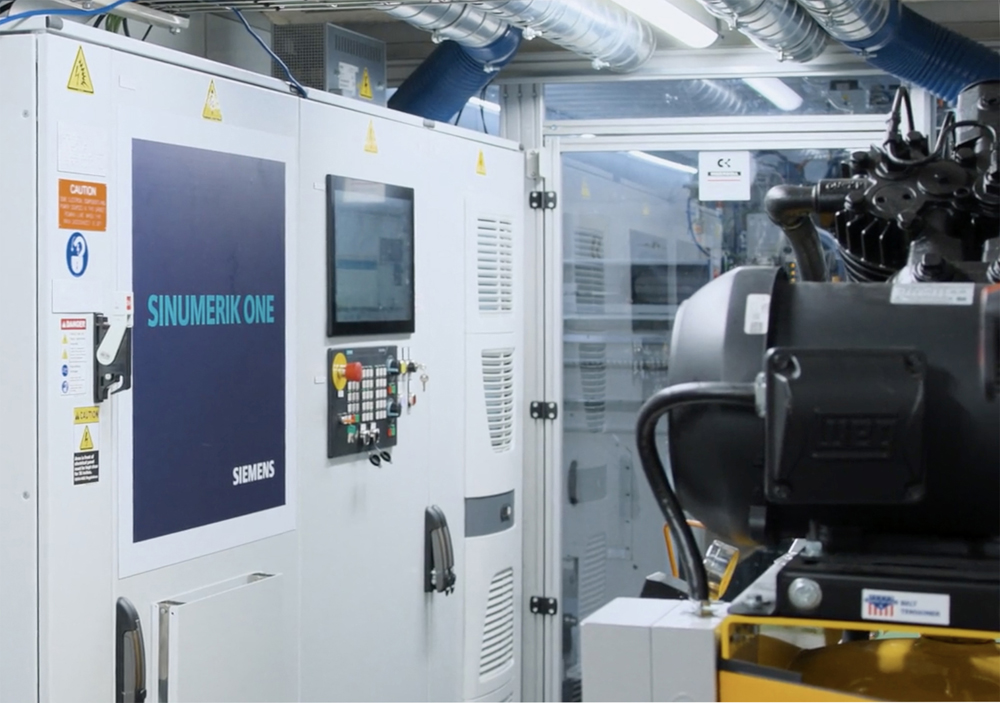
SINUMERIK ONE plays a central role in the transformation of machine tools in the age of Industry 4.0, outperforming previous generations of controllers in terms of PLC and CNC machine operation, cutting speed, data capture and processing power. With its integrated SIMATIC S7-1500F PLC, the SINUMERIK ONE control offers up to 10 times faster PLC cycle times. Thanks to the PLC, SINUMERIK ONE is now fully integrated into the Siemens TIA Portal engineering framework, enabling standardization of all engineering tasks for operators of larger format machines. This generation of Siemens CNC is fully compatible with the previous SINUMERIK 840D sl controller generation in terms of programming and operation. This made the changeover to SINUMERIK ONE more seamless for Ingersoll and, as Jason Melcher notes, the training supplied by Siemens made the process faster and easier for Ingersoll and its first customer for MasterPrint® Deployable.
With SINUMERIK ONE, Siemens offers CNC technology that easily creates and works with digital twins of machine tools. Work preparation teams and engineering departments can also benefit from the digital twin. Siemens offers a comprehensive user interface for SINUMERIK ONE that enables convenient, flexible and efficient operation of machine tools across all machining technologies, including additive, subtractive and, in this case, both, as well as composites with chopped carbon fibers.
While under development at Ingersoll, the unit was powered by standard factory 480V power. The transformer supplied “in the box” connected to the customer’s on-site generator in the field for immediate startup, according to Jason Melcher.
On the topic of the overall benefits of the relationship with Siemens, Jason Melcher says, “We wanted to produce the largest possible workspace in the footprint provided by our customer. Siemens was very helpful, as they always are, in not letting us overreach the capabilities of the control and its processes. That’s the optimum contribution a partner can make and, combined with their technology and training, we are confident we derived the best solution for the customer’s application and their logistics.”
From the Siemens side, Zach Gray concludes, “This MasterPrint® Deployable application was an exciting challenge for Andrew (Ramirez) and me. With all the other technologies we know we can incorporate into this Ingersoll concept, including robotics, it really does open the possible up for our customer and us.”
Website:
usa.siemens.com/ingersoll
It began with an accident. Dr. Salah Huwais, a renowned periodontist with several offices in Michigan, USA, started to drill a hole in a patient’s jaw, but an assistant had mistakenly set the hand tool to rotate counterclockwise. Although Dr. Huwais found it hard to push the burr into the bone, he also noticed that trying to do so had the effect of hardening the bone a bit. This gave him the idea that the right tool geometry might be able to both make the required hole and compact the cut bone back into the jaw. If so, this would revolutionize dental implant procedures by greatly reducing the required time to heal.
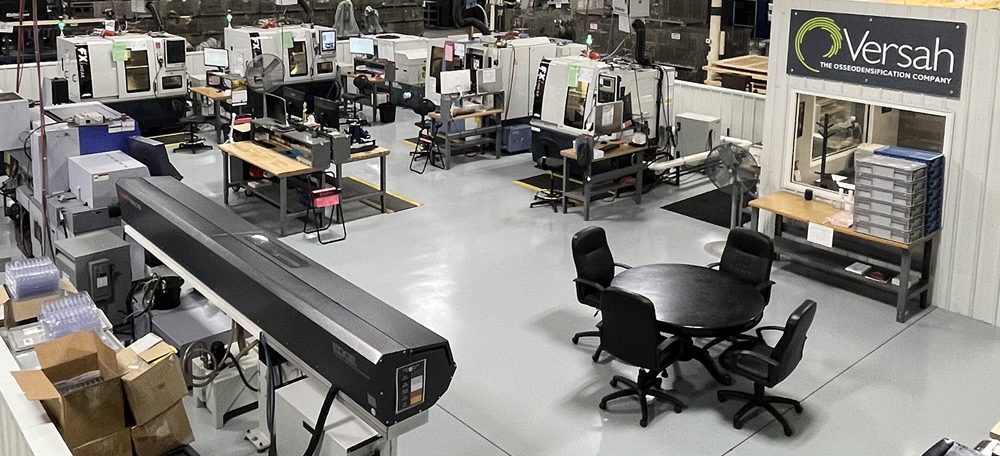
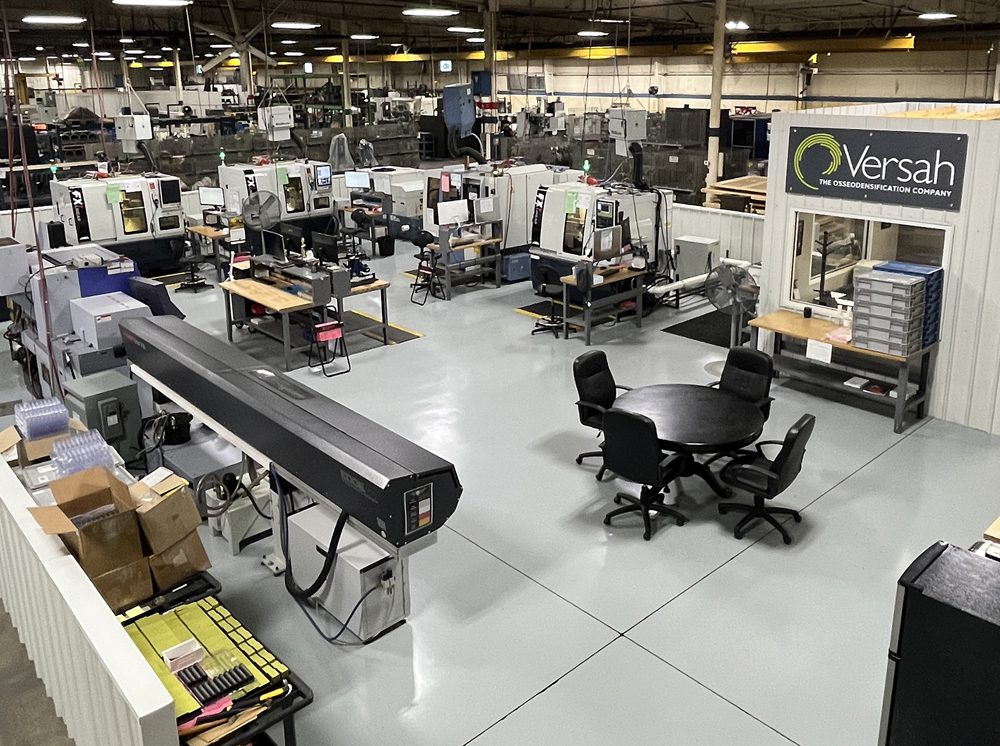
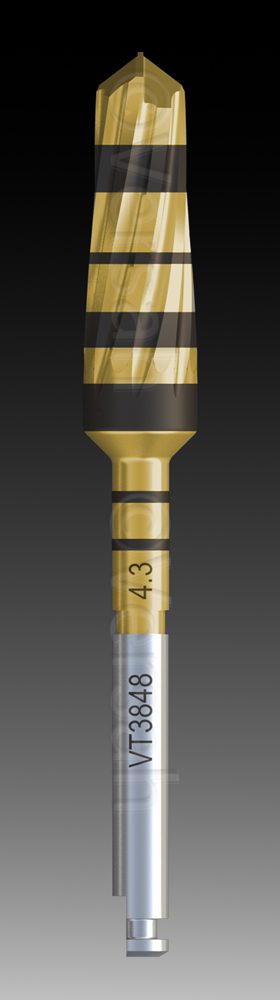
That was back in early 2014. By April of that year, Dr. Huwais, who had no manufacturing experience, formed the company Versah, LLC, in Jackson, Michigan, and partnered with engineers to turn his idea into reality. It wasn’t easy. Aaron Beach, director of manufacturing and product development, recounted that they went through more than 60 prototypes over 6 months before settling on a design. The resulting dental burr, which is protected by numerous patents, returns all the bone back into the jaw as the periodontist cuts the hole needed for the planned implant. According to Beach, this usually enables the surgeon to immediately place the permanent implant, versus waiting 6 to 12 months for the bone to heal, as is required when using a traditional burr.
ANCA machines are key
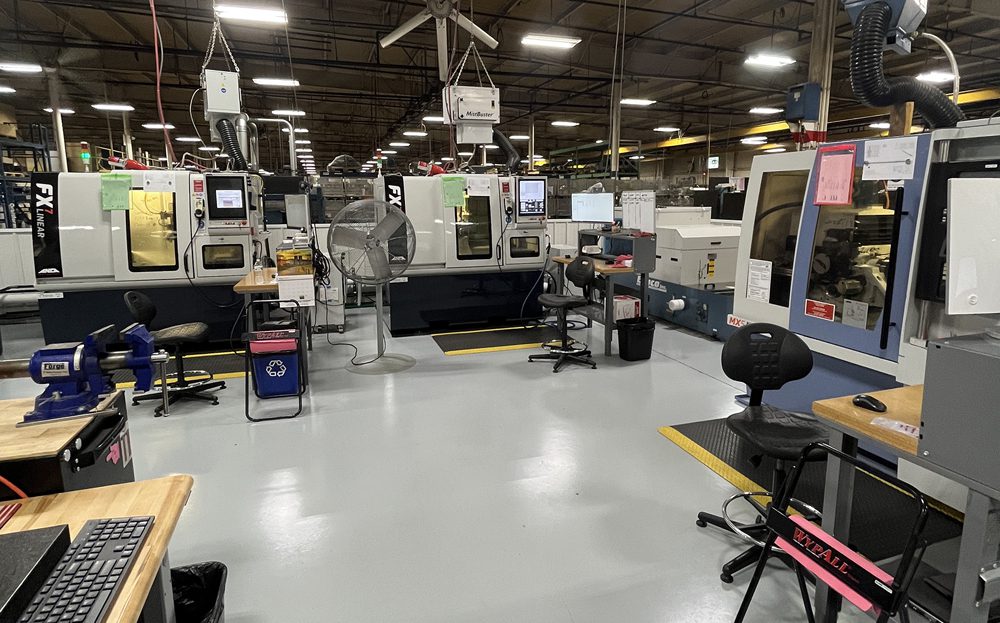
Naturally, Versah does not want to publicize all the secrets that go into making these stainless-steel tools, except to say that they are ground to “extremely tight tolerances” on ANCA MX and FX machines, where the biggest challenge is accounting for wear in the steadyrest and the grinding wheels, said Beach. But the CBN wheels hold up well enough that they don’t require in-process dressing, he reported. In terms of workholding and part handling, all jobs are fully automated, with a typical batch size of 1,000 burrs.
Beach did reveal that the tools have “multiple geometries” that change throughout the flute, which the ANCA software and machines handle well. Likewise, measuring the geometry is a challenge, the details of which can’t be shared. But Beach said they “inspect parts with a vision system every 30 minutes, and document the inspections every 2 hours, to maintain quality.”
Another important point Beach made is that although he had manufacturing knowledge when starting this project in 2014, he had no grinding experience. Versah jumped in with a fully equipped ANCA MX5 and then a number of FX machines. As Beach recalled, “I did some Solidworks programming in the past that helped. But I didn’t know anything about ANCA’s iGrind software or anything related to grinding. The fact that you’re able to watch the part unfold in the software, to watch the changes happen right in front of you on the machine, makes it very, very user friendly.
“The software is also educational. New people coming in, or even our team in the offices with no manufacturing background, can click on different items, leave some highlighted, and it walks them through how that part’s being ground, and shows how each part of the program is connected with each tool feature. It’s really simple. I have hired a few people on these grinders that had zero experience with them, and they’ve picked it up quickly.” Beach also lauded ANCA’s customer service and reliability. “We run these machines around the clock, six to seven days a week. So, they’ve gotten a lot of use, which obviously calls for maintenance and support. But we find them to be very low maintenance.”
Production details
Versah makes their burrs in two lengths and a variety of cutting diameters, but with a single shank diameter that meets the relevant ISO standard. This simplifies their setups, said Beach, such that they use only two collet types. For the longer burrs, the collet swallows more of the shank, providing more rigidity for the grind. They also use a fixed steadyrest on each tool, changing its position based on the tool length. But given Versah’s lot sizes, these adjustments are infrequent.
Versah electro-polishes the tools coming off the ANCA grinder, added Beach, “to remove any free iron. Then they are coated with titanium nitride.” Beach explained that heat reduction is the main coating benefit, since heating the bone typically damages it. “We found that adding this coating, along with the appropriate irrigation, keeps our burrs a little cooler than they otherwise would be. We think the coating also helps prevent the bone from sticking to the burr, and therefore helps transfer the bone back to the jaw.”
On the other hand, the unique geometry is clearly the critical factor, because Versah only added the coating in 2019. By then, the burrs had become a worldwide success. A gratifying success story in improving thousands of lives.
For further information, please contact:
Amanda Bakun
Marketing & Communications Manager – Americas
248-497-1168
amanda.bakun@anca.com
ANCA is a market leading manufacturer of CNC grinding machines. It was founded in 1974 in Melbourne, Australia where the company still has its global headquarters. ANCA has offices in the UK, Germany, China, Thailand, India, Japan, Brazil, Korea and the USA as well as a comprehensive network of representatives and agents worldwide.
ANCA CNC grinders are used for manufacturing precision cutting tools and components across a diverse range of competitive industries including cutting tool manufacture, automotive, aerospace, electronics and medical.


Partnering with ANCA gave a boost of confidence to the Bengaluru-based company, which extensively uses ANCA machines to make precision cutting tools, prepare blanks, and regrind tools
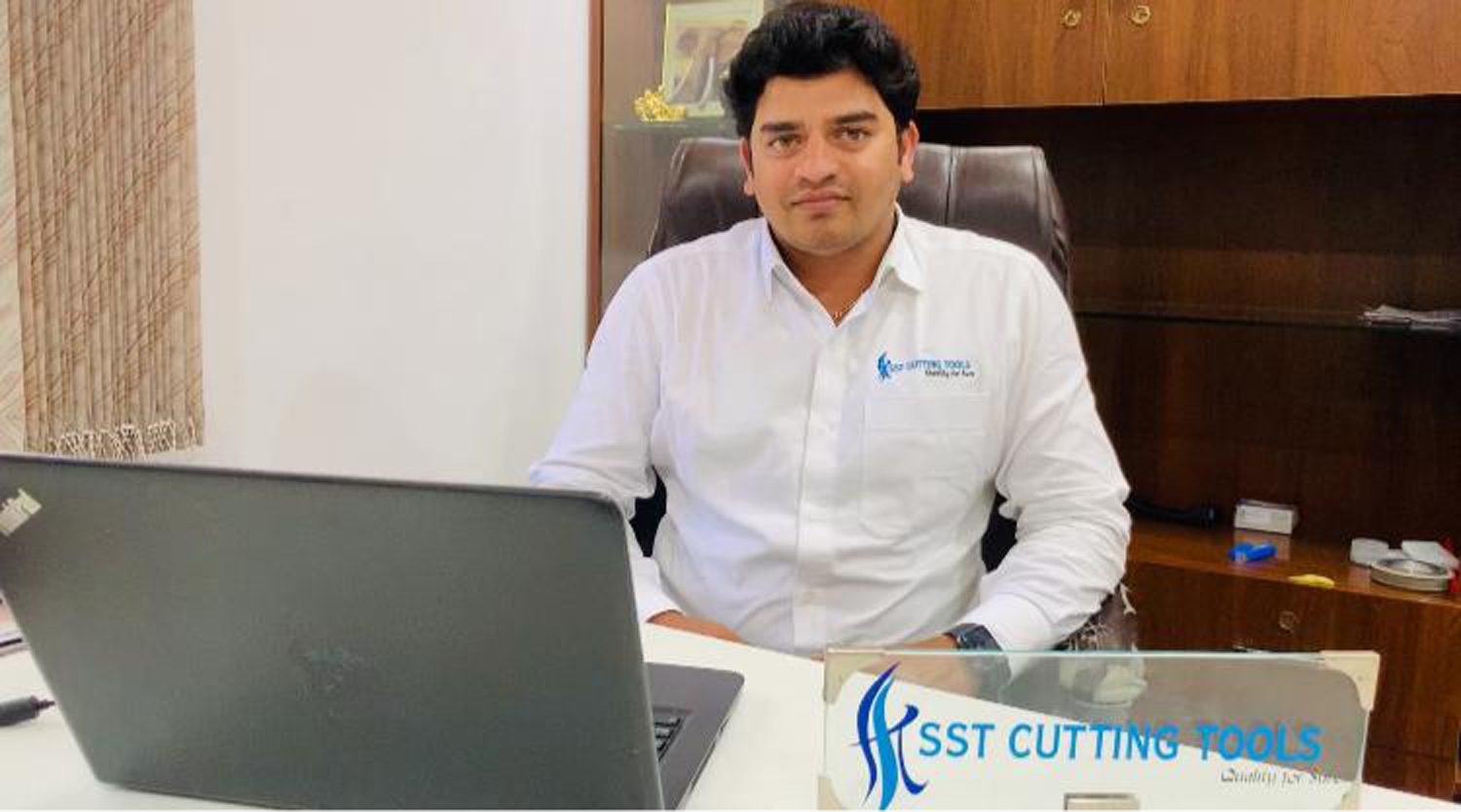
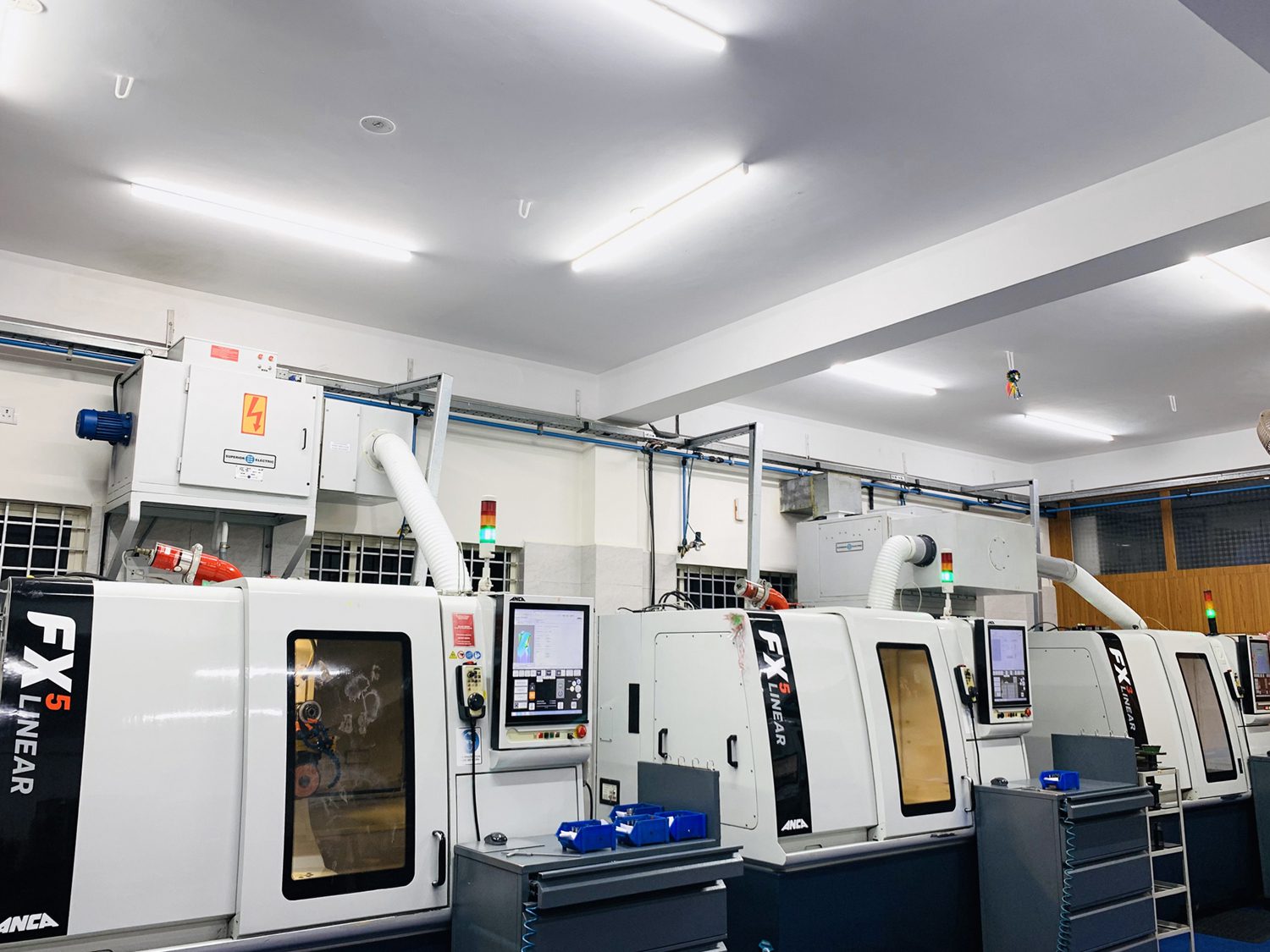 From a conventional machine operator to the founder of a company that manufactures high-precision cutting tools that employs over 30 people. Sounds like an unbelievable success story? Well, this perfectly describes the journey of Kumar A., a passionate cutting toolmaker from Bengaluru, India. Kumar’s cutting tool manufacturing company, SST Cutting Tools, relies on high-end grinding machines from ANCA to manufacture customized tools for aerospace, defense, and automotive applications. Here’s how it all began…
Journey of growth with ANCA
Kumar started SST Cutting Tools in the middle of the global recession in 2008 with a single tool and cutter grinding machine. The company now has four ANCA machines and many delighted customers.
 “I started with one conventional machine and used to regrind tools. My work was received well in the industry and soon I added more conventional machines and operators, but we were not able to speed up the process and procure orders that needed high precision. That’s when I thought of investing in a CNC grinding machine,” says Kumar.
“I had absolutely no idea about CNC grinding machines, as I had never operated one before. All I knew was that I wanted the best one. I evaluated several global brands and found ANCA to be best suited for my application. More than anything, I needed a user-friendly machine, as none of the team members, including me, had any experience with CNC grinding machines,” adds Kumar.
Enhanced output, efficiency, accuracy
SST Cutting Tools added an ANCA FX3 with linear scale technology, which can produce tools with an accuracy of three microns. “We were amazed by the machine’s output and speed. Our efficiency and accuracy went up. This provided a boost to our much-needed confidence and now we’re out in the market looking for precision cutting tools requirements,” says Kumar.
 As orders increased, the company grew. A plot of land was purchased and construction of its factory began in 2016. “We were small players, but I always maintained one thing – never compromise on technology. Moving to the new factory in 2017, we added a Zoller tool inspection machine, which could measure any kind of tool profiles with the accuracy of one micron,” he explains.
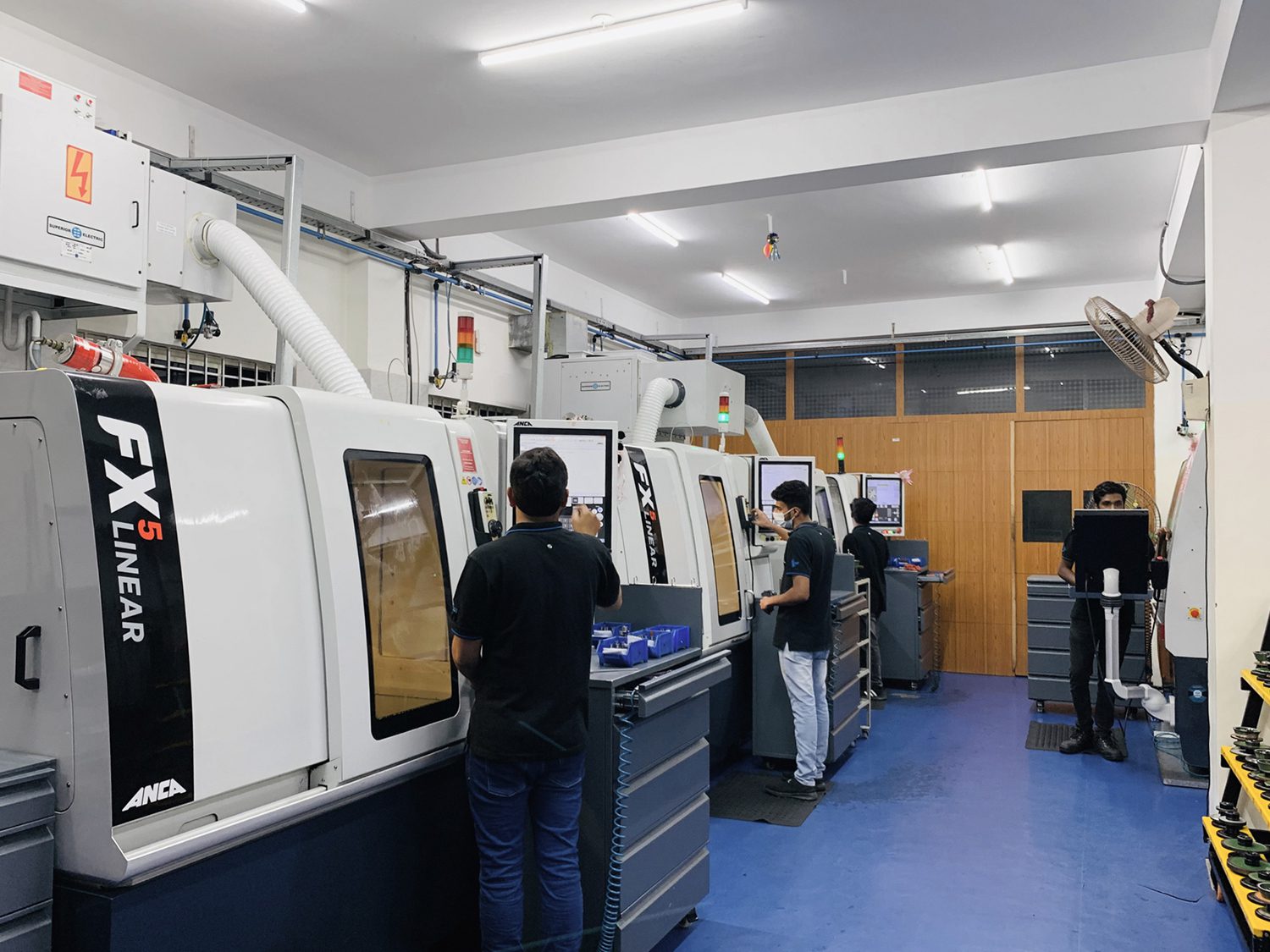
The company started taking precision cutting tool orders, with many happy customers. “We received several repeat orders and a lot of new inquiries. We needed to enhance our efficiency further by reducing the setup time. I discussed this challenge with the ANCA team, and they suggested the ANCA FX5 fully automatic linear machine. I saw the demo, observed all the features, and opted for it in March 2018. It was the perfect match for my requirements. The machine is equipped with a 2-wheel changer that helps us reduce the number of setups,” informs Kumar. SST added one more advanced version of the ANCA FX5 in 2019. It is fully automatic and provides high accuracy and an in-process measuring camera.
It’s all about meeting requirements
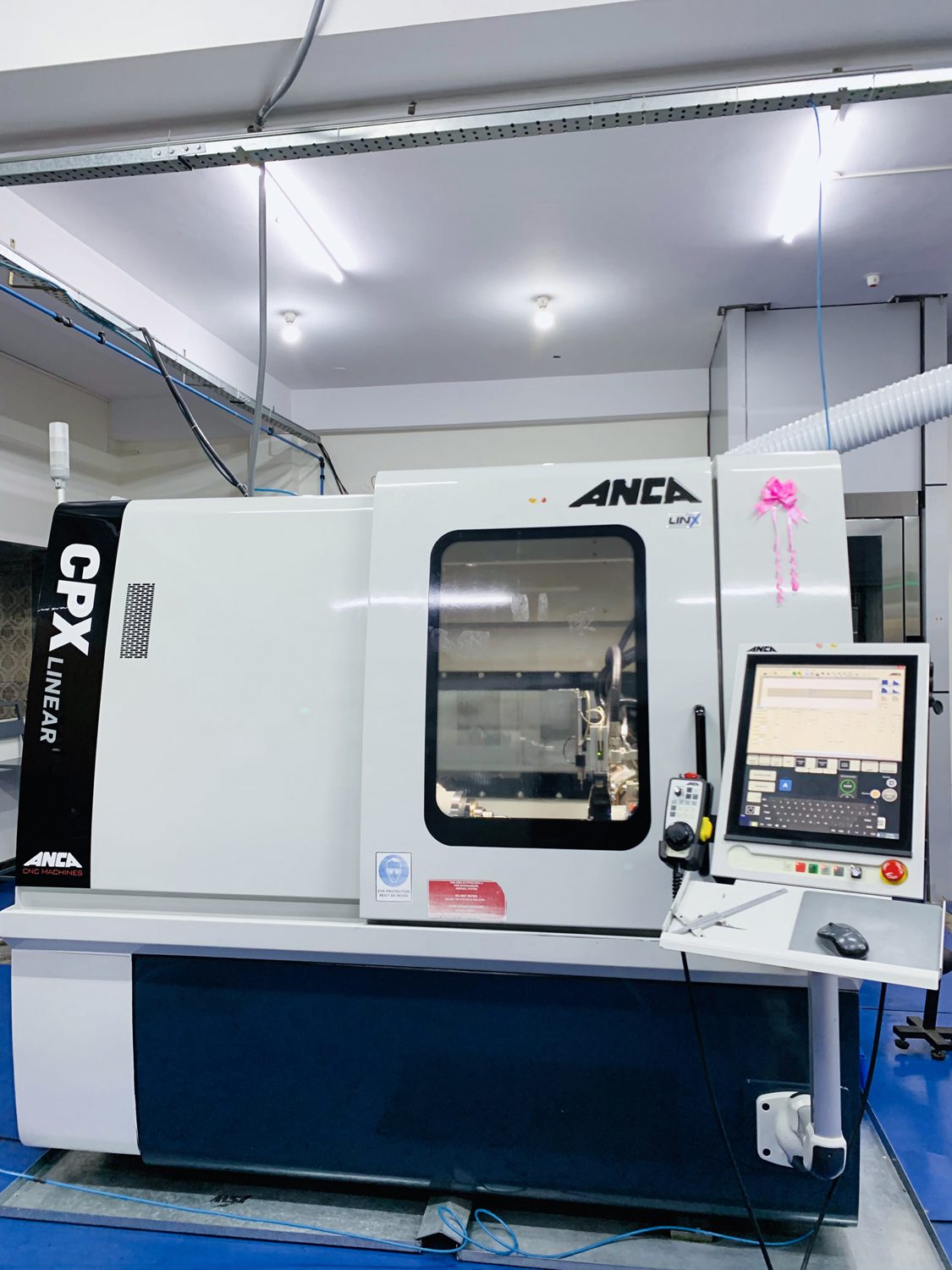 One of the most important and challenging activities for cutting tool manufacturers is to prepare precision blanks with close tolerances. The right blank can define the overall cutting tool. “With time, customers have also become very demanding. They want a cost-effective and accurate product on time. However, in 2021, the volume of orders we had in our current setup needed an upgrade, especially for the preparation of blanks. I wanted to reduce the blank preparation time with 100% accuracy and decided to opt for the ANCA 4 Axes CPX blank preparation machine,” says Kumar.
The CPX Linear is capable of achieving a surface finish better than 0.2Ra with a run out of less than two microns. “With the addition of a CPX Linear, we can make tools in a few hours, thereby meeting urgent requirements,” he adds.
Focus on quality, accuracy for applications
Talking about his vision, Kumar says, “I want to be a world-class manufacturer of cutting tools and provide services to the customer’s speculated time with zero defects and a high degree of accuracy.”
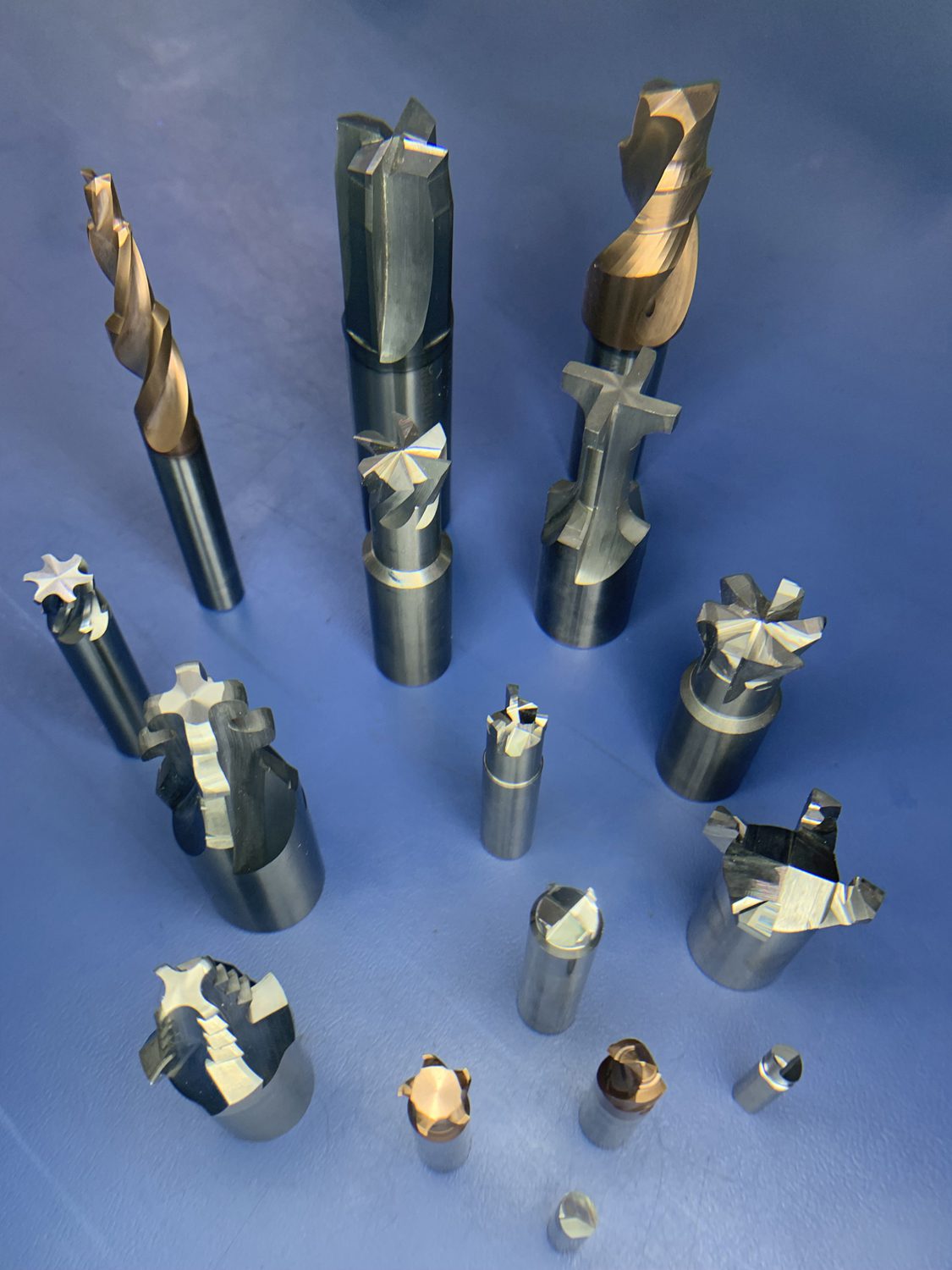
The company specializes in customized cutting tools such as drills with sizes ranging from Ø1 to Ø25 with the L/D ratio of Ø X 12; endmills with sizes ranging from 0.8mm to 25mm and 2flutes to 12flutes; and reamers and holemills, with sizes ranging from 1mm to 25mm, within the tolerance of 0.002 mm. Additionally, the company works with threading tools, boring tools, ID and OD grooving tools, pico bars, and angle grooving tools.
 Kumar comes from a very humble background. At the age when most children enjoy their school days, he worked part-time to make ends meet. At the age of 18, Kumar started working as a machine operator in one of the job shops in Bengaluru, the IT and manufacturing hub of India. Motivated to learn more, he took up a Diploma in Mechanical Engineering in the evenings.
“I wanted to learn the fundamentals of mechanical engineering, the functionality of the latest machines, and various advantages of grinding applications. I used to work for 10-12 hours during the day and attend classes in the evening,” he recalls.
SST Cutting Tools’ drive and versatility is also highlighted in their multiple #ANCATooloftheYear entries, showcasing their skill and creativity with ANCA software as well as an enthusiastic commitment to the community of cutting tool manufacturers.
 Proudly highlighting one of his projects, Kumar says, “When COVID cases were at their peak, we did our small bit by helping the Indian government make ventilator parts quickly with the help of our ANCA machines. Since the project was related to medical equipment, the accuracy and surface finish needed were high and the turnaround time was short. We acted quickly, gathered all our technical staff and halted all our other projects. I am glad we were able to play a small role in the fight against Corona.”
More growth ahead at home and abroad
After close to 15 years of operations and many happy customers in India, the company is now eyeing exports, and expanding their infrastructure to accommodate more machines. “We are looking forward to adding more ANCA machines in the coming days,” says Kumar.
He adds, “We have big plans for the future. However, it is worth looking back at the journey and remembering all that has worked in our favor. Choosing ANCA was one of the best decisions in my career. ANCA has not only enhanced the efficiency and productivity of SST Cutting Tools, it has also given our confidence the much-needed boost.”
“The ANCA team is well-versed with the technical know-how and their service is nothing short of excellent. Whenever we faced any technical hurdles, the team would quickly respond. We never had to face any major delays in our projects thanks to their prompt support. In fact, there have been instances of executives from ANCA flying down to Bengaluru from Australia only to help us better understand the machine’s features. I am looking forward to working with ANCA; they are our growth partner and not just a vendor,” concludes Kumar.
For further information, please contact:
Amanda Bakun
Marketing & Communications Manager – Americas
248-497-1168
amanda.bakun@anca.com
ANCA is a market leading manufacturer of CNC grinding machines. It was founded in 1974 in Melbourne, Australia where the company still has its global headquarters. ANCA has offices in the UK, Germany, China, Thailand, India, Japan, Brazil and the USA as well as a comprehensive network of representatives and agents worldwide.
ANCA CNC grinders are used for manufacturing precision cutting tools and components across a diverse range of competitive industries including cutting tool manufacture, automotive, aerospace, electronics and medical.

Partnering with ANCA gave a boost of confidence to the Bengaluru-based company, which extensively uses ANCA machines to make precision cutting tools, prepare blanks, and regrind tools
From a conventional machine operator to the founder of a company that manufactures high-precision cutting tools that employs over 30 people. Sounds like an unbelievable success story? Well, this perfectly describes the journey of Kumar A., a passionate cutting toolmaker from Bengaluru, India. Kumar’s cutting tool manufacturing company, SST Cutting Tools, relies on high-end grinding machines from ANCA to manufacture customized tools for aerospace, defense, and automotive applications. Here’s how it all began…
Journey of growth with ANCA
Kumar started SST Cutting Tools in the middle of the global recession in 2008 with a single tool and cutter grinding machine. The company now has four ANCA machines and many delighted customers.
“I started with one conventional machine and used to regrind tools. My work was received well in the industry and soon I added more conventional machines and operators, but we were not able to speed up the process and procure orders that needed high precision. That’s when I thought of investing in a CNC grinding machine,” says Kumar.
“I had absolutely no idea about CNC grinding machines, as I had never operated one before. All I knew was that I wanted the best one. I evaluated several global brands and found ANCA to be best suited for my application. More than anything, I needed a user-friendly machine, as none of the team members, including me, had any experience with CNC grinding machines,” adds Kumar.
Enhanced output, efficiency, accuracy
SST Cutting Tools added an ANCA FX3 with linear scale technology, which can produce tools with an accuracy of three microns. “We were amazed by the machine’s output and speed. Our efficiency and accuracy went up. This provided a boost to our much-needed confidence and now we’re out in the market looking for precision cutting tools requirements,” says Kumar.
As orders increased, the company grew. A plot of land was purchased and construction of its factory began in 2016. “We were small players, but I always maintained one thing – never compromise on technology. Moving to the new factory in 2017, we added a Zoller tool inspection machine, which could measure any kind of tool profiles with the accuracy of one micron,” he explains.
The company started taking precision cutting tool orders, with many happy customers. “We received several repeat orders and a lot of new inquiries. We needed to enhance our efficiency further by reducing the setup time. I discussed this challenge with the ANCA team, and they suggested the ANCA FX5 fully automatic linear machine. I saw the demo, observed all the features, and opted for it in March 2018. It was the perfect match for my requirements. The machine is equipped with a 2-wheel changer that helps us reduce the number of setups,” informs Kumar. SST added one more advanced version of the ANCA FX5 in 2019. It is fully automatic and provides high accuracy and an in-process measuring camera.
It’s all about meeting requirements
One of the most important and challenging activities for cutting tool manufacturers is to prepare precision blanks with close tolerances. The right blank can define the overall cutting tool. “With time, customers have also become very demanding. They want a cost-effective and accurate product on time. However, in 2021, the volume of orders we had in our current setup needed an upgrade, especially for the preparation of blanks. I wanted to reduce the blank preparation time with 100% accuracy and decided to opt for the ANCA 4 Axes CPX blank preparation machine,” says Kumar.
The CPX Linear is capable of achieving a surface finish better than 0.2Ra with a run out of less than two microns. “With the addition of a CPX Linear, we can make tools in a few hours, thereby meeting urgent requirements,” he adds.
Focus on quality, accuracy for applications
Talking about his vision, Kumar says, “I want to be a world-class manufacturer of cutting tools and provide services to the customer’s speculated time with zero defects and a high degree of accuracy.”
The company specializes in customized cutting tools such as drills with sizes ranging from Ø1 to Ø25 with the L/D ratio of Ø X 12; endmills with sizes ranging from 0.8mm to 25mm and 2flutes to 12flutes; and reamers and holemills, with sizes ranging from 1mm to 25mm, within the tolerance of 0.002 mm. Additionally, the company works with threading tools, boring tools, ID and OD grooving tools, pico bars, and angle grooving tools.
Kumar comes from a very humble background. At the age when most children enjoy their school days, he worked part-time to make ends meet. At the age of 18, Kumar started working as a machine operator in one of the job shops in Bengaluru, the IT and manufacturing hub of India. Motivated to learn more, he took up a Diploma in Mechanical Engineering in the evenings.
“I wanted to learn the fundamentals of mechanical engineering, the functionality of the latest machines, and various advantages of grinding applications. I used to work for 10-12 hours during the day and attend classes in the evening,” he recalls.
SST Cutting Tools’ drive and versatility is also highlighted in their multiple #ANCATooloftheYear entries, showcasing their skill and creativity with ANCA software as well as an enthusiastic commitment to the community of cutting tool manufacturers.
Proudly highlighting one of his projects, Kumar says, “When COVID cases were at their peak, we did our small bit by helping the Indian government make ventilator parts quickly with the help of our ANCA machines. Since the project was related to medical equipment, the accuracy and surface finish needed were high and the turnaround time was short. We acted quickly, gathered all our technical staff and halted all our other projects. I am glad we were able to play a small role in the fight against Corona.”
More growth ahead at home and abroad
After close to 15 years of operations and many happy customers in India, the company is now eyeing exports, and expanding their infrastructure to accommodate more machines. “We are looking forward to adding more ANCA machines in the coming days,” says Kumar.
He adds, “We have big plans for the future. However, it is worth looking back at the journey and remembering all that has worked in our favor. Choosing ANCA was one of the best decisions in my career. ANCA has not only enhanced the efficiency and productivity of SST Cutting Tools, it has also given our confidence the much-needed boost.”
“The ANCA team is well-versed with the technical know-how and their service is nothing short of excellent. Whenever we faced any technical hurdles, the team would quickly respond. We never had to face any major delays in our projects thanks to their prompt support. In fact, there have been instances of executives from ANCA flying down to Bengaluru from Australia only to help us better understand the machine’s features. I am looking forward to working with ANCA; they are our growth partner and not just a vendor,” concludes Kumar.
For further information, please contact:
Amanda Bakun
Marketing & Communications Manager – Americas
248-497-1168
amanda.bakun@anca.com
ANCA is a market leading manufacturer of CNC grinding machines. It was founded in 1974 in Melbourne, Australia where the company still has its global headquarters. ANCA has offices in the UK, Germany, China, Thailand, India, Japan, Brazil and the USA as well as a comprehensive network of representatives and agents worldwide.
ANCA CNC grinders are used for manufacturing precision cutting tools and components across a diverse range of competitive industries including cutting tool manufacture, automotive, aerospace, electronics and medical.
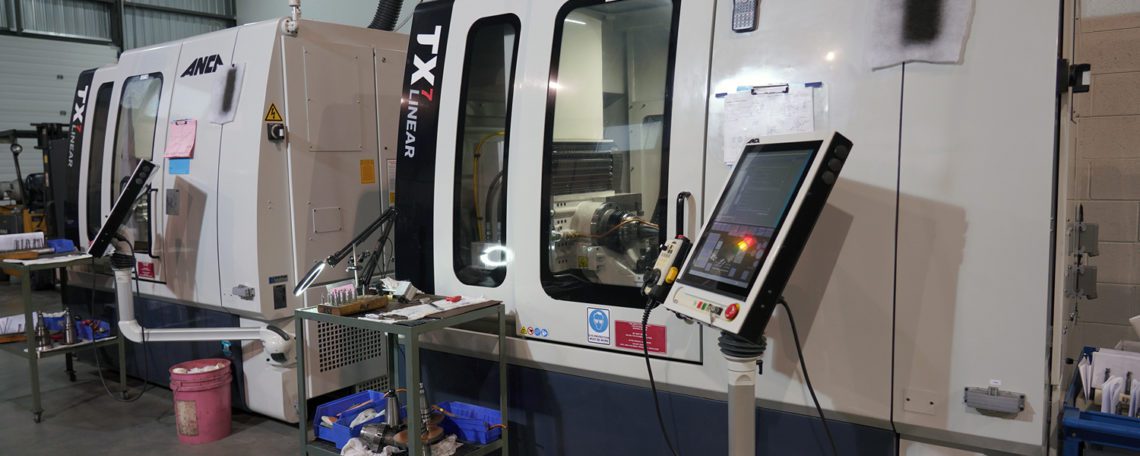
Using MX7 Linear, the Canadian company helps automotive company make tools within spec and regrinds 1,100-1,500 tools each year
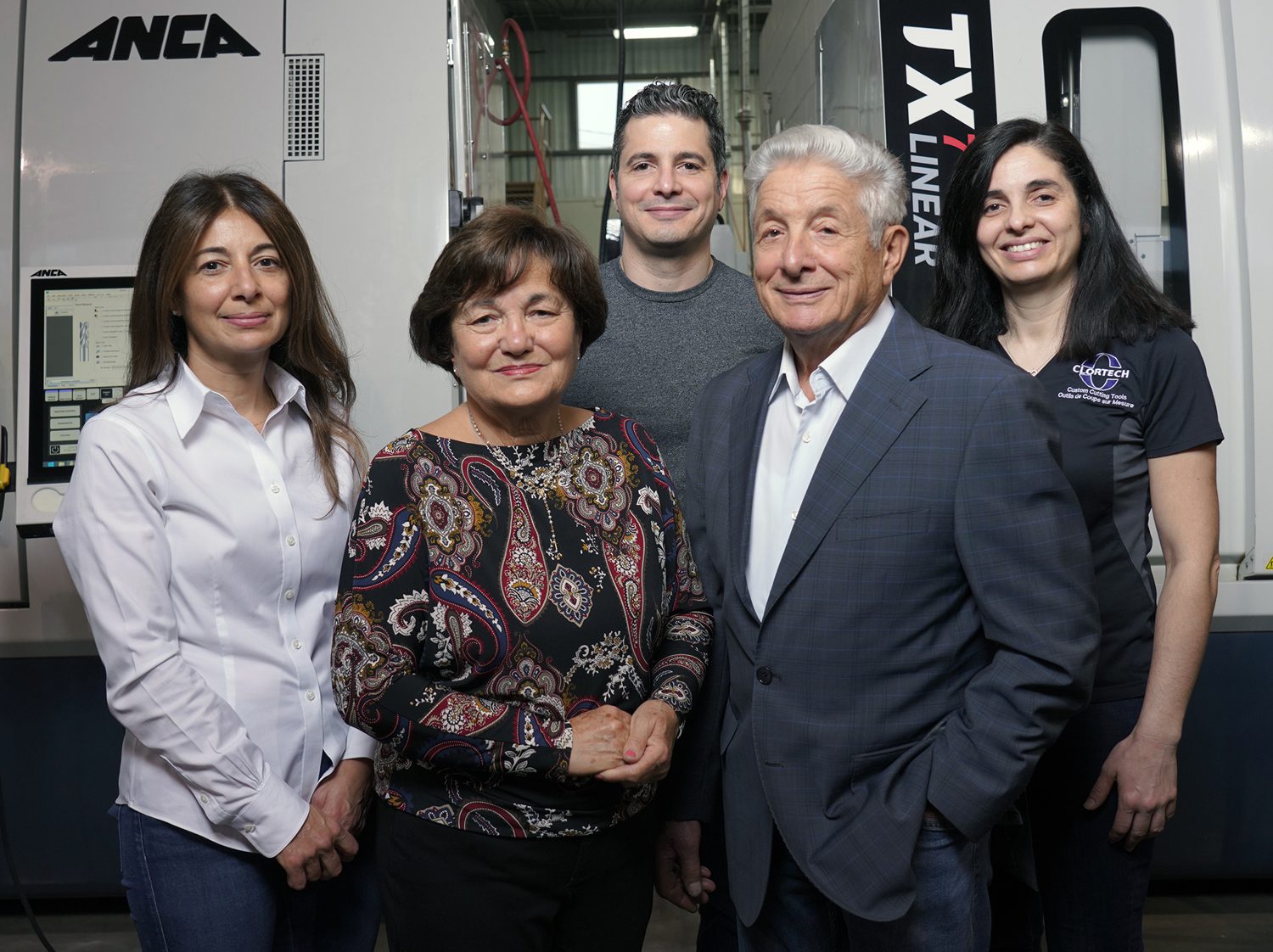
 Founded in 1987 by Clorindo Mattei, Clortech Precision Cutting Tools is a family business with wife Carmela handling bookkeeping, while son Patrick is the vice-president of production and sisters Emilia and Mena are the managing director and quality assurance director respectively. The company is a Montreal manufacturer of custom precision tools that sells to various industries including aerospace, recreational vehicles, rail and automotive. Products include shafts, gauges, broaches, bushings, extra-long reamers, special diameter formed end mills, special contouring tools.
In the ‘80s and ‘90s, business was made up entirely of aerospace customers. However, events like 9/11 and the global financial crisis, showed how temperamental that sector could be and prompted diversification beyond it. With its high-performance holemaking tools, including drills and special end mills, Clortech expanded into the automotive industry. It also provides drills for rail and tie installers, as well as tools (reaming, milling and holemaking) to help the Canadian Armed Forces in the maintenance and overhaul of tanks and other military equipment. Besides MRO tooling services, they also offer regrinding and reconditioning services to old tools and kit inventory services. Their 360° Approach is aimed at companies that don’t have the necessary resources or workforce to make their own tools, while the AOG 911 service produces or modifies aircraft tools with the shortest lead times.
Currently, the job shop is equipped with CNC lathes, milling machines, cylindrical grinders, tool and cutter grinders and six 8-axis NC ANCA grinding machines (two TG7 Plus grinders, two TX7 machines and two TX7 Linear machines).
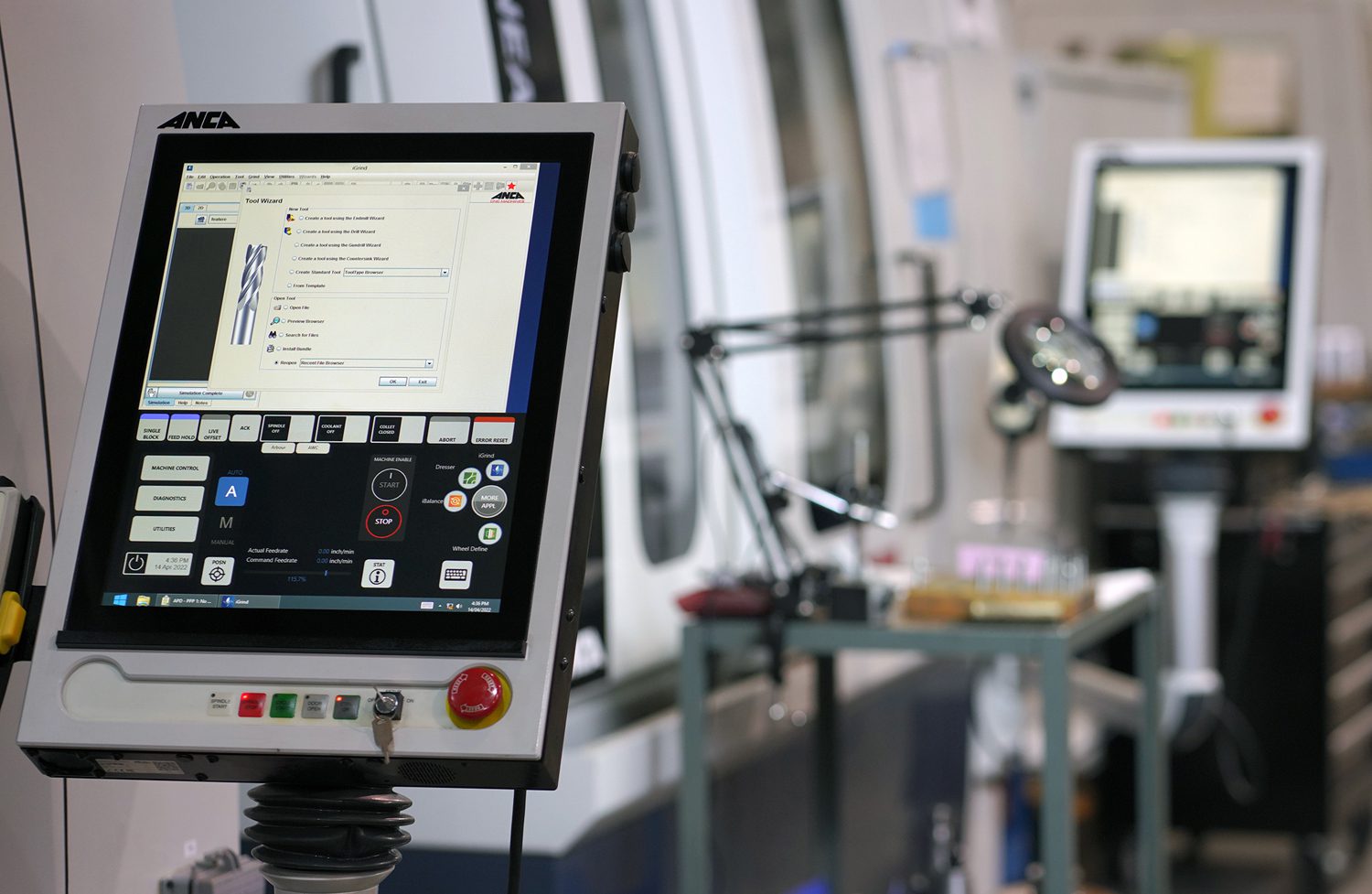
 While Clortech uses all of its ANCA machines, Patrick Mattei pointed out that more complex/ higher volume parts are manufactured on the ANCA MX7 Linear due to its speed, precision and software which is more detailed than older machines. The machines are used to make round tools such as: endmills, drills and reamers. Most are solid carbide, while some have carbide tips. All tools are manufactured to customer specifications.
Discussing what features stand out on the MX7 Linear, Patrick mentioned the Toolroom software, which allows them to simulate a tool before making it. This greatly reduces scrap. The program’s integrated 3D graphics make on-machine programming easy, as grinding simulation is performed after any parameter change providing instant feedback. When they are satisfied with the geometry, operators take that program and put it on the machine to run it. “The simulation software and offline programming is a very strong feature allowing the machine to run while [operators] work on other programs for different parts that they will be running later. The versatility with lots of axes allow them to make the most intricate type parts.” The importance of the software is further evidenced by the fact that raw materials are very expensive and hard to come by so the ability to run a 3D model of the tool beforehand makes a big difference. Most of the company’s tools are designed from A to Z, offering a turnkey solution. The 3D model can be taken to the customer, and they can simulate the cutting conditions in their machine tool. Thus, Clortech can give the customer something before the actual part is delivered.
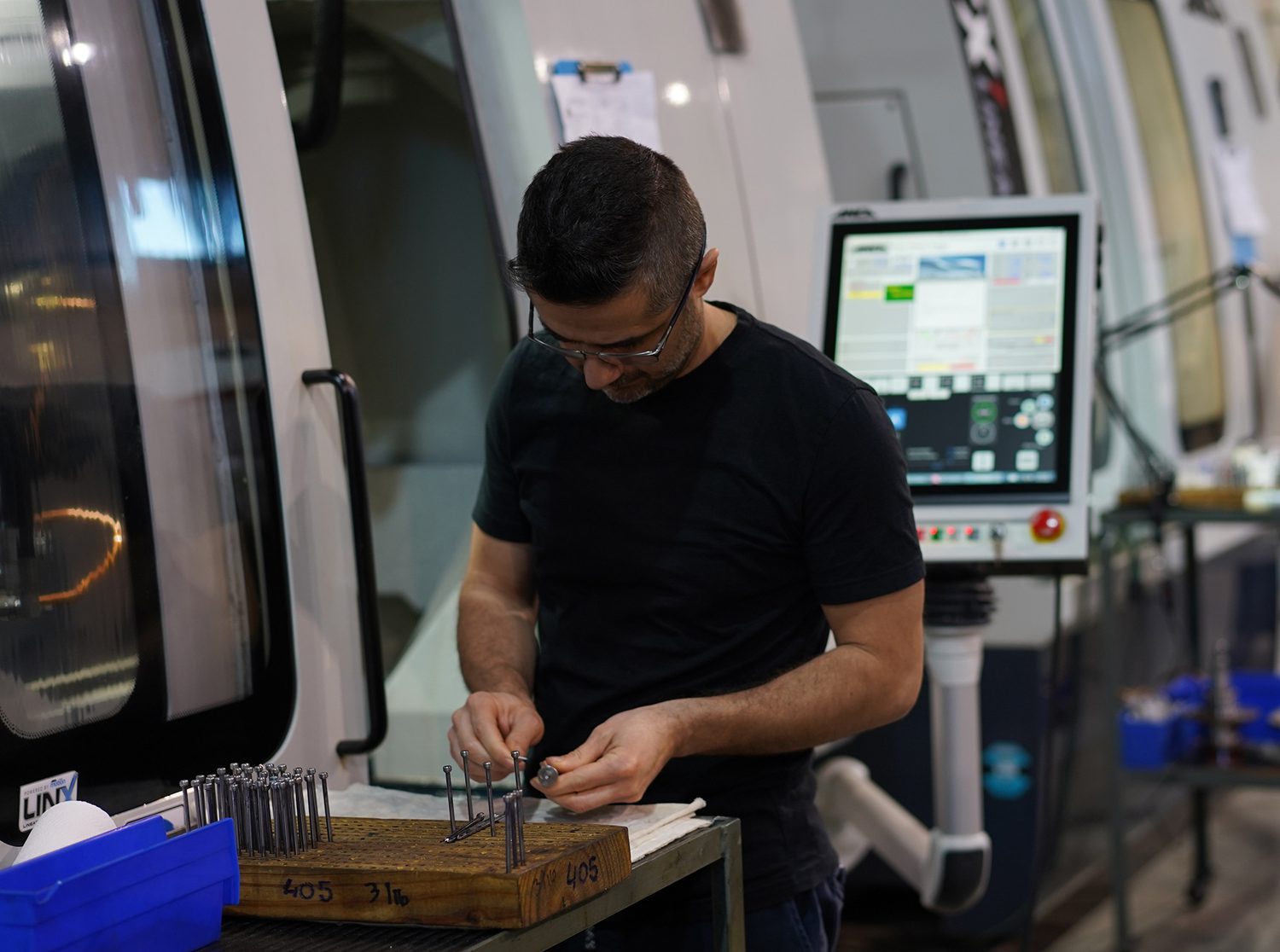
 Recently, Clortech helped a customer in the automotive industry who was making dovetail type cutters. These cutters require an extremely high degree of precision, and the company couldn’t maintain the tight tolerances. Clortech received the parts and reground them using the MX7. When completed, not only where the tools done within specification but the “product was better than what the customer was making themselves.”
Before they started using ANCA, Patrick mentioned they were doing a lot of work on conventional machines. Challenges they encountered included capacity and precision. The machines ran continuously but couldn’t match the speed and efficiency of a CNC grinder. Another challenge was having enough people to work the machines. With the integrated automation on ANCA machines, one operator can run more than one machine at once, making the company more profitable and efficient. Additionally, Clortech used to regrind 500-1,000 tools conventionally each year. With CNC machines, they are regrinding 1,100-1,500 each year. This is an efficiency improvement of 1000%. Although the set-up time on a CNC machine is longer, the output efficiency outweighs the time it takes.
The company’s first ANCA machine, a TG7 Plus Grinder, was purchased in 1997 after meeting Russell Riddiford at a trade show. At the time, Clortech was looking to purchase a machine and they chose ANCA because of its software features. Patrick believes ANCA machines symbolize efficiency and reliability, as the first one he purchased is still running smoothly.
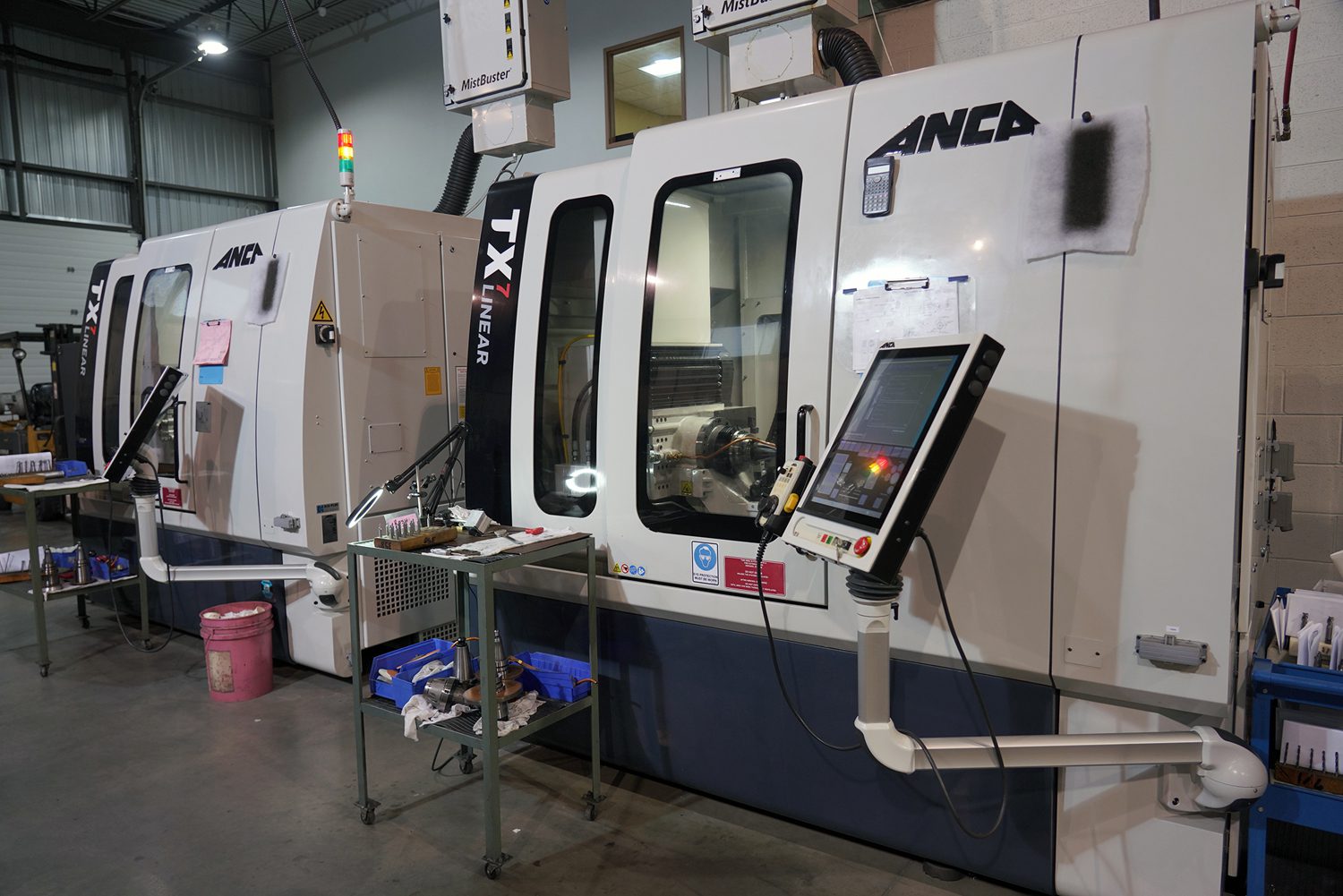 Patrick considers ANCA “part of the family” and enjoys speaking to the same people who know the company and his needs. He can call ANCA and there is always someone he can talk to regarding software issues, and everything is always resolved in a timely manner. He added that “… if we want to do something on the machine that hasn’t been done before, ANCA can even develop software for the product. They are always solution focused and working to figure out how to resolve any issue.”
For further information, please contact:
Amanda Bakun
Marketing & Communications Manager, Americas-ANCA
M: +1 248 497 1168
amanda.bakun@anca.com
ANCA is a market leading manufacturer of CNC grinding machines. It was founded in 1974 in Melbourne, Australia where the company still has its global headquarters. ANCA has offices in the UK, Germany, China, Thailand, India, Japan, Brazil and the USA as well as a comprehensive network of representatives and agents worldwide.
ANCA CNC grinders are used for manufacturing precision cutting tools and components across a diverse range of competitive industries including cutting tool manufacture, automotive, aerospace, electronics and medical.
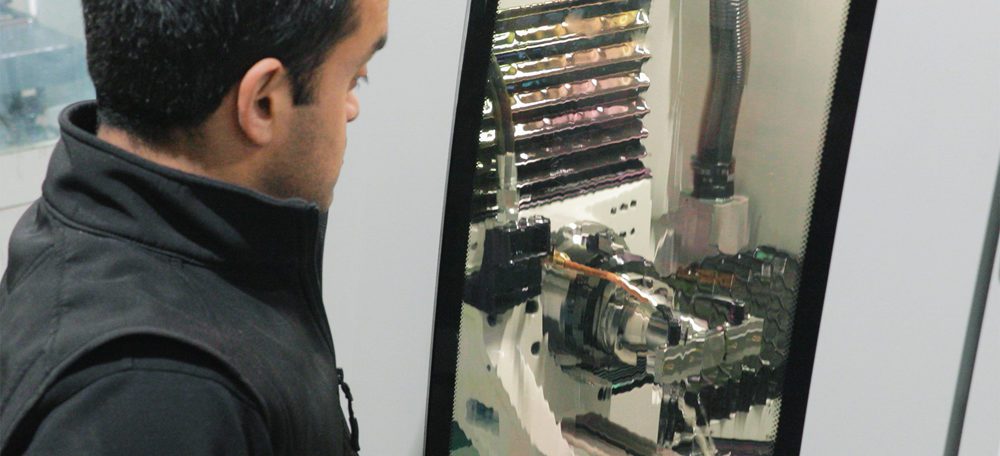
Growth in the animal health industry saw the company invest in a FX5E to keep up with demand
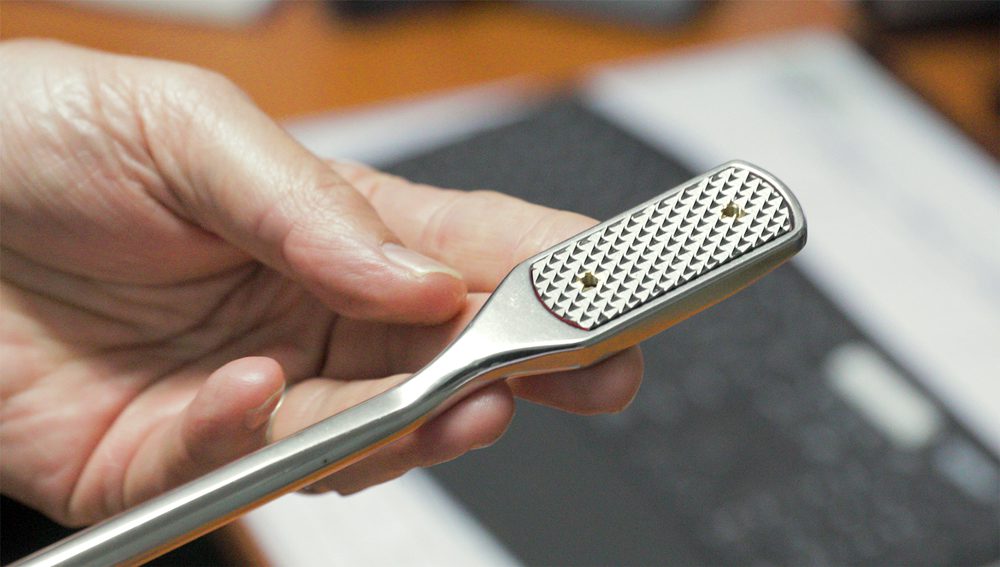
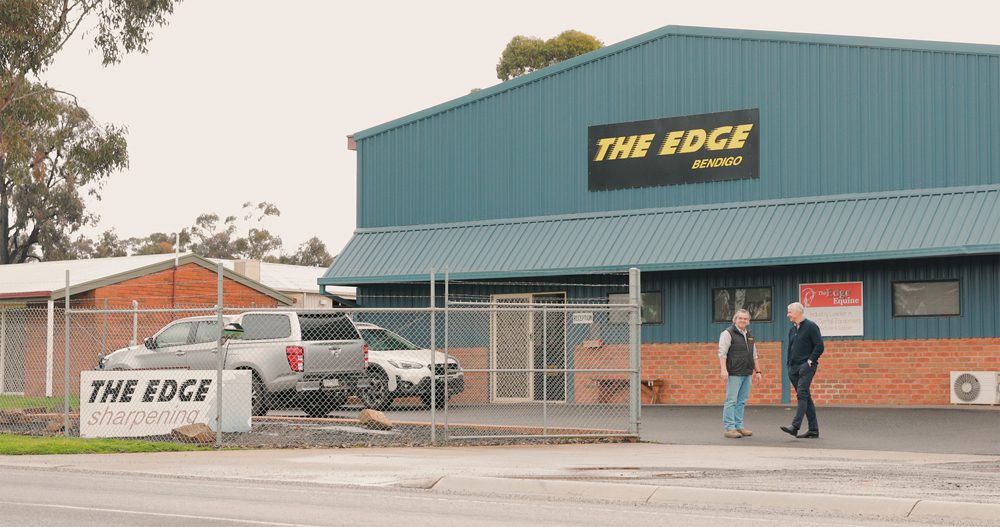
Based in Bendigo, Victoria, The Edge Equine is an Australian manufacturer of equine dental products, primarily rasps for manual horse dentistry. The company also provides commercial industrial sharpening services for the central Victorian region – specializing in high precision sharpening such as broach drills, annular cutters, saw blades, and router bits for local commercial cabinet makers, sawmills, and food processors.
The company’s focus on manufacturing equine dental products stemmed from a local horse dentist’s request to sharpen his equine dental blades. Today, it is a point of differentiation as The Edge Equine has concentrated on a more traditional product while other manufacturers have moved to the electronics industry.
The Edge Equine pride themselves on providing prompt service, made possible with on-site manufacturing capabilities that enable them to ship products within 48 hours. The company sells directly to over 40 countries, with distributors in the US, UK, New Zealand, and South Africa.
Tim McMahon, Managing Director of The Edge Equine said, “Our relationship with ANCA started in 2005 when we purchased a second-hand TG4. Over the years we grew to have three TG4s on the floor. ANCA were fantastic, they helped us write our programs, get the machines up and going and then when we swapped to our first FX3, ANCA developed the programs to make our products which was absolutely fantastic.”
“We invested in the FX5E in 2020. We were after another machine, as our demand for product had grown to the point where the FX3 and the remaining TG4 couldn’t cope. Jake [Farragher], ANCA Asia-Pacific General Manager recommended the new FX5E as having some features that would certainly help us grow, part of that being its future ability to be automated as our growth continued. It’s been a pretty seamless transition with having the FX3 and FX5E on the floor.”
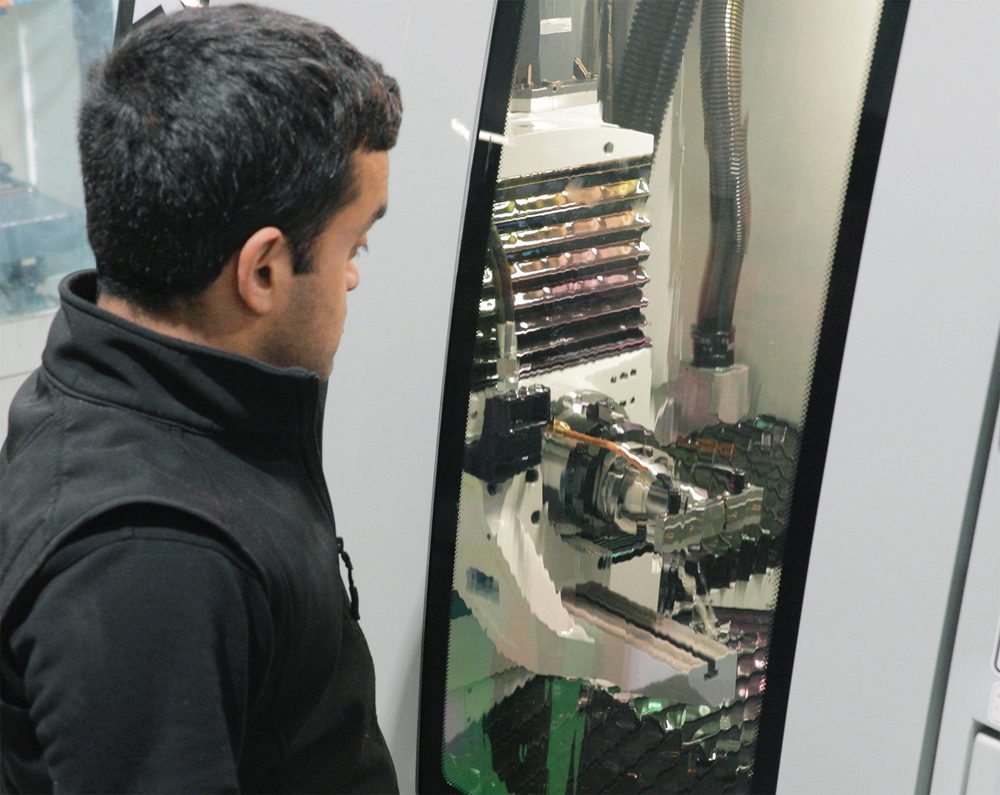
The Edge Equine mainly produce dental rasps and floats, devices that are used for maintenance of horses’ teeth. “The average cycle time is approximately 14 to 16 minutes depending on the rasp profile that we’re grinding which is two blades per cycle so it’s roughly eight minutes, seven to eight minutes per blade,” Tim said. “Most of our clients around the world order on an as needs basis so a prompt manufacture and supply is important to us and our customers.”
The future is bright with ANCA FX5E
Tim said, “With the implementation of the FX5E, it has given us new scope to look at more high precision grinding in the industrial regrinding market. We do a lot of granular cutters, annular cutters or broach cutters. We’re also looking at new products once again in the veterinary space. These are sectioning burrs for basically cutting out teeth that’s inside the horse’s head. As you can see, they’re quite a long burr. So there’s a lot of growth in using the capabilities of the FX5E.”
“The FX5E has the capacity to have robotics fitted and it will be something to look at in the future as our market grows and with the help of ANCA, we’ll develop a process to automate the process of blades. At the moment, we manually feed the machines, which still works well for us, but we have the opportunity to grow further on the automation stage.”
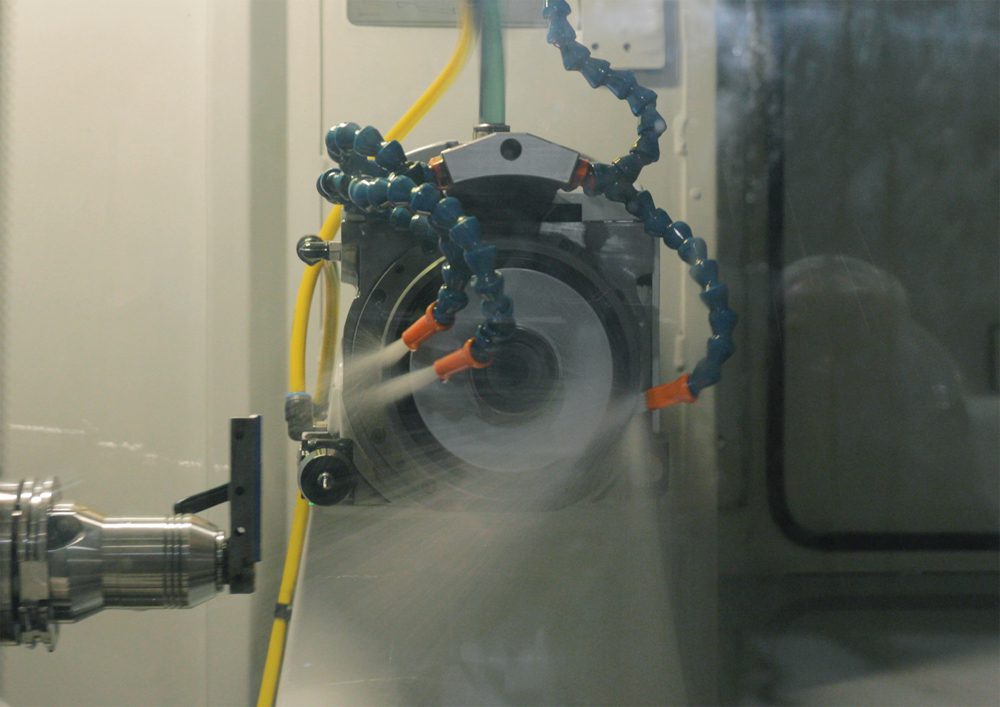
“The other major benefit of the FX5E is its flexibility. It gives us the capacity to change from manufacturing our rasps through to grinding tools within a matter of minutes. As with the FX3, we do jig setups, change things over, change wheels. It becomes time-consuming. But the flexibility we have now is outstanding, we can go from one job to the next without losing any time.”
“The FX5E is probably the first opportunity where we’ve had the capacity and the wherefore to branch out into different products and it’s also given us a lot more flexibility of sharpening our own mills within our own processing.”
Tim recognizes that the company’s two-hour location from the ANCA headquarters is a major advantage. “Whenever we’ve had issues, there’s always someone on the phone to talk to and usually they’ll have a technician up here within 5 hours or the next morning. As our customers expect customer service from us, our expectation from ANCA is to have a high level of customer service – and they certainly provide.”
Tim is confident that the company will see continual growth in the animal health industry, enabling The Edge Equine to be a leader in the manufacture of manual tools for equine dentistry. He envisions using the FX5E along with ANCA’s technology to manufacture other products within the veterinary space in the next 10 to 15 years.
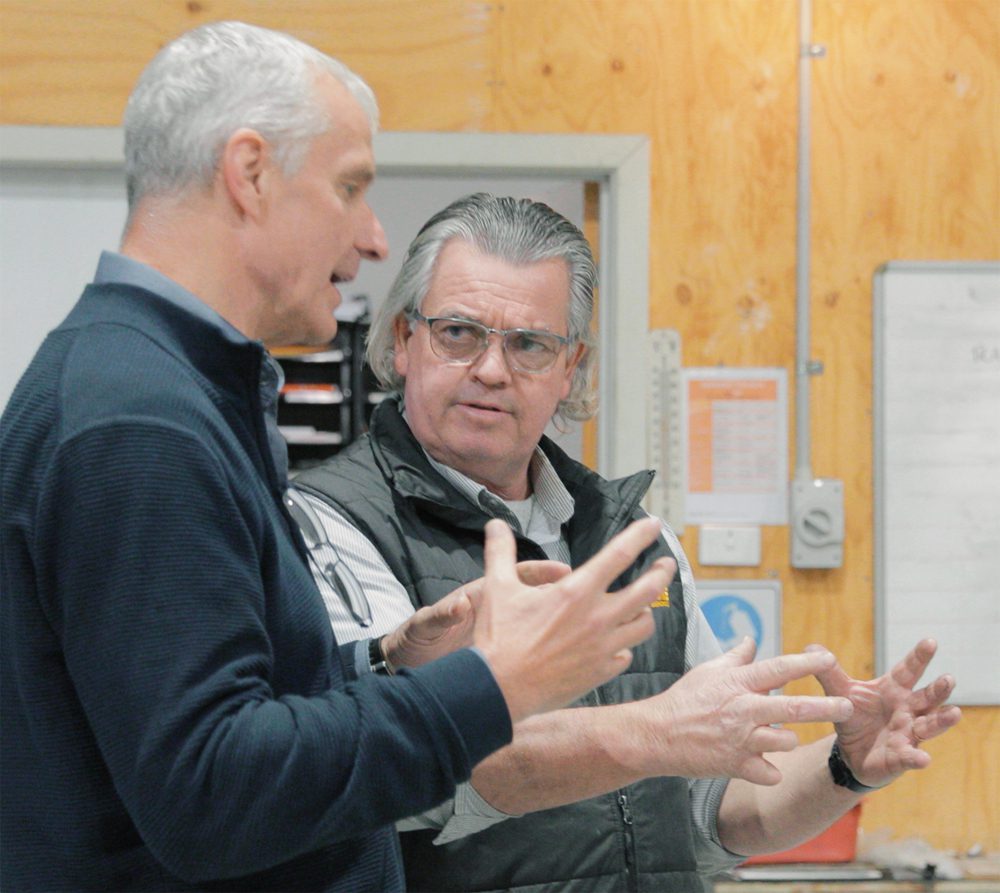

“Prior to COVID, we would do three or four conferences a year within the USA, at least one in the UK, and Germany. We are and we’ll always be looking at what the world needs and what the industry needs as far as these types of tools,” Tim concluded.
ANCA is a market leading manufacturer of CNC grinding machines. It was founded in 1974 in Melbourne, Australia where the company still has its global headquarters. ANCA has offices in the UK, Germany, China, Thailand, India, Japan, Brazil and the USA as well as a comprehensive network of representatives and agents worldwide. ANCA CNC grinders are used for manufacturing precision cutting tools and components across a diverse range of competitive industries including cutting tool manufacture, automotive, aerospace, electronics and medical.
Continue reading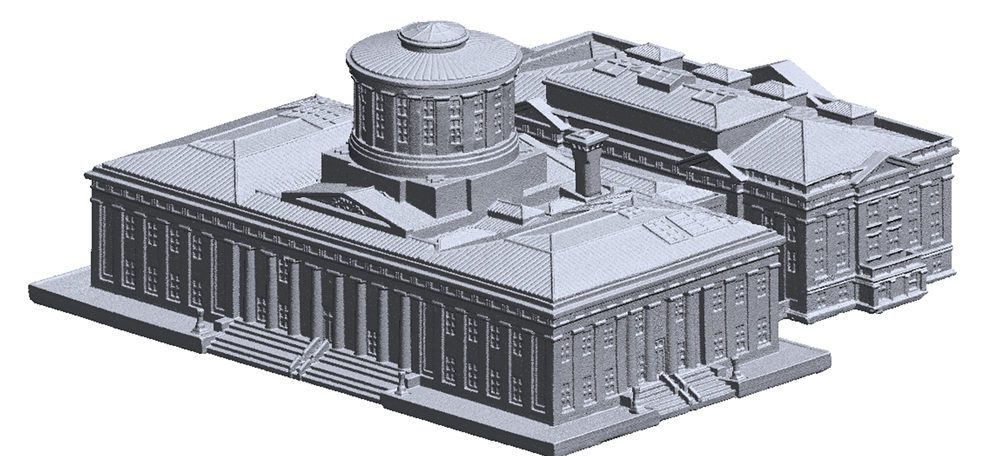
Exact Metrology: A Division of In-Place Machining Company and a comprehensive 3D metrology service provider and hardware sales company, recently used CT (Computed Tomography) to assist a former Ohio State University student with a special project.
Caroline Karbowski a Biology major as well as an undergraduate student researcher in Molecular Biology, started her own company called See3D. A nonprofit organization, See3D helps the blind and visually impaired to see through touch using 3D printing to create models. They then distribute them to those in need.

Since 2017, See3D has distributed over 1,400 models to people in 23 states, 9 countries and 23
organizations. Ms. Karbowski taught herself Braille in 6th grade because she wanted to “read books in the car without getting dizzy.” From there, her interest grew and she discovered that she could add Braille labels to 3D printed models. Blind students could make their own scientific observations instead of only relying on someone else’s observations.
See3D contacted Exact Metrology wanting to take a particular physical part and convert it into a digital model, a service the company can provide rapidly with multiple methods of data capture and full-time staff for modeling and reverse engineering. The nonprofit had access to a scale model of the Ohio State House. The model is presumably a one-off model made by an artist. The challenge consisted in modeling the minute details and features of the state house into a printable format. An accurate point cloud was required. The geometry of the part and small features made industrial CT scanning the ideal choice for data capture.
The scan was completed by an Exact Metrology applications engineer, with a ZEISS METROTOM 6 scout (GOM CT). Using an x-ray generating source and a digital detector, an image showing the difference in density was created. Thousands of images were taken automatically. When a sufficient number of images were captured, they were stitched together to create a 3D x-ray image or volume. The volume can then be surfaced into a model by the gray value difference between materials in the volume. In this case, an outer shell featuring a core and a base. The applications engineer noted that when a point cloud was generated of the Ohio State House, it had too many points to be feasibly processed into a printable format. Exact Metrology’s in-house reverse engineering team removed the unnecessary data points while maintaining accuracy to provide a printable digital model of the state house. The engineer commented on his experience by saying, “I enjoyed this job because it was an interesting, unique part with the added bonus of helping See3D provide a valuable service.”
Last year, Caroline was selected as the Next Generation Innovator of the Year by her university. To hear her talk more about See3D and the inspiration behind it, view below:
In-Place Machining Company: On-Site Machining Solutions In-Place, Any Place in the World.
In-Place Machining Company, with facilities in Wisconsin, Washington, Virginia, Ohio, and Ontario, Canada, is the premier provider of high-precision engineered on-site machining, metrology, and large scale cutting & drilling services for a wide range of renewable energy, aerospace, industrial, and military customers throughout the world.
Exact Metrology: A Division of In-Place Machining Company, is ISO9001, AS9100 Certified as well as ITAR Registered.
Exact Metrology: A Division of In-Place Machining Company, with facilities in Cincinnati, Ohio, Moline, Illinois and Milwaukee, Wisconsin, plus affiliated offices throughout the country, is a comprehensive metrology services provider, offering customers 3D and CT scanning, reverse engineering, quality inspection, product development and 2D drawings. The company also provides turnkey metrology solutions, including equipment sales and lease/rental arrangements.
For more information, please contact:
Exact Metrology: A Division of In-Place Machining Company
Steve Young
11575 Goldcoast Drive
Cincinnati, OH 45249
Local: 513-831-6620
Toll Free: 866-722-2600
www.exactmetrology.com
stevey@exactmetrology.com