
Contact us today:

(847) 934-4500
tdaro@bernardandcompany.com
Contact us today:
(847) 934-4500
tdaro@bernardandcompany.com
Advanced Machine & Engineering Co. (AME) Rockford, IL announces their return to IMTS 2012. As in the past, they will have two booths to showcase their products and services.
Visit Booth W-2405 to learn about precision machine components, featuring:
Visit Booth E-5714, for additional AME products such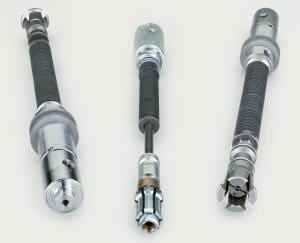 as:
as:
Our sister company, Hennig, Inc., will have their complete line of products in Booth E-5714 and W-2405.
Advanced Machine & Engineering Co., is a manufacturer located in Rockford, IL, serving the Machine Tool Industry with precision components and accessories, including spindle interface components, workholding devices, and, through our sister company, Hennig, machine enclosures, chip removal and filtration systems. The Fluid Power – Safety markets are served with cylinder rod locks and safety catcher devises; and the Production Saw market with our Amsaw carbide saw machines and Speedcut blade products. AME has manufacturing partners and customers around the world and across the U.S. To learn more, visit www.ame.com.
 Hennig, Inc. design and produces custom machine protection and chip/coolant management products for state-of-the-art machine tools. Hennig products are designed to protect against corrosion, debris and common workplace contaminants. Manufacturing facilities located in the U.S., Germany, Brazil, India, Japan, France and South Korea. Repair centers are located in Machesney Park, IL; Chandler, OK; Livonia, MI; Blue Ash, OH; Mexico City, Mexico and Saltillo, Mexico. To learn more, visit www.hennigworldwide.com.
For more information, contact:
Tim Waterman
ADVANCED MACHINE & ENGINEERING CO.
2500 Latham St.
Rockford, IL 61103
Phone: 815-316-5277
Fax: 815-962-6483
E-mail: info@ame.com
Connect with AME online: 


Integrated Sawing and Machining Center Sets New Industry Standard
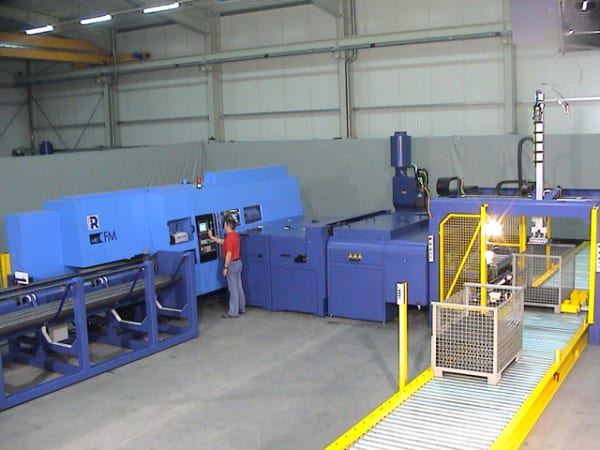
 Rattunde Corporation introduces the ACS + CFMcurve integrated sawing and machining center, an exciting new technology, at the IMTS show, McCormick Place in Chicago, from September 10-15, in the North Hall Booth #6737. A fully operational system will be producing a variety of parts, demonstrating the fully automated flexibility of this manufacturing center.
The ACS Sawing Machine is the new industry standard for cold saws. It utilizes a proprietary sawing algorithm with servo motor controlled feed to continuously adjust critical sawing parameters during each cut. The results are the fastest sawing times, best surface finish and longest blade life available on the market.
The CFMcurve machining center is a patented Rattunde process that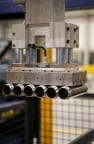 simultaneously machines each workpiece end, using 12 independent servo-controlled axes. Machining options include: threading, boring, profile turning, grooving, radius edges and angled chamfering. Programming screens guide operators for quick setup on even the most complex part geometry. No special programming is required.
Precision parts are made in one continuous process with no operator intervention. Bundles of mill length stock, up to 16.5 meters (54’) long, are placed in an automatic loader, individually separated and fed to the sawing process. Cut parts are then transferred to the CFMcurve machine for precise finishing. Utilizing advanced CNC controls, linear ball screws and servo motors, all mechanical motion is seamlessly integrated into the machine design for full process control.
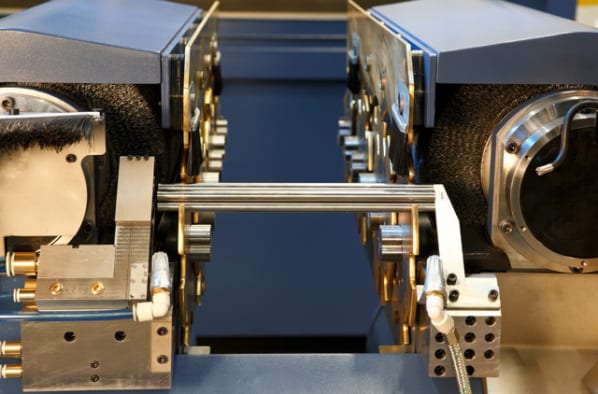 The technology incorporated on this manufacturing center delivers production rates and quality unmatched by the competition. For example, a tubular component of 70mm diameter, wall thickness of 5mm, material type ST52-3 BK, with a length of 150mm, machined with a 30 degree chamfer on the ID & OD with a faced end has a saw time of .96 seconds, a machined time of 1.86 seconds and the machine can produce 1,820 parts per hour, inspected for length and automatically packaged. Cut length tolerance of +/- 0.15mm at 1.67 CPK and a machined length tolerance of +/- 0.05mm at 1.67 CPK are maintained with consistency.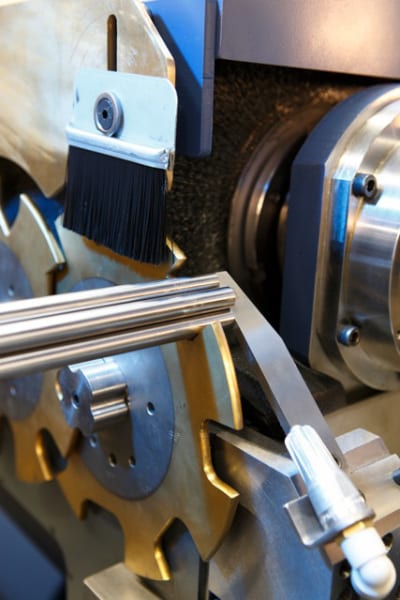
The operator interface saves part files for instant recall when changing parts. Servo motors move all cutting and machining tools to their exact positions and implement saved parameters. No tooling change is required in the ACS Saw within a diameter range of 10mm; there is a 5mm diameter range in the CFMcurve. Tooling change for the complete system takes less than 20 minutes, when necessary.
All critical sawing and machining parameters are monitored and controlled. Clamping forces and position, saw blade torque and vibration, plus machining insert torque are continuously displayed and monitored. Operating limits are set and machine functions stop when they are not met. Saw blade and tooling insert wear is predictable and consistent. Key data for each part produced are stored in memory for statistical evaluation. All guesswork is removed for the operator.
Rattunde sets a new industry standard for manufacturing with this machine, replacing slow and unreliable processes with a complete manufacturing center. Bar feeding lathe machines rely on a slow cutoff process, restrict the length of incoming stock and are not always capable of finishing both part ends simultaneously. Cutting in a conventional saw, dropping parts in a bin and eventually loading them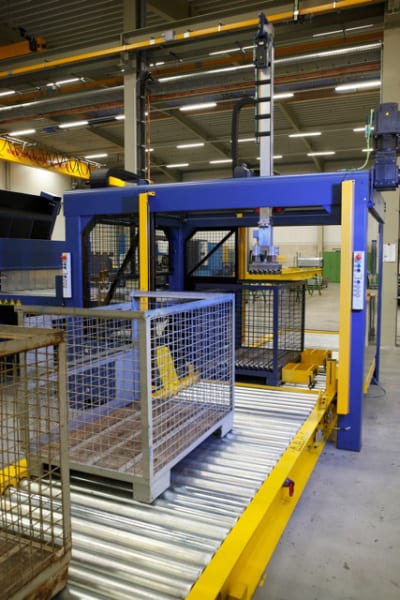 to a conventional machining center is time consuming, labor intensive and creates excess inventory with a loss of process control.
Additional processes, engineered and manufactured by Rattunde, are easily integrated with the ACS + CFMcurve, including: part inspection stations, washing and drying, automatic packaging and automatic container changing, all available to further automate customer manufacturing. The system being exhibited at IMTS will include part inspection and automatic packaging.
The ACS + CFMcurve is available in three models with diameter ranges from 10mm to 102mm, 10mm to 136mm and 10mm to 169mm, with finished part lengths from 10mm to 3500 mm. All material types can be processed.
You can watch the machine in action at:
http://www.rattunde-corp.com/tube-sawing-video.htm
For further information, please contact:
Rattunde Corporation
4980 Kendrick St. SE
Grand Rapids, MI 49512
616-940-3340
Alec Banish
IMTS PRE-SHOW NEWS…BOOTH N-6737
No. 1022 is a 550ºF, electrically-heated, two-zone, dual belt conveyor oven from Grieve, currently used for encapsulation curing of large electrical coils in fixtures at the customer’s facility. Workspace dimensions of this oven measure 8’ W x 40’ D x 18” H. 480KW (240KW per zone) are installed in Incoloy-sheathed tubular elements to heat the oven chambers, while two 20-HP recirculating blowers provide a 49,000 CFM vertical downward airflow to the workload.
This Grieve conveyor oven comprises a 2’ long open belt loading zone and 3’ long insulated, unheated entrance vestibule, two 20’ long insulated heat zones with independent recirculated airflow and temperature control, 3’ long insulated unheated exit vestibule and finally a 2’ long open unloading zone for the workpieces.
No. 1022 has 6” insulated walls throughout, aluminized steel interior/exterior and is split into two sections for shipping. Side doors along the length of the oven permit access to the workload and heating chambers. This Grieve conveyor oven is built with all safety equipment required for handling flammable solvents and is constructed to NFPA 79/NEMA 12 electrical standards.
The oven further features two 3’ wide, 1-3/16” diameter cross bar conveyor belts with 1-HP motor drive, variable from 0.5 to 9 ipm. The conveyor belt drive is used in either index or continuous mode. Removable drip pans are provided below the conveyor assembly.
Controls on the oven include separate power and control panels, plus photo eyes at the unload station to signal an alarm, if the workpiece unloading is not cleared before conveyor indexing, SCR power controller for each zone and a tower light to indicate oven status. All control functions are accessed through a touch screen HMI connected to the onboard PLC.
For more information, please contact: THE GRIEVE CORPORATION, 500 Hart
Road, Round Lake, Illinois 60073-2835 USA. Phone: (847) 546-8225. Fax: (847) 546-
9210. Web: www.grievecorp.com. Email: sales@grievecorp.com. Attention: Frank
Calabrese.
Continue reading New name to better reflect the scope of the machinery now represented throughout North America by the company
Ann Arbor, Michigan –Effective June 11, 2012, American Wera is now officially renamed German Machine Tools Of America (GMTA) and continues to represent various top-quality German metalworking machine builders, including Profilator, Pittler, Praewema, WMZ and MAE. These machines are sold for gear and spline production, vertical turning, flexible machining solutions (blank to finish part solutions), as well as bar, pipe and tube straightening plus wheelset pressing. The company’s target markets include automotive, off-highway, OCTG, rail, wind energy, aerospace and other heavy equipment manufacturing.
This announcement was made jointly by GMTA President Walter Friedrich and Vice President of Sales Scott Knoy.
“The reason for the name change is simply that the parent company wished to use a name that is more representative of all the lines we handle in North America,” said Knoy.
Originally formed as the North American subsidiary for Wera in Germany, GMTA today provides application engineering, sales and service for a broad range of machine tools and metal fabricating equipment. GMTA has representatives throughout the U.S., Canada and Mexico.
Other key company individuals include Claudia Hambleton, Treasurer; Doug VanDeven, Service/Parts Manager and Shawn Wilkin, Senior Service Engineer. Joseph Kemple remains the dedicated Product Manager for the MAE line of straightening and wheelset presses.
For more information on this announcement, please contact:
GMTA (German Machine Tools of America)
4630 Freedom Drive
Ann Arbor, MI 48108
Phone: 734-973-7800
Fax: 734-973-3053
Web: www.gmtamerica.com
Email: sales@gmtamerica.com
Attention: Scott Knoy, VP
Facebook: GMTA
Twitter: @GMTA_US
Fourth annual event to include Banner and Pioneer executives, presenting how to effectively address FDA supplier control concerns through strategic OEM/Supplier partnerships
Carol Stream, Illinois – Banner Medical executives Vince Adams, Vice-President of Sales, Marketing & Strategic Planning, and Bob Khin, Quality Assurance Director, along with Peter Johns, Supplier Quality Manager for Pioneer Surgical, will participate on a faculty panel at the upcoming Supplier Quality Management Congress sponsored by FDAnews, to be held at the Bethesda North Marriott Hotel & Conference Center in Bethesda, Maryland from July 31-August 2, 2012. The Banner Medical / Pioneer Surgical alliance has long been recognized in the industry as a successful strategic OEM / Supplier partnership formed to address the challenging supplier and raw material control issues which has been a focus of the FDA and of the Industry itself for the past decade. The partnership model, which the two companies have developed together, has produced positive results and yielded best practices that have been recognized by many and already adopted by some within the Medical Device industry.
This year’s Supplier Management Congress mark’s the fourth annual event and is designed to bring together suppliers, producers, top regulators / policy makers, legal and advisory consultants to the industry, for the purpose of assuring the integrity of Device raw materials and supply chains. FDA representatives as well a dozen other OEM and Supplier executives will participate as the faculty for this three-day event.
Attendees will include various manufacturers and suppliers to the industry, who will learn about risk management, recalls, liability issues and the new regulations recently instituted by FDA to better control the international drug and device supply chain to the medical markets.
Banner supplies medical and orthopedic device manufacturers with medical-grade materials to meet the highest quality standards. It operates two ISO 13485 and ISO 9001 certified, FDA CFR part 820 compliant facilities in Carol Stream, Illinois and Charlotte, North Carolina. The company provides its GuardiaNTM customer support solution program for supply chain management and medical materials stocking, plus its AssuraNce® protocol that assures all products made for the medical market are produced on equipment validated per the FDA requirements. Banner’s EsseNtial Quality SystemsTM is a patent-pending IT-based quality program that manages the company’s materials selection and production processes to deliver medical-grade bar and plate stock.
Banner Medical is a strategic business unit of Banner Services Corporation, a provider of precision ground bar as well as centerless grinding, turning and straightening, among other machining services.
For more information on this development, please contact:
BANNER MEDICAL 494 East Lies Road,Carol Stream, IL 60188-9425
Phone: 800-323-9732
Fax: 630-653-7555
Web: www.banner-medical.com
Email: getinfo@banner-medical.com
Agency contact:
Tim Daro or Wendy McCormick
Bernard & Company
847-934-4500
tdaro@bernardandcompany.com
wendy@bernardandcompany.com
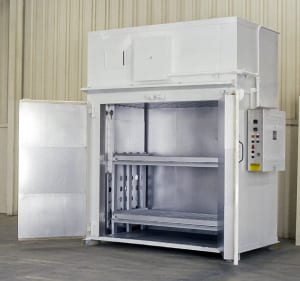 No. 951 is a 650ºF, electrically-heated, walk-in oven from Grieve, currently used for preheating large steel molds at the customer’s facility. Workspace dimensions of this oven measure 72” W x 42” D x 72” H. 60KW are installed in Incoloy-sheathed tubular elements to heat the oven chamber, while a 4200 CFM, 3-HP recirculating blower provides a combination airflow to the workload.
This Grieve walk-in oven features 5” insulated walls, top-mounted heat chamber, aluminized interior and exterior plus a free-standing oven rack with two 6000 lb. capacity shelves for the workpieces.
Controls on No. 951 include a digital indicating temperature controller, manual reset excess temperature controller with separate contactors and recirculating blower airflow safety switch.
For more information, please contact: THE GRIEVE CORPORATION, 500 Hart
Road, Round Lake, Illinois 60073-2835 USA. Phone: (847) 546-8225. Fax: (847) 546-
9210. Web: www.grievecorp.com. Email: sales@grievecorp.com. Attention: Frank
Calabrese.
Continue readingBill Hunter assumes 100% ownership of pioneering company in automatic matchplate molding machinery for sand casting
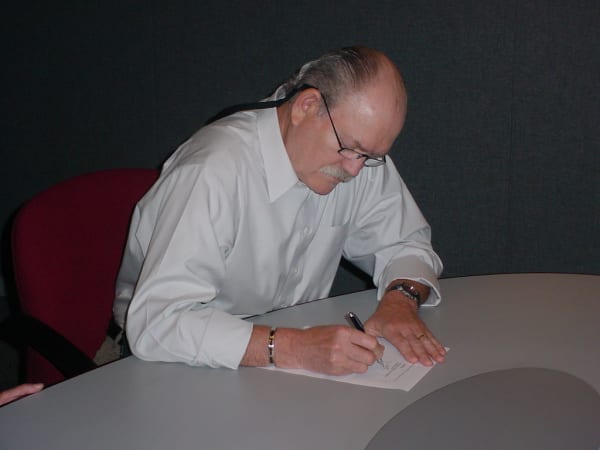
Bill Hunter signs agreement to obtain 100% ownership of the company
Schaumburg, Illinois (USA)-Hunter Automated Machinery today announced the completion of an asset buyout of the company and all its foreign subsidiaries by current President Bill Hunter. In his words, “We have successfully crossed the bridge of generational transition with this arrangement.” Mr. Hunter bought the assets of the company held by his three sisters, Dianne, Linda and Heather. All were the children of Al Hunter, the late founder of the company that began building the automatic matchplate molding machine Al invented, in 1964. Today, Hunter machines and mold handling lines are operating in foundries worldwide. Hunter operates plants in the USA, Brazil and China. The company has European headquarters in Italy and regional offices in India.
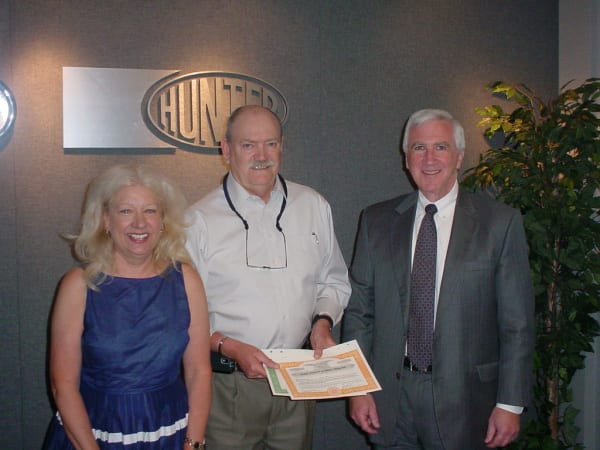
Karen Hunter, corporate secretary, Bill Hunter, president and John Purtill, corporate attorney at signing
Bill Hunter noted, “I am very thankful to my sisters, who worked closely with me on this agreement, allowing us to keep the company in the family. Likewise, I will always honor the memory of my father, who taught me much about this business and left a legacy of innovation and achievement in the global foundry market. We fully intend to continue and build on the company’s long-standing traditions of technology, quality and service to the industry.”
The agreement was finalized on June 27, 2012.
For further information on this announcement, interested parties may contact:
HUNTER AUTOMATED MACHINERY CORPORATION
2222 Hammond Drive Schaumburg, IL 60196
Phone: (847) 397-5110
Fax: (847) 397-8254
Email: info@hunterfoundry.com
Attention: Bill Hunter, CEO
Web: www.hunterfoundry.com
Connect with Hunter Foundry online: 
Texas foundry buys new equipment, including Hunter XL matchplate molding machine, to respond to customer needs with fast pattern changes, shorter runs and on-the-fly flexibility in job scheduling, deliveries
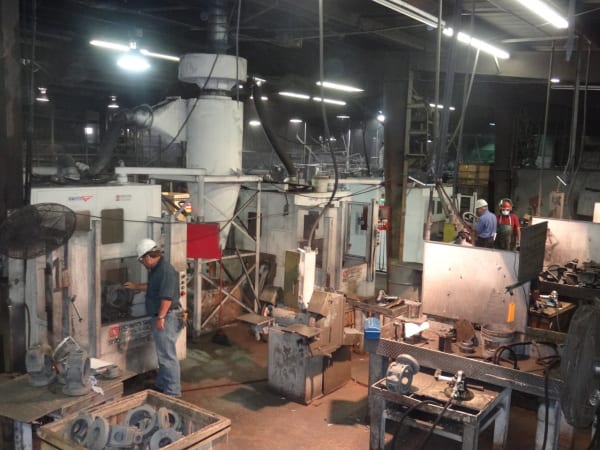
Schaumburg, Illinois (USA)-In the heart of Limestone County sits Coolidge, Texas, halfway between Dallas and Houston. This classic American small town is home to another classic, Frazier & Frazier Industries, a ductile and gray iron foundry, established in 1972 by C.W. Frazier as a traditional cope-and-drag sandcasting operation with two squeezers and run today as a formidable shop by Plant Manager Will Frazier. An ISO 9002 Certified process operation, F&F combines the best of the old ways with the newest casting technologies and equipment in the market. As Will Frazier points out, “This is one of the biggest reasons we’ve continued to prosper, while so many other foundries have disappeared. We recognize what works and what doesn’t, to best suit our current business and market conditions.”
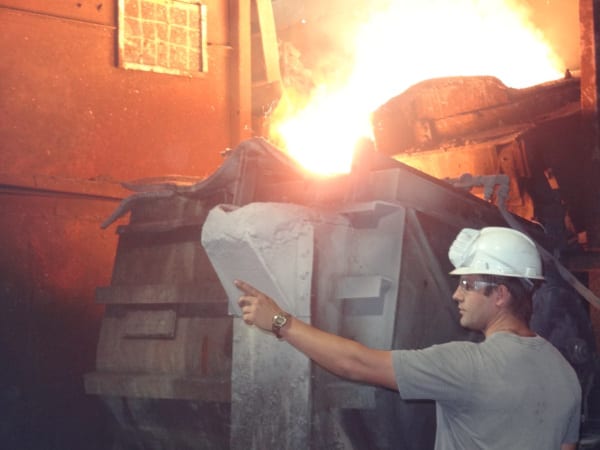
Once a heavy production shop, F&F today continues to support their large batch customers, but has reshaped the business model in many ways, according to Frazier. “We have traditionally worked in pieces from a few ounces up to 150 pounds or more. The large runs were more typical in days past, while we saw a new business environment emerging, several years ago, when the market began to decline overall.” He continued to explain how many of the company’s traditional customers began to reduce their inventories and thus placed shorter run orders with much tighter lead times. In something of a “perfect storm” scenario, this combination of increased job numbers and more urgent shipping requirements literally changed the pace of business at F&F. Frazier notes, “It’s not unusual for us to come in on a Sunday to finish a job for a customer who really needs it…and we rarely charge a premium, because we know how tough things are, for most of our accounts.”

While the oil & gas market applications are prominent here, as they are with most foundries in the region, F&F currently sells to end product manufacturers for the automotive, agricultural, wind energy, municipal water works and other market segments, a strategy that has helped to maintain a better balance in this shop’s workload. With its own sales force plus several manufacturers’ rep organizations in the field, Frazier & Frazier boasts customers in a wide variety of markets and as far away as Indiana, a relatively rare achievement in the foundry business, especially when larger, heavier workpieces are involved.
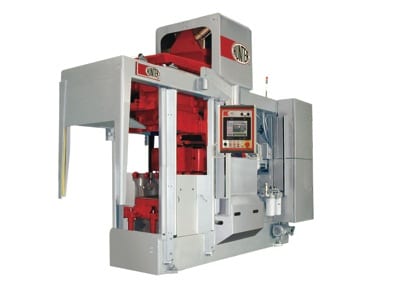
With over 8000 patterns in-house, F&F today experiences as many as 15 pattern changes per day per machine on the floor. This further complicated the job scheduling and work flow. Will Frazier and his team of Bob Pranger, general manager and Harlon Easton, vice president of sales, quickly saw the need for more automation in the machinery lineup.
F&F still does hand-rammed oil and air set cores, but over the years they’ve acquired automatic coresetting equipment, as well as automated molding machines, including the most recent purchase, a Hunter XL2024 automatic matchplate molding machine, which is used with the already in-place Hunter mold handling turntable system at F&F, as are other molding machines here. Three melting units feed the certified chemically correct iron to the molding stations. Currently, this shop does approximately 70% of its work in ASTM Class 60-100 ductile and 30% in Class 15-50 gray iron.

The XL2024 is a fully automated matchplate molding system, using gravity-fill technology pioneered by Hunter. It produces sand molds up to 20” x 24” with shallow 6-1/2” cope and 5-1/2” drag (165mm/140mm) at 180 cycles per hour, using 400 lbs. (181kg) of sand. Variable squeeze surface pressures to 142 psi (10kg/cm2) can be achieved in production.


This latest Hunter machine continued the tradition of leading-edge sandcasting technology used at Frazier & Frazier. Although several generations of Hunter and other brands of machines have been used here, when a new machine was planned, Will Frazier notes there were some key criteria to be met. “We’d been having critical problems with another machine builder, getting parts and service. We always knew the Hunter folks were excellent in those areas based on past experience, plus they were willing to provide considerable application engineering assistance and set-up help with the new machine. Coupling that with their stability as a company and great reputation in the world foundry market, we looked at all our options and settled on the XL2024.” Frazier further cites his long relationship with Hunter’s Mike Hughes as a factor. “Mike came down here several times to help us and, since the machine has been up and running, he’s stayed in close touch with us, even though we’ve had no performance issues with the machine.”
Will Frazier also points out that, currently, over 20% of the orders at F&F are rush and the quick changeover time of the Hunter machine makes it a highly productive piece of equipment and a definable competitive advantage in the market for his shop.

Frazier & Frazier provides its customers with metal castings as well as CNC machining, heat treating and galvanizing services, when needed. The shop has a fully equipped quality inspection department, highlighted by CMM and other state-of-the-art lab apparatus.
For further information on this story, interested parties may contact:
FRAZIER & FRAZIER INDUSTRIES, INC.
817 South First Street P.O. Box 279
Coolidge, Texas 76635 USA
Phone: 254-786-2293
Fax: 254-786-2284
Web: www.ffcastings.com
Email: willfrazier@ffcastings.com
Attention: Will Frazier, Plant Manager
Or
HUNTER AUTOMATED MACHINERY CORPORATION
2222 Hammond Drive Schaumburg, IL 60196
Phone: (847) 397-5110
Fax: (847) 397-8254
Email: info@hunterfoundry.com
Attention: Bill Hunter, CEO
Web: www.hunterfoundry.com
Connect with Hunter Foundry online:
Minnesota foundry includes multiple layers from their organization to decide on the right casting process simulation tool
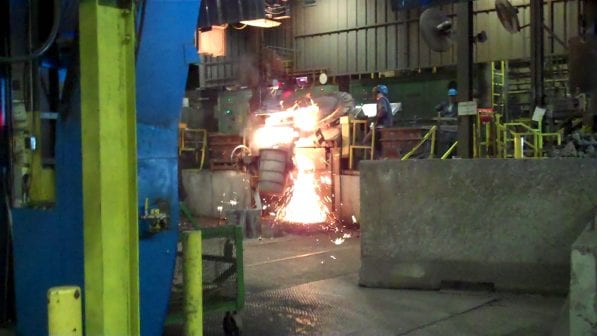
Wide view of Dotson Iron Castings in action
Dotson Iron Castings in Mankato, Minnesota is an iron foundry that melts and pours 100+ tons of ductile iron castings daily, using 20X24 horizontal, high pressure, green sand molding machines. Products include over 3,000 different castings for over 300 customers in a wide range of applications including medical, transportation, agriculture, construction and recreation equipment. The raw casting weights here range from 2 to 50 pounds with typical production quantities ranging from 25 pieces to several thousand.
Dotson prides itself on engineering excellence, providing customers a higher total value with castings designed and produced in a highly automated, quick response foundry and machining facility.
Operating as a foundry for over 130 years, Dotson credits its success to satisfying customer needs by not only managing, but exceeding, their expectations. The goal is to provide customers with quality products in a fast, flexible, cost effective manner.
As a company best practice, Dotson includes its employees in making all important decisions that will impact not only the job of each of the individuals, but the foundry as a whole. Dotson has a program called, “The $10,000 Project.” As the name implies, any purchase made by the foundry of $10,000 or more is done through a detailed process involving the employees who will be most affected by the purchase of the product or equipment being considered.
Any product or project that costs over $10,000 must have a cross-functional group examine all viable options. Members of the group choose what they consider the best product or piece of equipment to help them accomplish their goals. They then make onsite visits, make comparisons and do cost justifications. With the information they have gathered, they then make multiple presentations to the group explaining the “what” and the “why” of the product, equipment or service they have chosen for consideration.
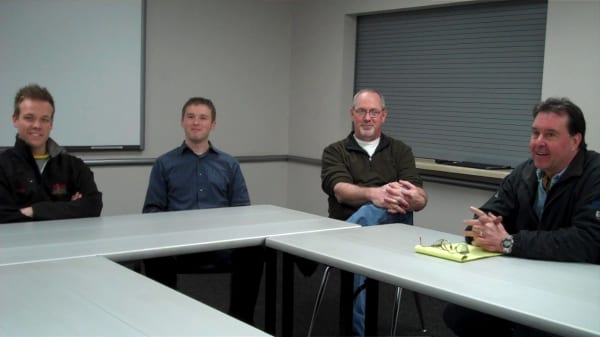
John Jaycox, Bradley Wiyninger, Jim Headington and E. Jay Zins discuss MAGMASOFT® at Dotson
When Dotson’s owner Denny Dotson and President /CEO Jean Bye wanted to expand their capabilities in terms of serving customers with solidification solutions, MAGMASOFT®, provided by MAGMA Foundry Technologies (Schaumburg, IL) was one of the many software packages considered. “We certainly are a foundry that differentiates ourselves on our engineering services and to do that you must have the right tools,” Jean Bye said. “We researched and explored our options for a few years before making the decision to purchase simulation software for the foundry,” Denny Dotson adds.
The $10,000 Project is a lengthy process with the participants sometimes making three or four presentations to support their argument. Deciding on the simulation software that best supported the needs of this foundry took a long time, due to the importance of doing numerous comparisons. When comparing the benefits of all the products being considered, “…it came down to weighing out the factors and deciding which ones would have the greatest impact on the overall foundry operation,” Bye stated.
When the $10,000 Project is complete and a decision has been made, nobody can say they weren’t onboard. “They might not have gotten their way,” Bye notes, “but they certainly understand all the reasons why the decision was made, because it was well thought out by the entire group.”
Dotson saw the addition of simulation software as more then just an engineering tool; rather it represented a smart business tool specifically designed to improve yield as well as positively impact sales. There was a lot to consider in the justification process beyond the product’s capabilities. Ease of use, speed of use, accuracy of results, presentation of these results, reputation of the provider’s company, customer care, quick response time from company representatives when there was a question or assistance was needed, as well as which company Dotson felt was more technologically advanced with new innovations. In addition, a significant benefit Dotson saw with simulation was the ability to identify jobs that would require some type of stress relief before actually making the tool or gating system. “It’s much more difficult to go back to the customer after the fact and tell them this is your cost, than it is before you cut the tool. There are always options before anything is created,” Engineering Process Manager Jim Headington points out.
“Moving from opinion or educated guess to a factual report supporting changes has made it quicker and easier to communicate the need for making changes with our customers,” adds Jay Zins, Control Manager at Dotson.
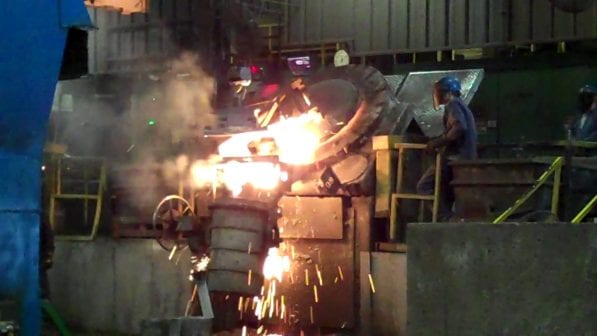
Live shot of Dotson in action
When discussing the impact simulating the process has on time to first quality part, Headington explains, “Time isn’t always the most important issue at hand. Cost and the integrity of the tool by the time you’re done with it are the real keys. When you find yourself adding material to a production tool, it’s never a good thing. Once you scab on that material, no matter how you put it on, you’ve really jeopardized the integrity of the tool. This is all now done virtually, instead of through trial and error.”
On one recent customer project, Dotson ran approximately 30 virtual iterations on a particular part. Not only did having the ability to simulate the entire molding process save a significant amount of time, being able to run a large number of iterations also helped them be sure that the quality of the part was not compromised. “Once in a while, on projects like this, we do 30 simulated iterations, simply because we now can,” Josh Jaycox, Quality Assurance Engineer adds.
While all new jobs at Dotson are run through MAGMASOFT®, retro jobs, especially the high yield jobs, are also now simulated. A significant part of the justification process was improving yield. When considering yield improvements, Dotson recognizes that the improvement in the first year will normally be significant, as they hadn’t run simulation before, whereas moving forward, improving yield would be less significant, as all new jobs are now run through the simulation and, as a result, are more efficient from the very beginning. “Running the software on a casting will also help us see that it may be possible to make a riser smaller, this will help in de-gating and reduce grinding time.” Jaycox said.
Sales and Marketing Manager Matt Schindle adds, “The benefit to the customer is that they know we are not going to build a tool, we are not going to spend a dollar of their money, until we have done the solidification on it. It gives us more credibility and it gives the customer reassurance.”
“It’s almost like having a third party in the room giving our observations credibility,” Bye adds.
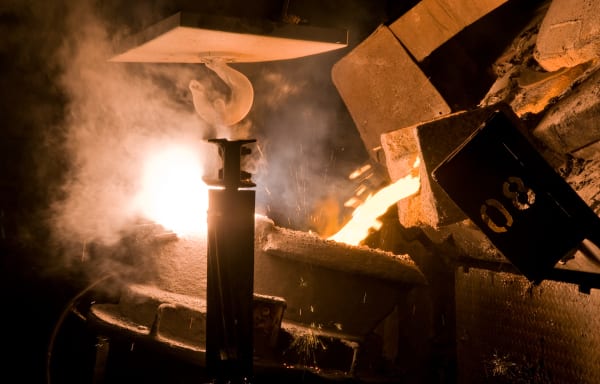
Furnace at Dotson Iron Castings
Seeing the importance of being sure their foundry and their engineers have the tools to be the best they can be, Dotson found the addition of MAGMASOFT® to be a natural next step. When considering the in-depth justification process and the criteria involved in bringing a new product or tool into the foundry, they learned their decision regarding process simulation to be a great benefit to the company overall. Dotson realizes customers now expect and rely on the fact that their parts are run through this virtual process with the end result being the highest quality castings possible.
Choosing MAGMASOFT®, Dotson believes all their performance and value criteria were met and, in many cases, even exceeded. MAGMA’s reputation in the world foundry market and their customer care program, as well as the added benefits of their training programs and annual user group meetings, help Dotson feel more confident in their partnership with MAGMA, according to Jaycox and Headington.
For more information on this story, please contact:
Christof Heisser
President
MAGMA Foundry Technologies, Inc.
10 N. Martingale Road, Suite 425
Schaumburg, IL 60173
Phone 847-969-1001 ext. 225
Email cheisser@magmasoft.com
Web www.magmasoft.com
Machining center used at University of Hawaii Institute For Astronomy to produce one-off diffraction gratings for remote sensing instruments used with telescopes and other research instrumentation
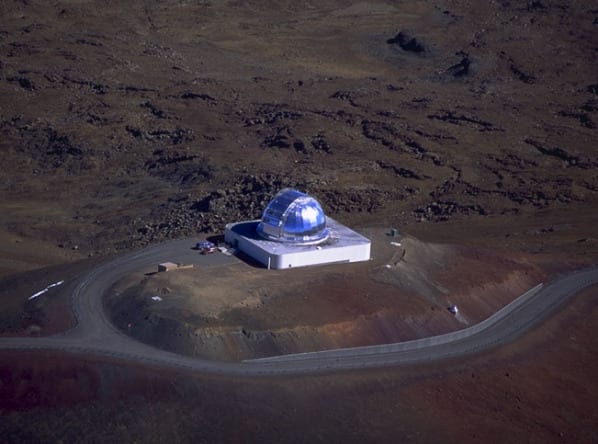
University of Hawaii Institute For Astronomy telescopes are able to see the solar system and into deep space with greater clarity than at any other location on the planet, according to Dr. Ritter.
When you enter the laboratories at the University of Hawaii’s Maikalani Institute For Astronomy (IFA) Advanced Technology Research Center on the island of Maui and hear talk of light years, dark energy and space telescopes, it quickly becomes apparent that this is not your typical machine shop. The machining for instrumentation developed here involves some of the most sophisticated techniques on Earth, which is a pun of cosmic irony, as the workpieces produced here are primarily used to help evaluate happenings in deep space.
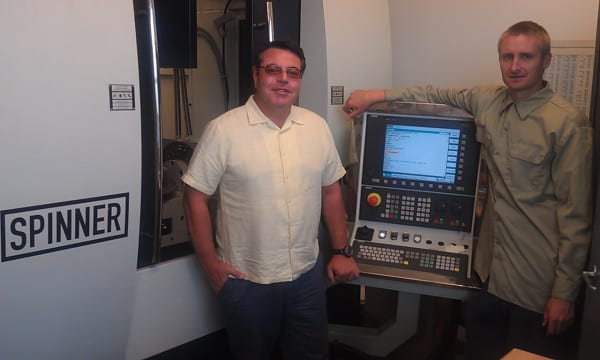
The Maikalani facility provides laboratory workspace for Physicists and Astronomers performing advanced 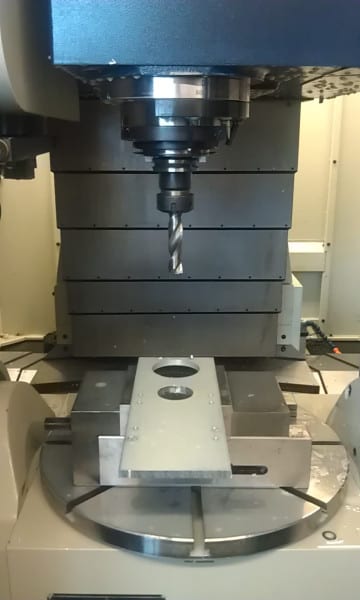 metrology and optical fabrication, novel optics design, optical/infrared sensor development and a creative workspace. Maikalani literally means, “knowledge we gain from the cosmos.” As the Lab Director, a world-class physicist, Dr. Joe Ritter explains, “At the IFA, our excellent staff and faculty invent, design and build novel instruments for use in state of the art telescopes. Among other technologies, we are working to develop a novel generalized conformal diffraction grating. Gratings are optical components used to split light into component colors for the study of the chemistry of stars.” Ritter and his assistant John Valliant are also the machinists. They exchange their hats from physicists to milling machine operators, using a Spinner MC650-5A, equipped with Sinumerik 840D solution line CNC, to produce parts from high-conductivity copper and aluminum 6061-T6 grades, among other alloys.
 Since the Spinner is used at the IFA exclusively for precise one-off parts, the search for the right machine focused on equipment that had among the industry-highest standards of accuracy and precision. The novel conformal gratings under development at the lab are designed with variable pitch and spacing dimensions to correct optical aberrations and also focus and split infrared light for future deep space spectroscopy instrumentation.
As Ritter explains, “Accuracy is everything in optics. Most of the machining centers I evaluated were in the +/-25 micron (~0.001”) range for accuracy. We settled on a 3+2 axis machine with 100 nanometer precision scales with interferometric remapping on the 840D sl CNC. Because we do experimental fabrication work and optics typically need to be made to micron level tolerances, it was imperative to have a feedback control on the machine tool with a known accuracy and predictable degrees of variation.” As an example, though not suitable for visible light, the optics Ritter discussed required accuracies of a few microns-good enough for infrared optics. Other technologies being developed by Ritter at IFA include novel photonic meta-materials for future space telescopes intended for studying exoplanets and the evolution of our universe.
Dr. Ritter cited the age-old challenge for educational  and research institutions, when searching for such precision machinery, namely, budget constraints. In this case, the lab was fortunate, according to Ritter, as they became aware of a demo machine from Spinner, available from Lois Hill and Robert “Mac” McPherson of MacHill Machinery in South Carolina. During the purchase and commissioning, Ritter emphatically noted, “The Spinner technician Herr Siegfried Jungk, who trained us, was exceptionally talented and particularly knowledgeable and helpful. Ritter also noted that the Siemens ShopMill software included with the CNC package, was “…an easy-to-use program for getting the multi-axis machining up and running for basic drilling and facing.”
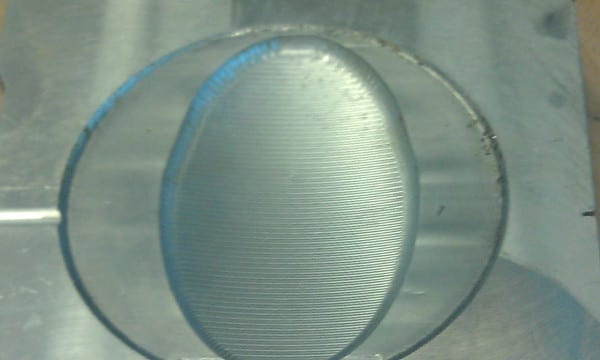
Sample parts produced on Spinner machine, mostly copper and aluminum, include many that become diffraction gratings used on highly sensitive instruments for deep space exploration projects
While invariably the smart guys in any room, Dr. Joe and John Valliant are not machinists by trade, so they were using both Shopmill and CAD/CAM programs like Mastercam with the highly-specialized G-code generator and post-processor needed to create precision path cuts, then running them directly on the mill to quickly begin cutting, an absolute necessity in their one-off world of custom parts.
“For some optics, the millions of coordinates we use for every workpiece are pushing the control to the limit, but it responds well. Plus, the teach-in functionality of the Sinumerik 840D sl CNC and its software package keep us running very efficiently,” according to Valliant, who worked in the lab as a University of Hawaii-Maui college student and has learned CNC machining on the go. In an environment where 0.1 of a wavelength of light is the desired target for accuracy, this is no small achievement. Valliant adds, “Once you’re comfortable with this machine and the control, the process is very intuitive.”

Photo Credit: Rob Ratkowski
Dr. Ritter, who is constantly pushing the boundaries on novel orbital space telescope designs, notes that the state of Hawaii and the island of Maui in particular have some of the best conditions on Earth for nighttime telescopic observation, as well as the best in the world for daytime solar viewing. The National Science Foundation will soon build the world’s largest solar telescope on Maui. Maui is a little known hotbed of technology development. In addition to solar research and deep space observations, the Institute for Astronomy partners with many nations to push the boundaries of human knowledge, while training future scientists.
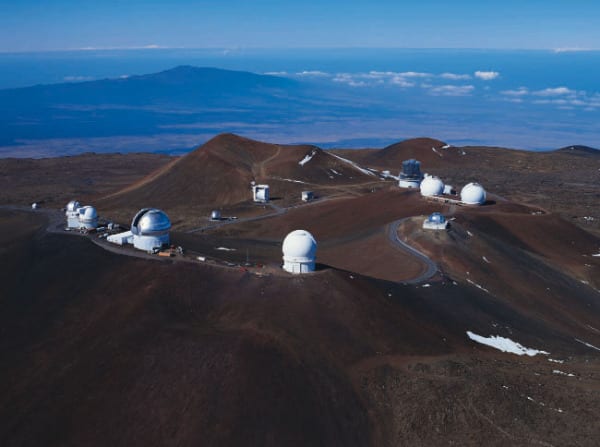 Currently, the Institute is engaged in developing technology to make other new scientific discoveries possible. They include the largest camera on earth, new high contrast off axis telescopes, instruments using electronic cameras and spectrographs for the telescopes on Mauna Kea, Haleakala and, in Chile, detectors such as ultra-sensitive mega-pixel infra-red CCD arrays, plus adaptive optics to help overcome the image blurring caused by Earth’s atmosphere. Knowledge gained from the cosmos depends on maintaining Hawaii’s dark skies. Another initiative by Ritter, who chairs the Maui County Outdoor Lighting Committee, includes the development of novel efficient low light pollution outdoor and street lighting to preserve endangered species sea turtles and migrating seabirds as well as to preserve dark skies for Astronomy (see www.EcoScienceLighting.com).
Mac McPherson, the Spinner machine dealer and importer for North America, adds, “We do  considerable business with academics and it’s always challenging, owing to the unique nature of their machining needs. In this case, an optic grid pattern with high accuracy was the biggest hurdle. We were able to supply the Spinner demo machine within budget and with the proper tooling included. The lab actually built their own custom fixturing for their work and Siemens helped to develop a special post-processor program.”
“Na Kilo Hoku” means “the watchers of the stars” and the instrument components made here certainly help them do just that — and also gain knowledge from the cosmos for us all.
For more information on this story, please contact:
Joe Ritter, Ph.D
Physicist and Lab Director
University of Hawaii Institute For Astronomy
Maikalani Advanced Technology Research Center
34 Ohia Ku St.
Pukalani, HI 96768
Phone: 808-573-9521
Web: www.ifa.hawaii.edu
Or
Robert McPherson
MacHill Machinery Solutions, LLC
(dealer for Spinner machines)
2245 C-132 Ashley Crossing Drive
Charleston, SC 29445
Phone: 843-873-6888
Web: www.machillmachinery.com
Or
SIEMENS INDUSTRY, INC.
DRIVE TECHNOLOGIES
MOTION CONTROL
MACHINE TOOL BUSINESS
390 Kent Avenue
Elk Grove Village, IL 60007
Phone: 847-640-1595
Fax: 847-437-0784
Web: www.usa.siemens.com/cnc
Email: SiemensMTBUMarCom.sea@siemens.com
Attention: John Meyer, Manager, Marketing Communication
Follow us on Facebook: www.facebook.com/SiemensCNC or Twitter: www.twitter.com/siemens_cnc_us.
—
Siemens Industry Sector is the world’s leading supplier of innovative and environmentally friendly products, solutions and services for industrial customers. With end-to-end automation technology and industrial software, solid vertical-market expertise, and technology-based services, the sector enhances its customers’ productivity, efficiency and flexibility. With a global workforce of more than 100,000 employees, the Industry Sector comprises the Industry Automation, Drive Technologies and Customer Services Divisions as well as the Metals Technologies Business Unit. For more information, visit http://www.usa.siemens.com/industry.
The Siemens Drive Technologies Division is the world’s leading supplier of products, systems, applications, solutions and services for the entire drive train, with electrical and mechanical components. Drive Technologies serves all vertical markets in the production and process industries as well as the infrastructure/energy segment. With its products and solutions, the division enables its customers to achieve productivity, energy efficiency and reliability. For more information, visit http://www.usa.siemens.com/drivetechnologies.
Continue reading