Contact us today:

(847) 934-4500
tdaro@bernardandcompany.com
Contact us today:
(847) 934-4500
tdaro@bernardandcompany.com
 Guill Tool, the global leader in extrusion tooling, has hired a new sales representative firm. Located in Roswell, Georgia, JCM Plastics Machinery is a plastics and rubber manufacturing equipment representative, covering the Southeastern U.S. territory.
Joseph Guigli, the company’s President/Owner, holds a B.S. in Mechanical Engineering from the University of Vermont. After graduation, he started working at Davis Standard in Pawcatuck, Connecticut. For the next 17 years, Guigli held various positions within the company ranging from mechanical engineer, screw designer, product manager, to regional sales manager and then Vice President of sales for the North American aftermarket.
Covering North Carolina, South Carolina, Georgia, Tennessee and Alabama, Guigli’s primary responsibility is to sell the extrusion product portfolio to existing and new customers. This includes “… providing these customers with the best buying experience possible from the time a project is kicked off until the customer is successfully using the equipment.”
When asked what he enjoys the most about working with Guill and his hopes regarding his role, Guigli said, “Guill has a strong name in the market, and they make a good product. I’m happy to be attaching my name and my company to Guill because of these reasons. I hope to bring my almost 20 years of industry experience to the customer base here in the Southeast.”
In addition to the rubber and plastics extruder market, Guigli also serves the construction, infrastructure, medical, food, industrial packaging and home care products markets.
For more information, please contact:
Tom Baldock, Sales Manager, Extrusion
Guill Tool & Engineering
10 Pike Street
West Warwick, RI 02893
USA
Phone: 401-465-5526
tbaldock@guill.com
Continue reading
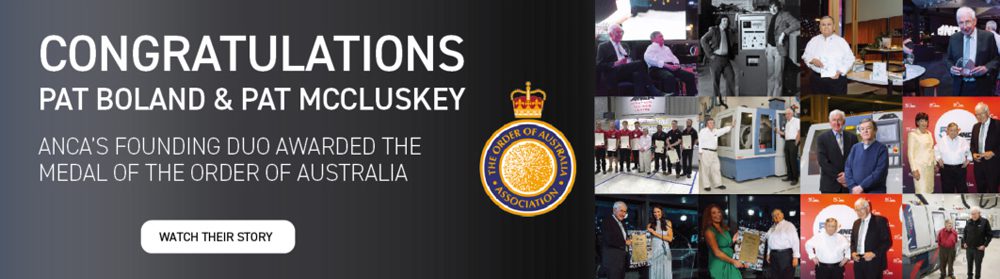
Australian Technology Pioneers Share Their Inspiring Story in a Heartfelt Video Retrospective
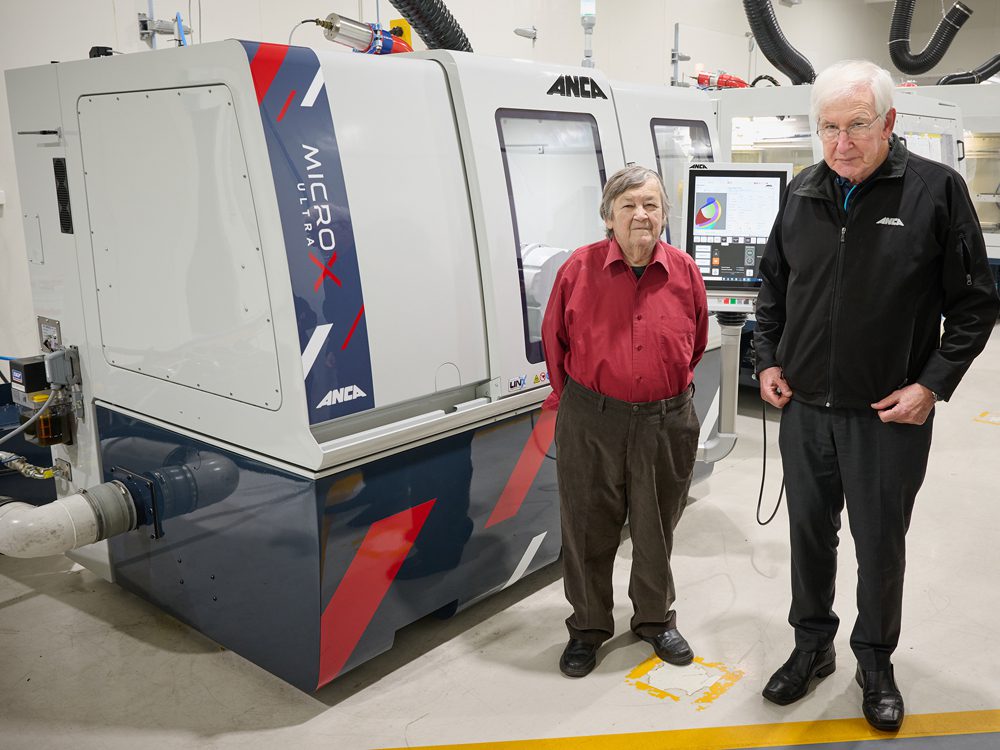
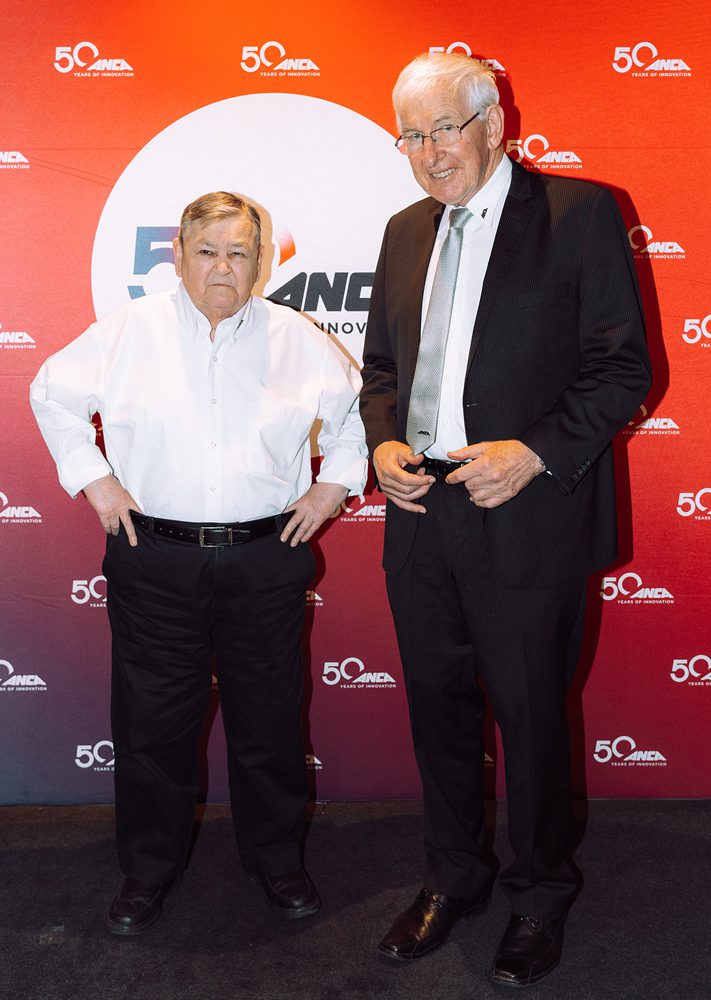
ANCA, an Australian advanced manufacturing leader, proudly announces that its co-founders, Patrick Boland and Patrick McCluskey, have been awarded the Medal of the Order of Australia (OAM) in the 2025 Australia Day Honors List. Known as “The Two Pats,” their visionary leadership has propelled ANCA to the forefront of global technology, demonstrating that advanced manufacturing can not only thrive in Australia but also contribute to high-value products, international competitiveness, meaningful careers, and sovereign industrial capabilities.
The dynamic partnership of Boland and McCluskey, combining academic expertise and practical ingenuity, has driven ANCA’s success for over 50 years. Their passion for innovation and engineering excellence has led to the development of world-first technologies that have revolutionized the cutting-tool industry. Notable innovations include groundbreaking in-machine measurement that disrupted and shaped the market, setting new standards in precision manufacturing.
Success didn’t come overnight. By targeting a niche global market, adopting robotics, and applying innovative solutions to the machine world—long before the internet era—they brought their ambitious vision to life. Today, ANCA continues to lead the industry, driven by a culture of innovation, talent investment, and a commitment to “dreaming and having fun.”
Patrick Boland OAM, who holds a Master’s in Electrical Engineering from Melbourne University, is one of a handful of life members of the Australian Manufacturing Technology Institute Limited (AMTIL). He served as AMTIL’s President from 2010 to 2016 and was a founding member of the Future Manufacturing Industry Innovation Council from 2008 to 2014.
Patrick McCluskey OAM, the practical and design-focused counterpart, began his career as an apprentice working on fuses and radios. Today, he leads the mechanical design of ANCA’s advanced machines and mentors the engineering team, fostering the next generation of innovation. He also spearheads ANCA’s apprenticeship program, emphasizing the company’s commitment to skill development. In his spare time Pat wrote and self-published a memoir ‘Trust’* detailing his early beginnings growing up in a Ballarat orphanage to his move to Melbourne with a Diocesan Scholarship through to starting his apprenticeship with Department of Supply.
“This is an incredible honor,” said Patrick Boland. “I see it as recognition of the work ANCA has done over 50 years to sustain an advanced manufacturing business in Australia. By competing on smarts and riding the wave of technology, we’ve achieved an incredible journey filled with immense fun.”
Patrick McCluskey added, “ANCA is my life, and this award validates the countless hours, challenges, and triumphs that have shaped our journey. I’m thrilled to have built a company of over 1,300 people recognized globally for its technology solutions. From apprentices to seasoned professionals, I’m grateful to have them as part of our team.”
The awards coincide with ANCA’s 50th anniversary and the co-founders’ 75th birthdays. With 13 registered patents and three pending, including a recent patent for a Motor Temperature Control algorithm in the U.S. and China, ANCA continues to lead the field in advanced technology. Headquartered in Melbourne, ANCA’s offerings include CNC tool and cutter grinding machines, laser markers, automation solutions, motion controls, and manufacturing services. These technologies are critical to industries such as automotive, aerospace, electronics, medical devices, and cutting-tool manufacturing.
Investing 10% of profits into research and development, ANCA is committed to fostering STEM talent through partnerships with RMIT, Melbourne, and Monash universities. Its robust apprenticeship programs further strengthen Australia’s skilled workforce, ensuring groundbreaking innovations continue to emerge from this “hidden gem” of Australian manufacturing.
Hear directly from Patrick Boland and Patrick McCluskey about their journey and legacy: Watch the video
* Catherine Butterfield ghost wrote the memoir Trust with Patrick McCluskey
ANCA is a world-leading manufacturer of CNC grinding machines, motion controls, and advanced manufacturing solutions, employing over 1,300 staff globally. With a legacy of 50 years of innovation, ANCA designs and manufactures cutting-edge products in Melbourne, Australia, exporting 99% of its products to over 50 countries. The company has offices worldwide, including the UK, Germany, China, Thailand, India, Japan, Brazil, Korea, and the USA, supported by a comprehensive network of representatives and agents.
Two AS/AR systems leaders join forces
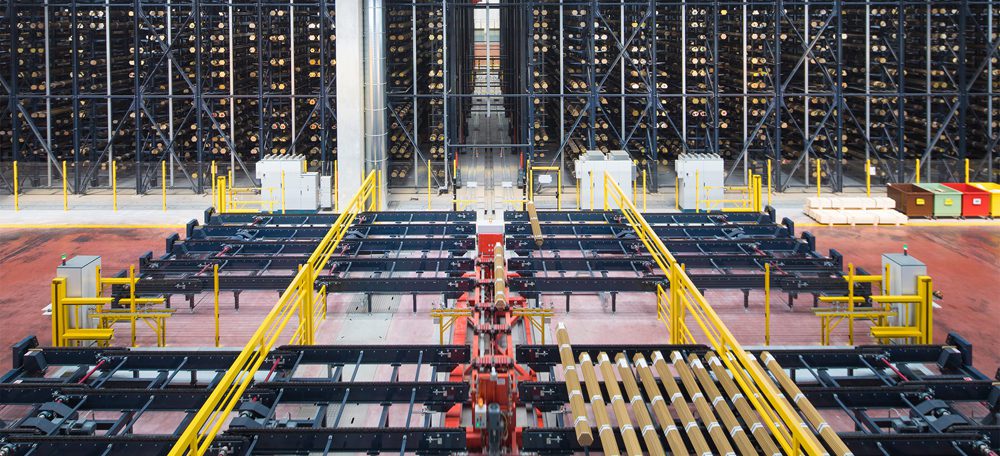
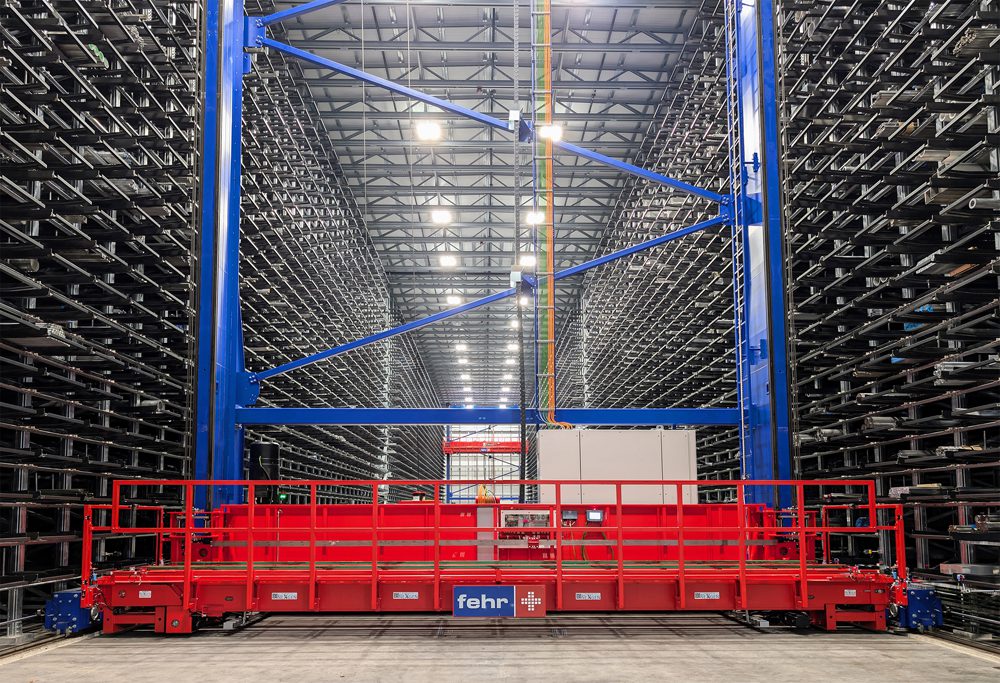
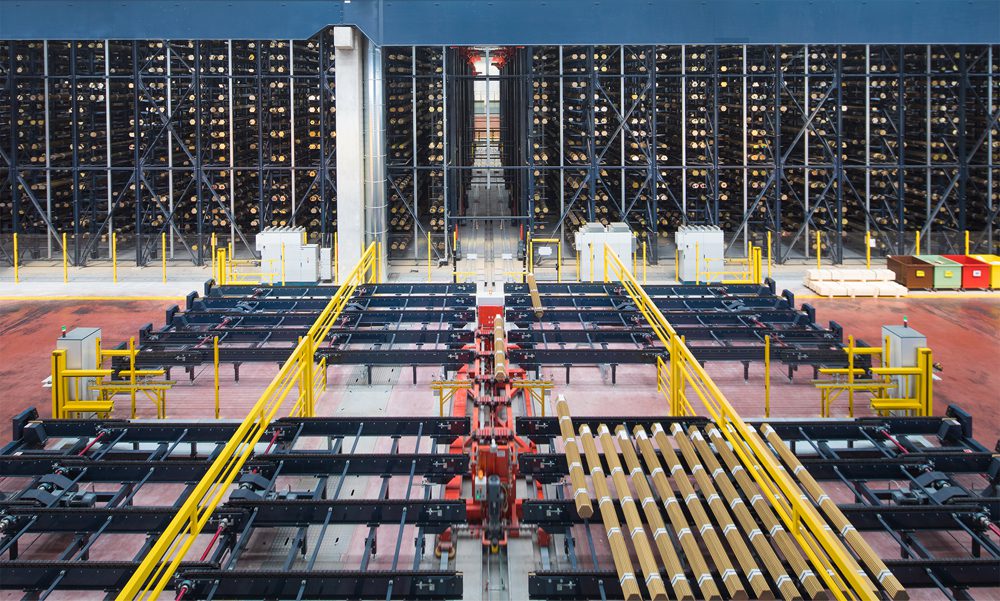
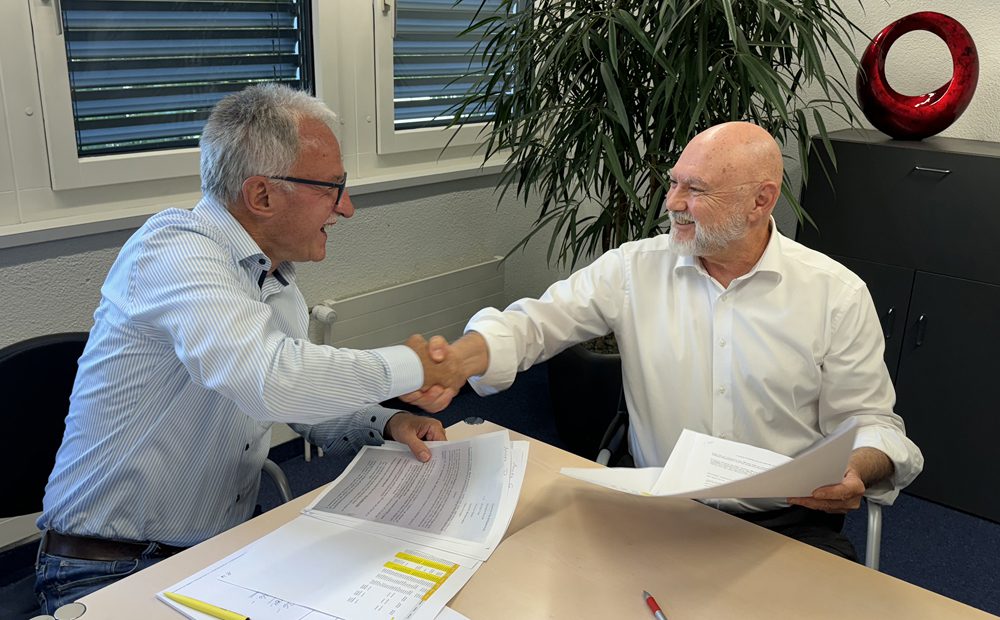
The majority shareholder of Fehr Lagerlogistik AG in Winterthur, Switzerland, today announced the acquisition of Matter srl in Italy. Both companies are global leaders in AS/AR systems for intralogistics in a variety of metal and other market segments, from mills to service centers, large production companies to job shops. According to majority shareholder CEO Thomas Lehner of Fehr, “We see this acquisition representing a new day in AS/AR for industry. Together, we can offer a comprehensive range of equipment and services to the market.” The acquisition was finalized between the company management teams on October 31, 2024.
Fehr, founded in Switzerland in 1949 by Hans Fehr, is today owned by the Lehner family. From warehousing logistics, through automation and special handling functions, the Fehr team of experts ensures a smooth movement of materials from stainless steel, tool steel, tube & pipe, aluminum, plastic or wood and other specialty materials handling needs, for its customers. Fehr systems are available in various configurations and offer robotic materials handling, automated sheet and long product picking, robotic saw cells and laser-guided loading/unloading.
Fehr operates numerous production facilities and warehouses worldwide. The company’s honeycomb system is considered one of the fastest AS/AR systems in the market for large quantities. Fehr Warehouse Solutions in Charlotte, North Carolina is the North American base of operations for the company.
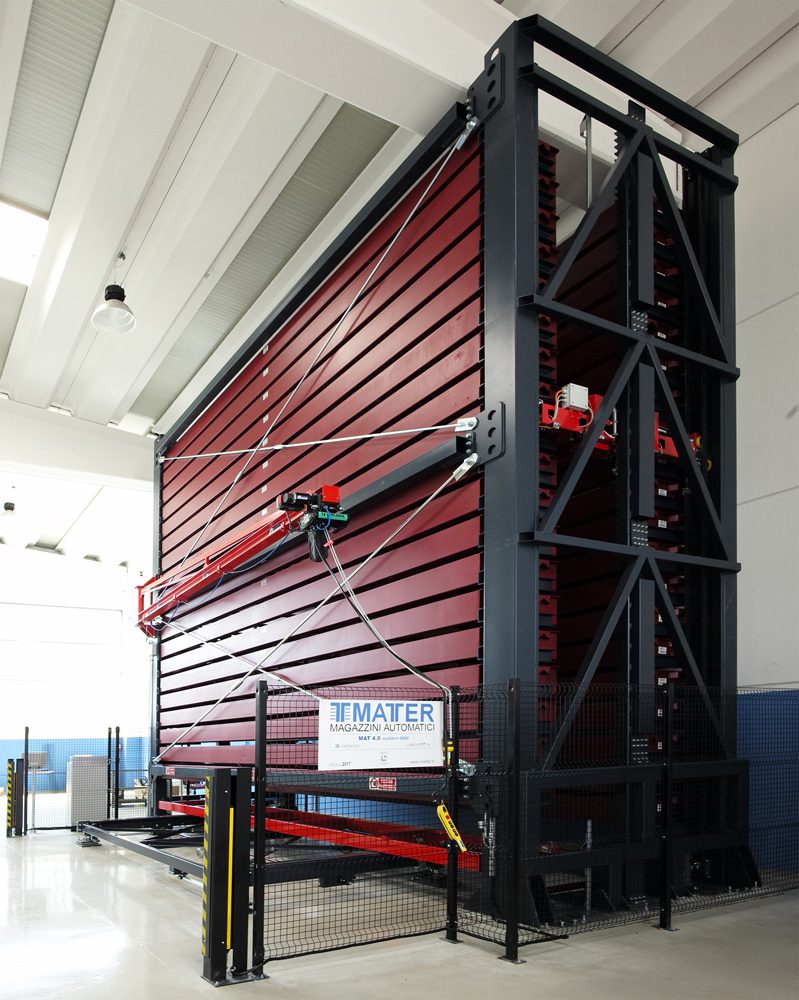
Likewise, Matter, founded in Bibbiano, Italy in 1992, specializes in the design and installation of technically advanced, vertical intralogistics solutions for the steel industry, especially for bars, tubes, billets, sheets, dies and components handling with vertical storage. The company is fully integrated in its engineering, software design, industrial automation, full fabrication and system integration. It supplies the industry its MATTER PRO series of customized systems for large quantity handling, as well as its popular MATT BOX modular storage systems for smaller quantities, aimed at eliminating outside materials storage for the job shop and contract manufacturers. As Giuseppe Rotondi, CEO at Matter, notes, “We see the synergy of this relationship as a great opportunity to serve both our markets with a more comprehensive suite of equipment and services.” Matter USA is based in Charlotte, North Carolina. The company counts major U.S. metal service centers, manufacturing operations and numerous job shops among its diverse customer base.
Both companies provide fully integrated and application-specific materials handling solutions with state-of-the-art material management interface, data communications and automatic transport devices. Furthermore, both companies work daily on projects for existing and greenfield locations.
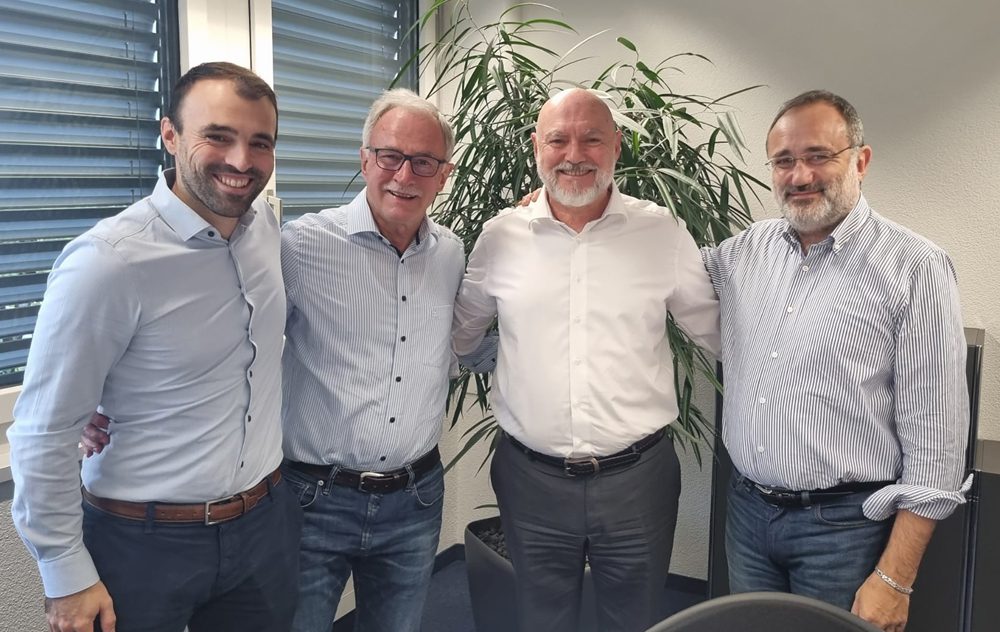
Consummating the acquisition were Marcel and Thomas Lehner, while the Matter management team comprised Raffaele Fiore and CEO Giuseppe Rotondi. The Lehner family obtained full ownership of Matter.
Going forward, plans include the maintenance of both brands in the market, according to company sources.
For more information, please contact:
FEHR WAREHOUSE SOLUTIONS
4801 Chastain Avenue, Suite 140
Charlotte, NC 28217
Phone: 704-666-8448
Attention: David Veldung, President
www.fehr.net
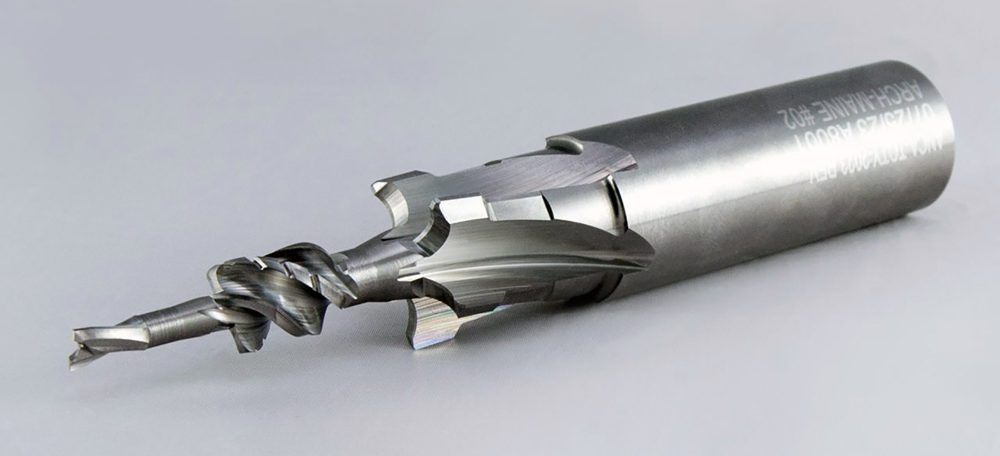
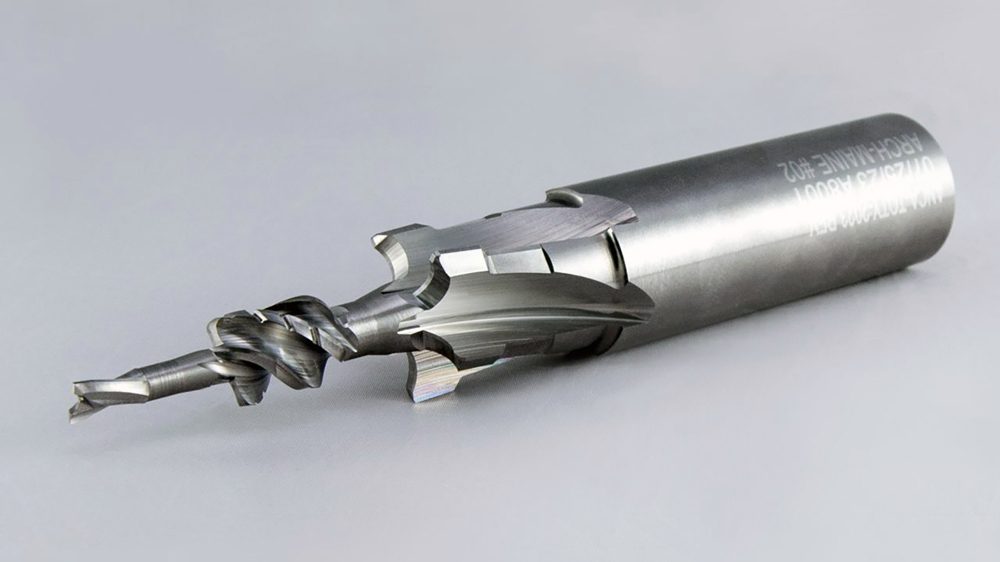
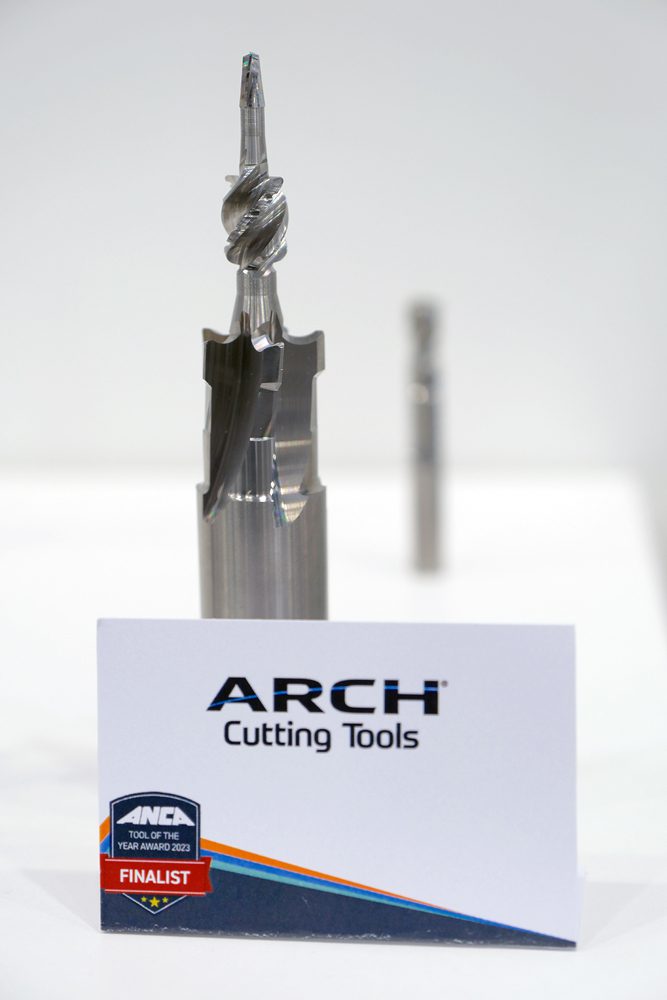
The competition to win ANCA’s annual Tool of the Year contest is fierce. So it’s no surprise that last year’s top contenders were team efforts. You could say the same thing about the entry from ARCH Cutting Tools in Cornish, Maine. It’s a platoon of cutting features they called “The Utilitarian.” Like many of the tools the outfit produces for their demanding client base, The Utilitarian can eliminate a host of what would otherwise be separate cutting tools. It can accomplish both plunge and side milling, plus multi-directional milling. It can cut a groove, thanks to a back trepan feature. It can add a back chamfer. And it’s concave end can create a convex ball. With an eye toward real-world practicality, the tool also features chip breakers to aid chip evacuation, corner radii to prevent chipping, and cylindrical margins to enable the various milling functions.
How do you build such a beast? It started with 30-year veteran, Pete Chapman, in engineering. Chapman has spent most of his career programming WALTER machines, and only recently got involved with ANCA machines. “I’d never seen this version of ANCA’s iGrind software until a year ago,“ he explained, “and I wanted to see what it was capable of. I poked around to find things I hadn’t used before, thinking someday someone is going to want to have a tool that does X, and we are going to have to figure it out. We’re better off learning in advance.” So, Chapman piled on feature after feature, testing each with ANCA’s 3D simulation to confirm that the machine could actually move the wheels through the carbide to grind the desired geometries.
From there, Steve Hutchins, a 28-year vet, used ANCA ToolDraft software to convert Chapman’s simulation into tool prints for the production floor. Hutchins praised the software, saying it’s easy to import multiple views of the tool and then add tolerances to each feature to guide the operators. Ordinarily, he’d also use ToolDraft to add images of the required wheels, along with their specifications. But he didn’t do that in this case because they planned to make just a few tools for the contest.
The tool has a 1” shank diameter and multiple steps ranging down to ¼” in diameter. So they opted to grind the OD on their new ANCA CPX pinch/peel grinder, operated by new team member, Jacob Hart. As Hutchins put it, “Jake’s only been here one year, and he can grind the most complex profiles there are, with tight tolerances and excellent finishes.” Hart modestly credited the CPX, saying it’s “very user friendly, and the repeatability is better than anything else I’ve heard about from more experienced grinders.” It was also the first time the facility used the machine for tools larger than ⅞” in diameter, Hutchins added.
After this prep work, Jake’s younger brother Josh Hart took over. Josh Hart has been with the company for 4 years, and used an ANCA MX7 Linear for the final 5-axis grind, including some spin grinding of the margins and the face of the trepan areas. In fact, with the exception of the major ODs ground on the CPX, all the complex geometries of The Utilitarian were ground on the MX in one shot, said Hart. “I used six different wheel packs to make the tool. Fluting alone was two wheels. A 30 degree for the smaller diameter and a 10 degree for the bigger back-lobe. There were two different profiles in the center section, so I needed a front facing and a back facing 12V9. I used the front facing 12V9 to get into back concave profile. Plus, there’s an 11V9, a chip breaker wheel, a cup wheel, and a gash wheel.”
Hart confesses that he broke the trepan off during the first grind, because he hadn’t yet dialed in the wheel speeds. “But it was perfect from there out.” He ground 4 tools, which Hutchins then inspected on a Zoller Genius using a program written by Seth Tillson, who’s been with the company about 7 years. All tools met the design tolerances of 0.0002” (5 µm) on the diameters and ±0.0005 to 0.001” (12.7-25.4 µm) on the profile sections, reported Hutchins. “The fact that the second tool was nearly perfect shows how good the simulation software is now.” He added that going from a simulation to a real tool accurate within 2 tenths is now routine at ARCH Cutting Tools.
Interestingly, they neither balanced the wheels nor used particularly fine grits to achieve the desired surface finish. Hutchins explained that customers have been demanding ever better surface finishes for about 5 years. “At first we were buying finer finish wheels and slowing programs way down. But ANCA’s new linear motor technology instantly makes it twice as easy to maintain fine finishes, due to the absence of lead screws and ball nuts. I’m not saying it’s easy. But you don’t have to buy polishing wheels and go back through your flutes, and so forth. You get a cherry finish out of the gate with the new machinery.”
The Maine team won the inaugural Tool of the Year competition back in 2018 (when they were Contour360). That tool made a splash in the market, recounted General Manager Chris Karcher. Naturally, they take the amazing 2023 Utilitarian on sales calls as well, he adds. “But it’s not the big wow factor you might expect, because we now make many such special tools, including staggered dovetail cutters and chamber reamers for the firearms industry.” In short, the “village” at ARCH Cutting Tools in Cornish, Maine has learned how to make the extraordinary, ordinary.
For further information, please contact:
Amanda Bakun
Marketing & Communications Manager – Americas
248-497-1168
amanda.bakun@anca.com
ANCA is a market leading manufacturer of CNC grinding machines. It was founded in 1974 in Melbourne, Australia where the company still has its global headquarters. ANCA has offices in the UK, Germany, China, Thailand, India, Japan, Brazil, Korea and the USA as well as a comprehensive network of representatives and agents worldwide.
ANCA CNC grinders are used for manufacturing precision cutting tools and components across a diverse range of competitive industries including cutting tool manufacture, automotive, aerospace, electronics and medical.
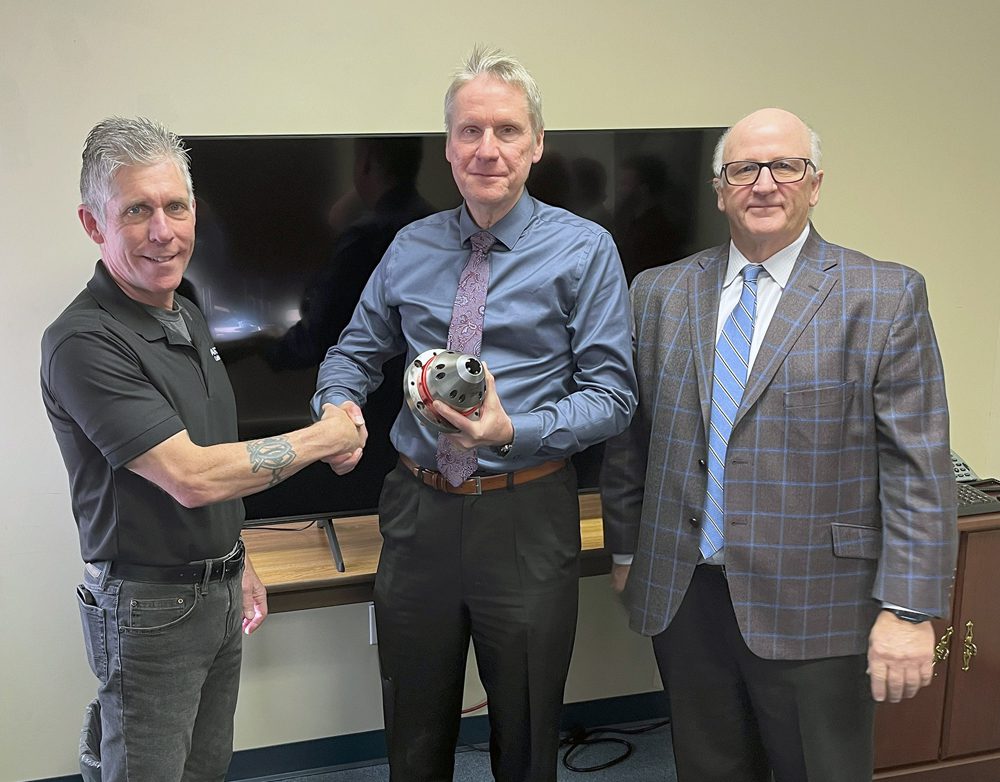
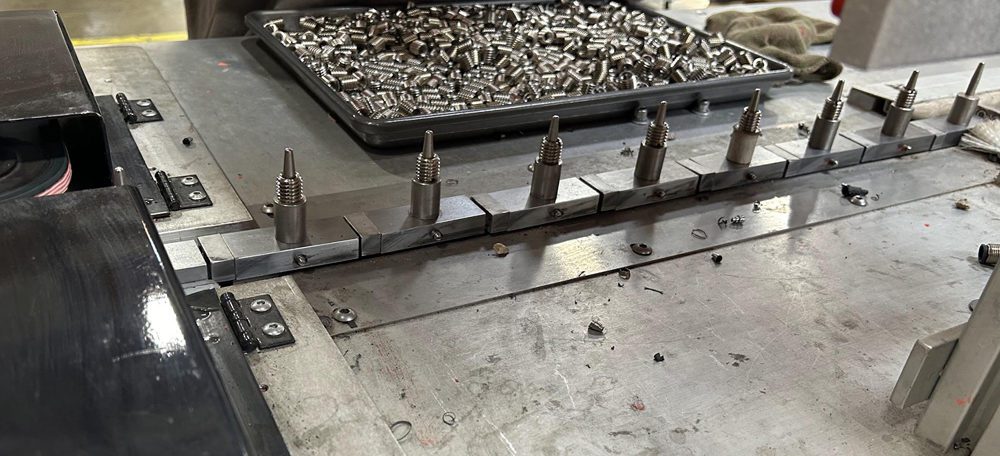
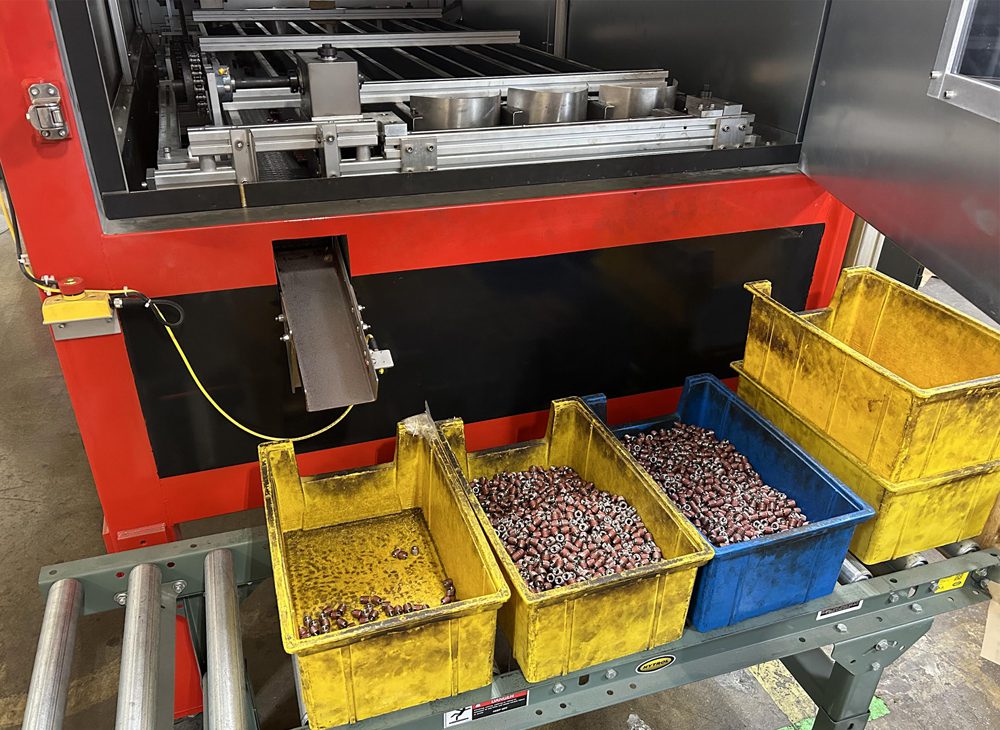
E-Z LOK, a leading manufacturer and master distributor of threaded inserts for metal, plastic and wood has purchased a LOCTITE® machine.
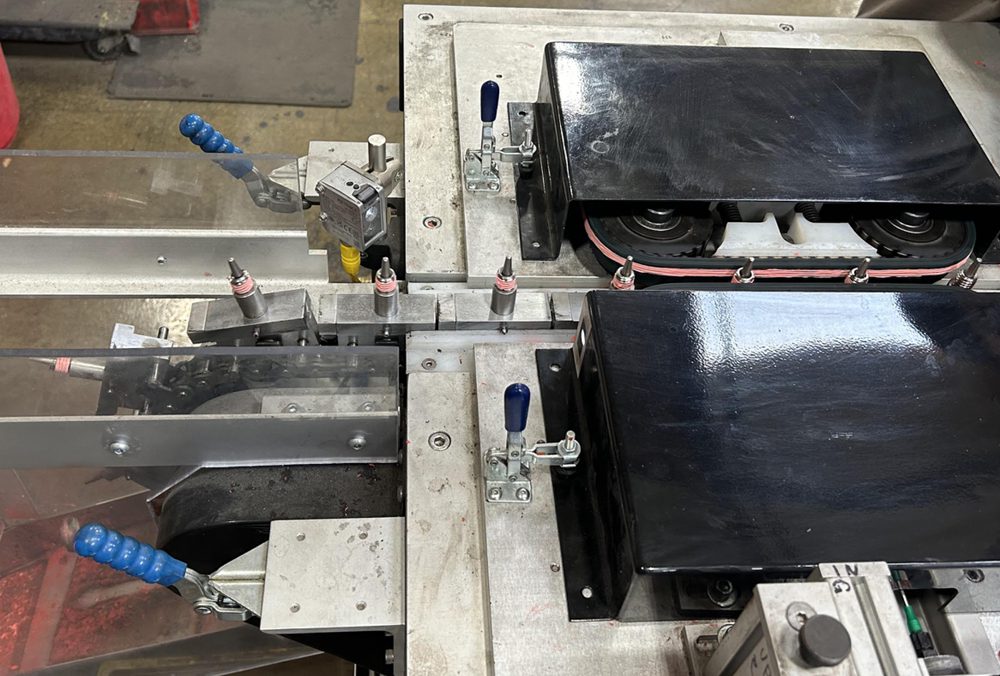
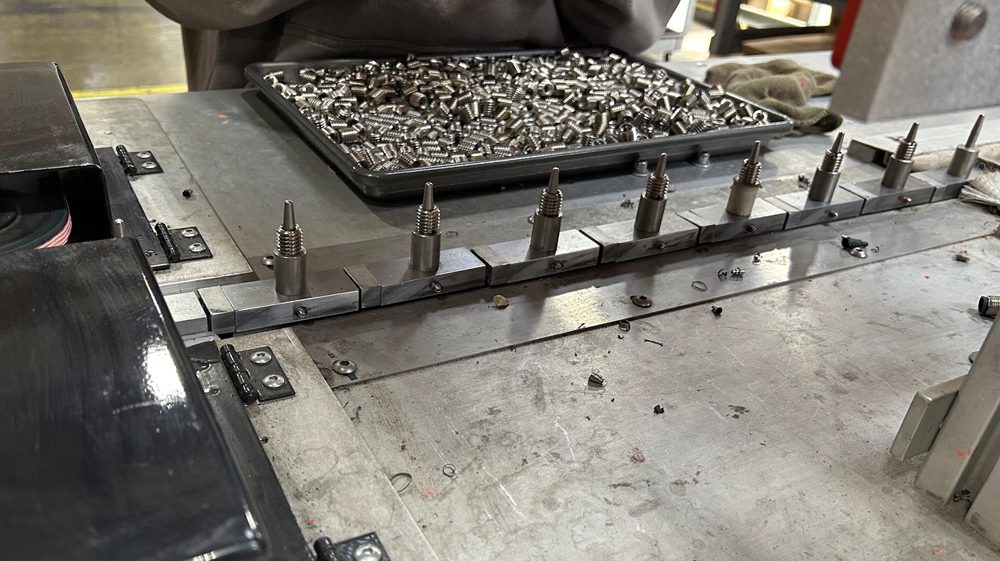
According to Director of Sales & Marketing, Kyle Lindsly-Roach, “We decided several years ago that bringing LOCTITE® application in-house would allow us to more efficiently and cost effectively apply the coating.” E-Z LOK purchased the machine nine months ago. It applies LOCTITE® to the external threads of the solid wall inserts, which proceed through a curing oven. Afterwards, the inserts are ready to use.
Having the machine at E-Z LOK’s Gardena, California headquarters, brings several benefits. Not only does the company save time by no longer using outside processers but they can apply the LOCTITE® in a semi-automated fashion, thus increasing their throughput.
Discussing its importance, Lindsly-Roach said, “LOCTITE® is an integral part of our company’s hallmark E-Z LOK inserts for metal, as it is this adhesive that holds the insert in place once installed.”
For more information, please contact:
Kyle Lindsly-Roach, Director of Sales & Marketing
E-Z LOK
240 E. Rosecrans Ave
Gardena, CA 90248
USA
Phone: 310-323-5613 x221
klindsly@ezlok.com
www.ezlok.com
E-Z LOK is a leading manufacturer and master distributor of threaded inserts for metal, plastic and wood. Inserts for metal include solid wall and helical wire-thread inserts, while inserts for plastic feature press-in and ultrasonic/heat stake designs. Those for wood are die-cast zinc alloy in hex drives for softwood and brass knife threads for hardwood. A variety of kits are available and feature installation tools, drill bits etc.
E-Z LOK is a third-generation family owned and operated company. Founded in 1956, it primarily sells North American OEM’s, end users and the DIY market through local, regional and national industrial distributors.
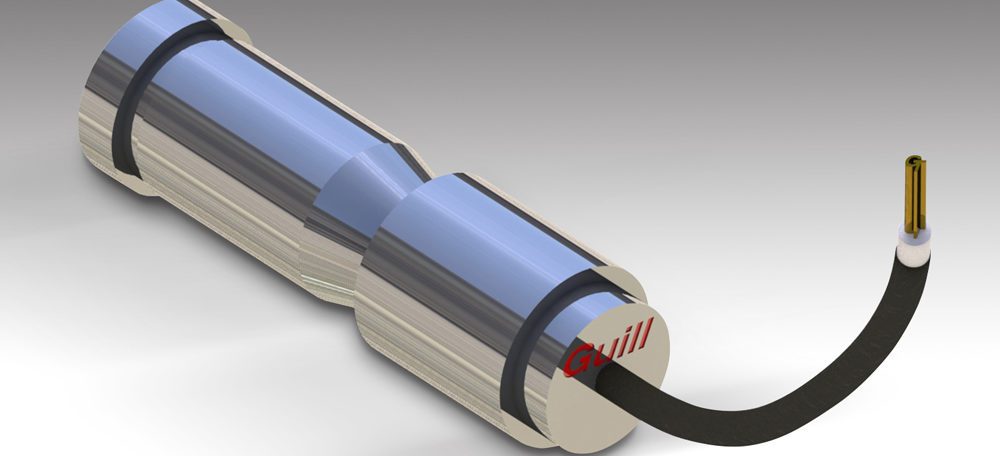
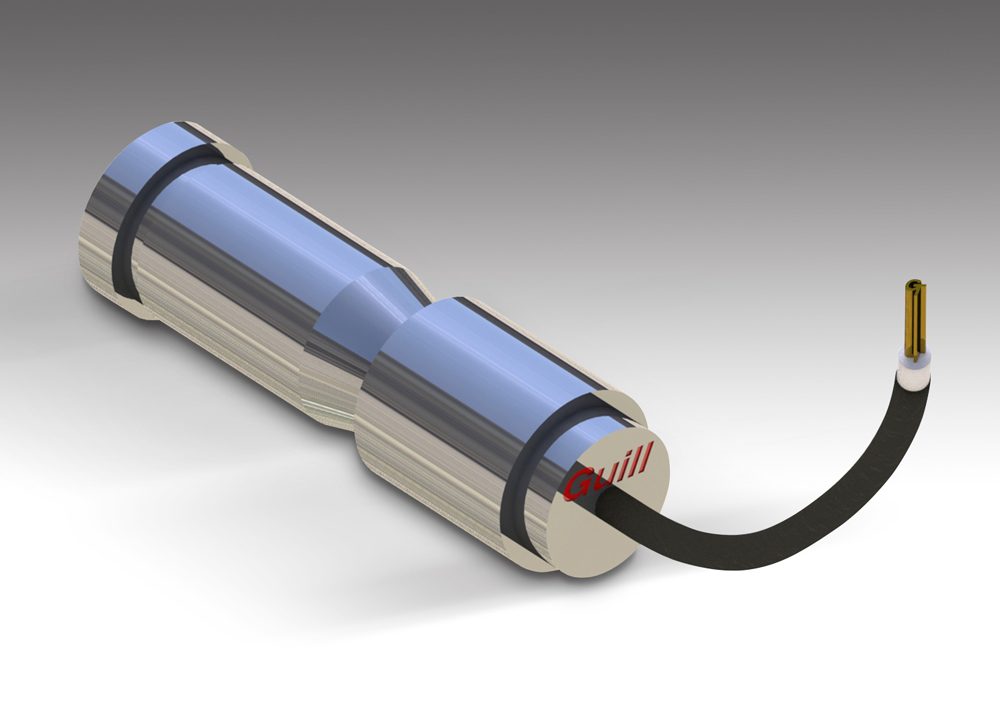
Guill Tool, the global leader in extrusion tooling, has announced its 10-day program. This program applies to eligible tips and dies that will be shipped within 10 business days of receiving the purchase order from the customer.
The company’s quality precision tips and dies have been manufactured in the U.S. for 62 years. All Guill extrusion tools are produced using certified and documented quality steel material specifically qualified for the polymer to be extruded. Furthermore, Guill designs tips and dies for any application the customer needs. These feature multi-lumen, stripe, multiple stripe, wire and cable, hose, pipe, tube, fiber optic, blown film, corrugated tube and profile. Dies include face seal, shouldered, snap together, floating, die plates, interchangeable die plate and custom dies. Available tips include single and multi-lumen, threaded style, snap together, fixed center shoulder, profile, tapered style and custom.
To find out which tools are eligible for the program, check with any sales representative. For all other parts, company personnel will review the customer’s drawing to determine if it is eligible for the program.
Eligible tips and dies for this program cannot be plated and must have a diameter less than 1.5” and a length less than 4.75.”
Guill proudly manufactures its products in the U.S. under the quality standards of ISO 9001:2015 and AS9100:2016.
For more details, visit www.guill.com/tooling-cell
For more information, please contact:
Tom Baldock, Sales Manager, Extrusion
Guill Tool & Engineering
10 Pike Street
West Warwick, RI 02893
USA
Phone: 401-465-5526
tbaldock@guill.com
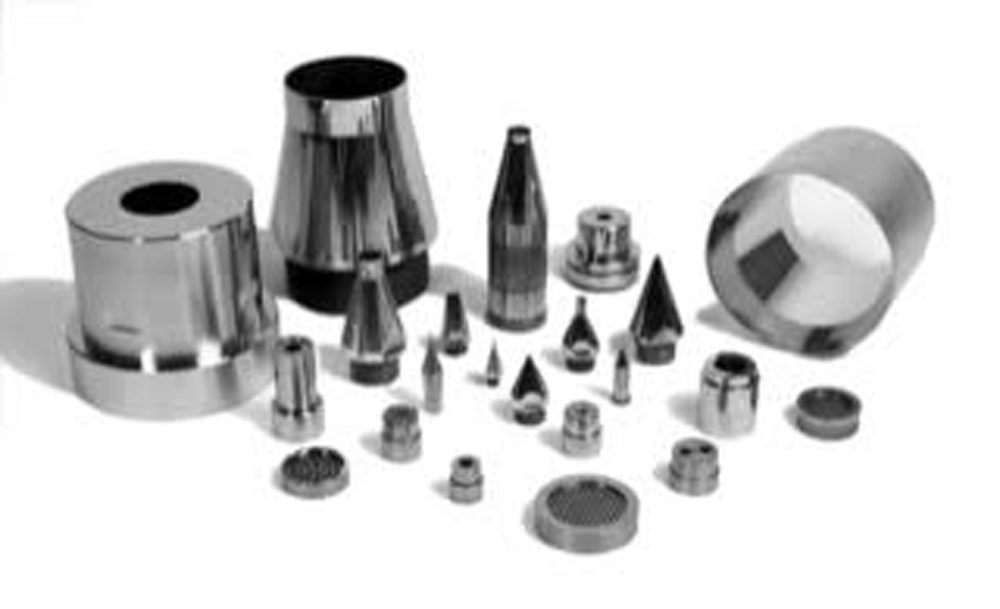
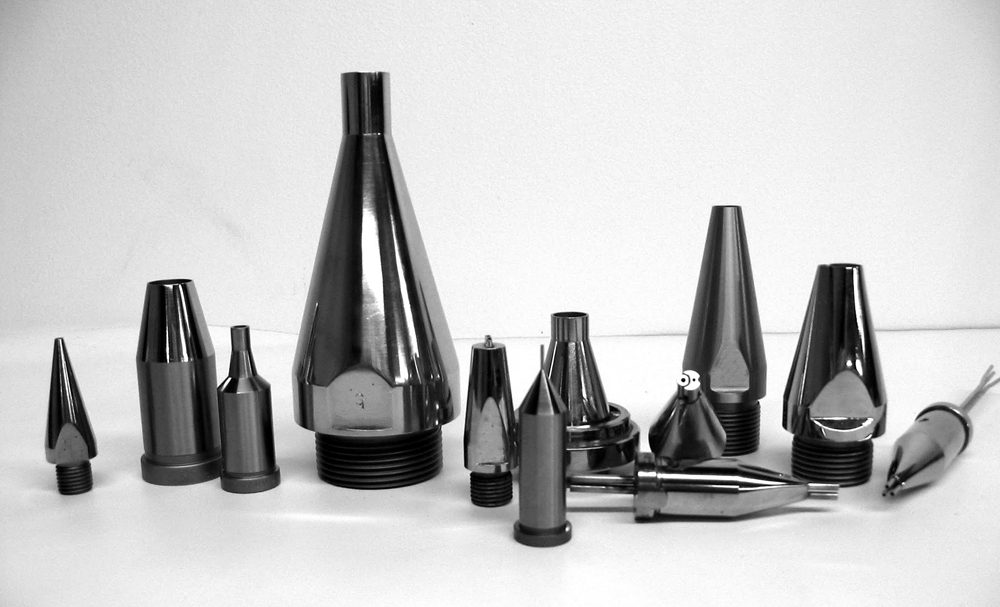
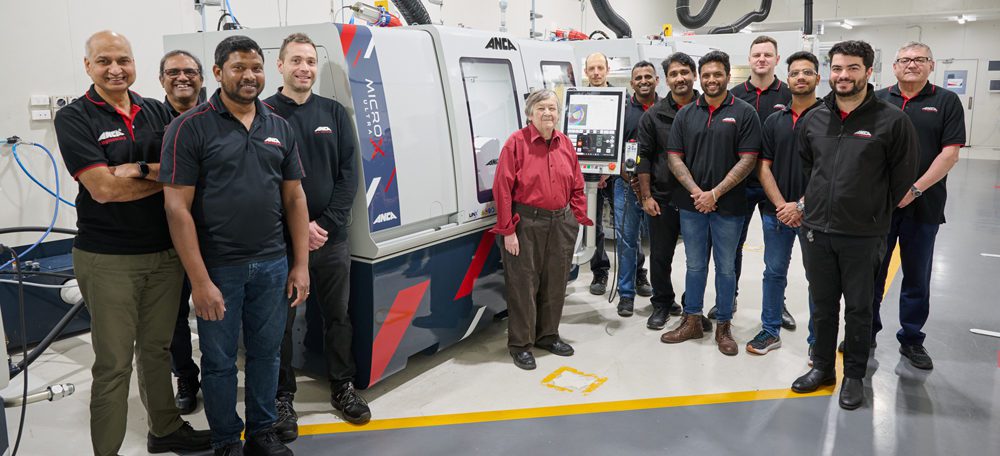
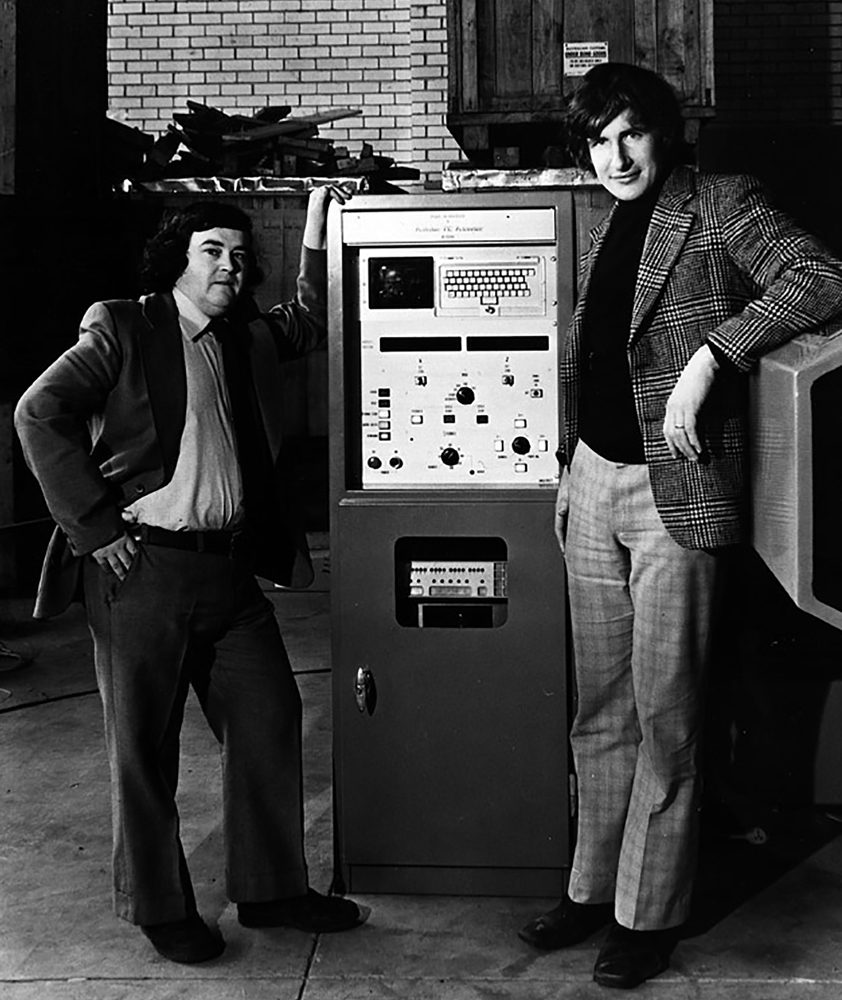
Pat McCluskey’s machine design and build experience at ANCA has fuelled manufacturing exports for Australia for half a century
For a half-century, ANCA has made the machines that make the tools that make the world go around.
One half of its founding pair, Pat McCluskey, has designed many grinding machine tools in that time.
He says that two things have remained focal when designing a machine: the customer and their expectations, and the manufactured cost.
It is never the result of a whim. It always follows information fed back through a two-way communication process on customer challenges, and meticulous market research, which is then presented to Pat’s team. Then the design gets underway.
If it sounds straightforward, it never is.
“To design a completely new machine that nobody has seen before is a complex task,” explains McCluskey.
ANCA tool and cutter grinding machines are underpinned by world-leading engineering and skills so specialized they often have to be fostered in-house. Their approach to innovation includes machines, controls, software and related accessories such as robots, and their vertical alignment has kept them ahead in a challenging field where there are few serious rivals.
A selection of world firsts over 50 years includes a probe for digitizing tools, first modem for support and diagnostics in a machine, and the first full and true 3D simulation of the grinding process.
Progress from top to bottom
“For some reason we seem to be the only grinding machine manufacturer for tool grinding that uses a polymer concrete base on their machine,” says McCluskey of one thing done differently.
First introduced in the TG7 machine, released in 1990, polymer concrete provides a very stable base for machines, damping out any vibrations. The ability to absorb heat minimizes any expansion and contraction which might sacrifice grinding accuracy.
McCluskey looked into what’s now called ANCAcrete in the 1980s as an alternative to cast iron, and a way to avoid dependency on foundry providers.
Self-reliance is crucial to the company’s dominance of its market, according to McCluskey.
Perhaps most important is development of its CNC and servo systems, as well as software, in-house. Competitors are dependent on pre-packaged CNC controls, and ANCA is the only tool grinding machine builder that makes its own control.
“So the Germans and the Swiss tend to buy the Japanese or the German CNC and try their best to adapt it to their machine,” explains McCluskey.
“And it’s a clumsy fit and they don’t do the in-depth development in the software that we do because they can’t get access to the software… it’s all locked off to them.”
Notable recent innovations are credited to Dr. Kotler Tee, Technical Leader – Servo Control at ANCA.
One innovation has enabled servo system resolution of a single nanometre and is being rolled out to new machines in the ULTRA platform
“He rewrote the servo algorithms in the servo drives in the CNC to increase the resolution,” says McCluskey.
“To explain this achievement in layman’s terms, take a 300 millimeter ruler and look at a pair of the smallest lines; the distance is 1 millimeter.
“Now divide that distance by 1,000, now you have a distance of 1 micron. In your mind, now divide that micron by 1,000, the result is now equal to 1 nanometre.”
“Designing the ULTRA platform has been a design process from the ground up bringing sophisticated elements to the art of grinding.”
Others include breakthrough features available on the newly released MicroX ULTRA, a six-axis tool grinder that premiered at EMO in 2023.
Through the years
The first four years of ANCA involved retrofitting CNC controls to other people’s equipment, such as special purpose machinery, lathes and mills.
What McCluskey estimates was the most significant non-technical development came in 1978.
Their major OEM at the time, Laser Lab, set up in Detroit, with ANCA sending young engineer John Roberts to work at the facility.
Roberts took it upon himself to book a booth at a trade show and display an ANCA CNC. According to Roberts, there was a crowd at the booth and significant interest, and the suggestion that ANCA make a CNC tool grinder to improve on the less-than-spectacular machines available at the time.
“The die was cast,” McCluskey says.
A further important non-technical development was the Australian recession in 1982.
“We didn’t want to continue to sell in Australia because of the ups and downs of the markets; we wanted to cover ourselves,” he adds.
“And the American market seemed to be the market for us, and we only needed a small percentage of that market and that was enough – more than what we could handle. And we got it.”
“So if we hadn’t made that decision, we’d have gone bust.”
50 years later, 98% of revenues are from exports, with customers in over 45 countries.
ANCA employs over 1,200 worldwide, with offices in the UK, Germany, China, Thailand, India, Japan, Korea, Brazil, Mexico, Italy, Türkiye, and the USA.
While some production occurs in Thailand and Taiwan, the heart of the company, its headquarters and innovation and manufacturing base – remains in the Melbourne suburb of Bayswater North.
Nearly a tenth of revenues are spent on R&D.
“ANCA is my life and I’m proud to be celebrating its 50th anniversary and that we have been able to build the company to the size that it is and with world recognition,” adds McCluskey.
The opportunity for engineers to work hard on complicated, world-leading, meaningful problems goes back to the company’s roots.
“I think it’s because Pat (Boland – ANCA co-founder) and I had to work so bloody hard in the beginning when we almost went broke and we’ve continued to do nothing but work hard like that ever since,” he says.
“And the people who work with us get a hell of a buzz out of working hard too.”
Staying sharp and skilled up
There is something of an “open university” nature to ANCA, believes McCluskey.
It attracts a lot of bright young people who are motivated by technical challenges more than money, and in seeing their work embodied in a physical product (which they can’t always do at a university.)
“At university they can study theory as long as they want, but at the end of that theory, they move on to something else,” suggests McCluskey.
“Whereas here at the end of their theory, they’ve got a new machine sitting on the floor and they’ve written the software for it, or they’ve written the code for the display unit.”
Attracting clever engineering graduates has not been a problem, he adds,
“It doesn’t take long for a group of students at a technical university to learn about ANCA. We don’t have to tell them, they learn by talking amongst themselves and it’s a great place for them to work,” McCluskey says.
“They get great pay, they get well looked after, and above all, they get respected by their peers, they get respected by the company owners. They don’t get that working for a big corporate.”
As the only organization in Australia that manufactures machine tools, and with a demand for very high-level assembly workers, the only real option for finding suitably skilled tradespeople is to train them in-house.
Another feature of ANCA is upward mobility for those who have apprenticed, with many going on to senior roles. When they move up or out, they must be replaced.
“So you train these guys to work in the high-precision assembly shop, but a few years later you find that they’re overseas somewhere, then they’ve got to be replaced. So there’s a continuous need for them,” McCluskey explains.
“We can’t send them to the technical colleges because they don’t have a program to train machine tool fitting. And you can go and look at other companies, but there isn’t any other company like ANCA.”
ANCA has been taking on apprentices and formalized its program in 2011. McCluskey wrote the original course material.
“I was reasonably happy when I found out that we’d have to create our own apprentice training school,” he recalls.
“Because it was something in the back of my mind that I had always wanted to do anyway.”
McCluskey began his career with an apprenticeship at the Commonwealth Department of Supply, where he met ANCA co-founder Pat Boland (then a cadet engineer at University of Melbourne) in 1968.
He is happy with the results of the company’s program and its ability to both create niche skillsets at ANCA as well as interesting futures for young employees.
“People say that the young kids of today are pretty useless. Well, I’d say they’re not. I’d say if you’re given the right kind of training, the right kind of opportunity, you’ll get the best out of them,” McCluskey says.
“One guy this year finished his time, got his indentures released at the last presentation night, and two nights later he was on a plane to America. He’s going to work in the American office in Detroit. What an opportunity for a kid!”
For media inquiries or more information, please contact:
Sepideh Zandieh
Acting Group Communications Manager
sepideh.zandieh@anca.com
ANCA is a market leading manufacturer of CNC grinding machines. It was founded in 1974 in Melbourne, Australia where the company still has its global headquarters. ANCA has offices in the UK, Germany, China, Thailand, India, Japan, Brazil, Korea, Türkiye and Italy and the USA as well as a comprehensive network of representatives and agents worldwide.
ANCA CNC grinders are used for manufacturing precision cutting tools and components across a diverse range of competitive industries including cutting tool manufacture, automotive, aerospace, electronics and medical.
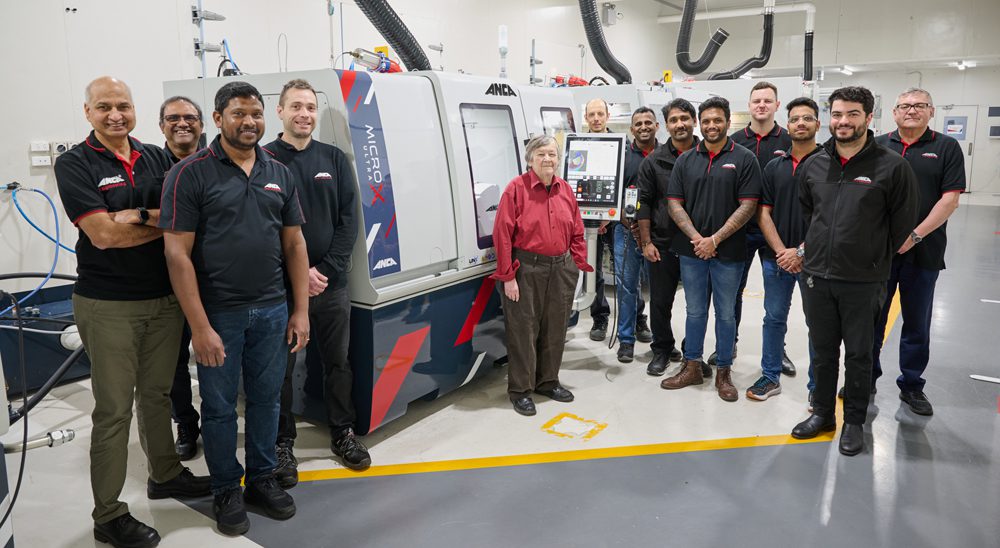


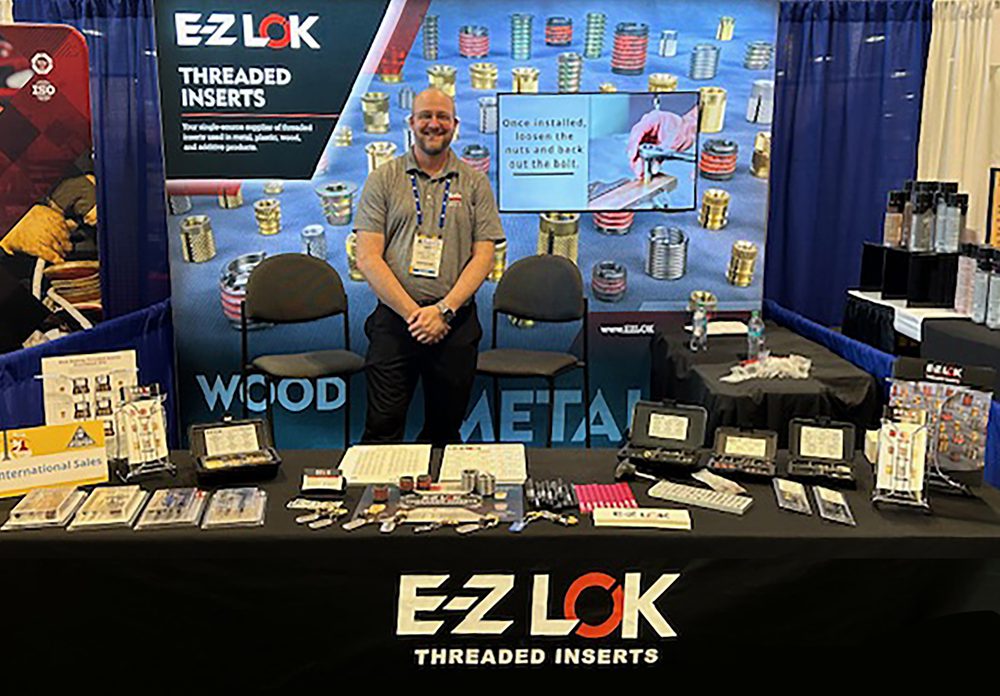
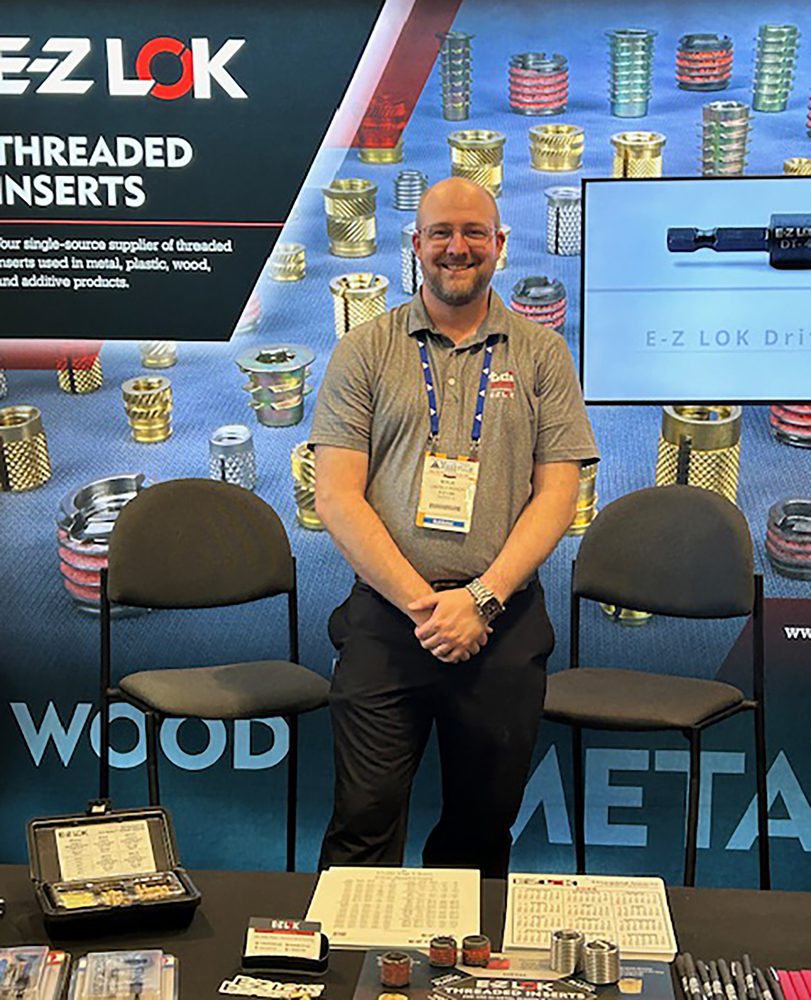
E-Z LOK, a leading manufacturer and master distributor of threaded inserts for metal, plastic and wood, recently attended the Specialty Tools & Fasteners Distributors Association (STAFDA) convention, November 10-12, in Nashville, Tennessee. Bringing together industrial supply chain and construction leaders, the yearly convention connects members who participate in educational programs and seminars. The trade show attracts leading manufacturing, distribution and representative agencies within the industry.
The company exhibited a variety of inserts for metal, wood and plastic, as well as all of the accompanying kits for these inserts. Given that STAFDA is a member-only show and the only one that some E-Z LOK customers attend, the products are very niche and not often used.
Kyle Lindsly-Roach, Director of Sales & Marketing, was pleased with the show. “Overall, the show was good, although booth traffic was down compared to last year. However, we did have some good conversations, and several high-quality connections were made.”
Regarding his expectations for next year, Lindsly-Roach said, “We hope the next show continues to bring opportunities for us to connect with current and potential distributors for our products.”
For more information, please contact:
Kyle Lindsly-Roach, Director of Sales & Marketing
E-Z LOK
240 E. Rosecrans Ave
Gardena, CA 90248
USA
Phone: 310-323-5613 x221
klindsly@ezlok.com
www.ezlok.com
E-Z LOK is a leading manufacturer and master distributor of threaded inserts for metal, plastic and wood. Inserts for metal include solid wall and helical wire-thread inserts, while inserts for plastic feature press-in and ultrasonic/heat stake designs. Those for wood are die cast zinc alloy hex drives for softwood and brass knife threads for hardwood. A variety of kits for the above inserts are available and feature installation tools, drill bits, etc.
E-Z LOK is a third- generation family owned and operated company. Founded in 1956, it primarily sells through local, regional, and national industrial distributors.
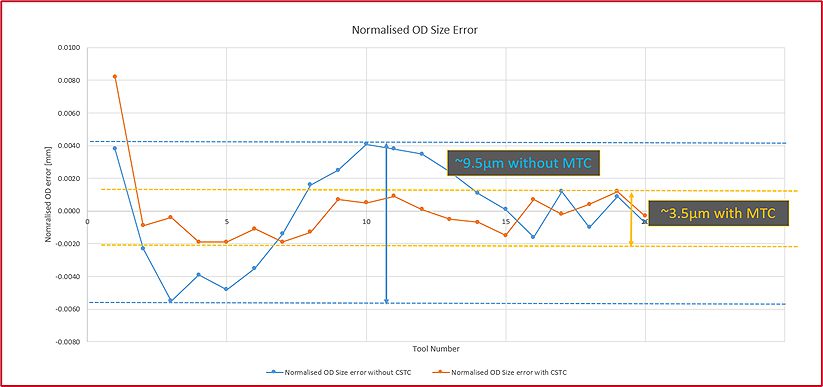
This innovative feature enables the production of consistently high-quality taps by addressing a key challenge – thermal growth.
Introducing a breakthrough in tap manufacturing: ANCA’s patented Motor Temperature Control (MTC) technology. This innovative feature enables the production of consistently high-quality taps by addressing a key challenge – thermal growth.
True to ANCA’s commitment to solving real-world manufacturing issues, MTC tackles the problem of inaccuracy and variation caused by thermal expansion. Traditionally, manufacturers rely on measurement and compensation to control these variations, adjusting for thermal and mechanical changes during grinding. But what if there was a way to eliminate a major source of inaccuracy altogether?
ANCA’s MTC does exactly that. This patented technology allows operators to set the spindle temperature for production, and the machine automatically monitors and maintains that temperature. By stabilizing the spindle’s thermal environment, MTC removes fluctuations caused by thermal growth, ensuring greater precision and consistency in tap production.
Let’s apply this unique and innovative solution to the TapX, using the cresting operation as an example.
Thread cresting is one of the most important tap features to get right. The relief of the thread typically involves a drop of 10-20 microns over the thread. The quality and shape of the thread crest are critical to the performance of the final (cut or formed) thread.
Threading is often the final operation in the manufacturing of parts, so taps play a crucial role. We do not want to scrap parts due to a tapped thread when all other value has already been added to the part. For example, the cresting affects:
Load Distribution and Thread Strength: Different crest types offer varying load distributions. High-load applications rely on high surface contact from a particular crest shape, such as a flat crest. The tap needs to form this large area without jamming or breaking.
Leak Tightness: Certain crest shapes, like rounded crests, can be more challenging to manufacture but are essential for creating effective seals in gas or fluid environments.
Thread Engagement: V-shaped threads provide high precision with increased thread engagement, while a tapered crest offers a more forgiving environment for quick or easy assembly, as well as being more durable with reduced wear.
Many tap manufacturers also have their own unique or specialized crest designs to achieve specific characteristics for a particular customer or industry. This is where ANCA’s TapX shines.
As mentioned in our previous article, reducing coolant pressure is one key to creating conditions for a more controlled operation. However, MTC takes a leap forward by regulating and maintaining a controlled manufacturing environment.
ANCA’s extensive experience has shown that thermal variation in the spindle contributes to variation in tool dimensional accuracy. OD finish operations are particularly sensitive to this. Using MTC significantly improves OD consistency over a batch.
Controlling the production environment with MTC enhances the accuracy, quality, and finish of the tap, leading to several benefits:
For more information, visit www.anca.com or contact your local ANCA representative.
ANCA is a market leading manufacturer of CNC grinding machines. It was founded in 1974 in Melbourne, Australia where the company still has its global headquarters. ANCA has offices in the UK, Germany, China, Thailand, India, Japan, Brazil, Korea and the USA as well as a comprehensive network of representatives and agents worldwide.
ANCA CNC grinders are used for manufacturing precision cutting tools and components across a diverse range of competitive industries including cutting tool manufacture, automotive, aerospace, electronics and medical.

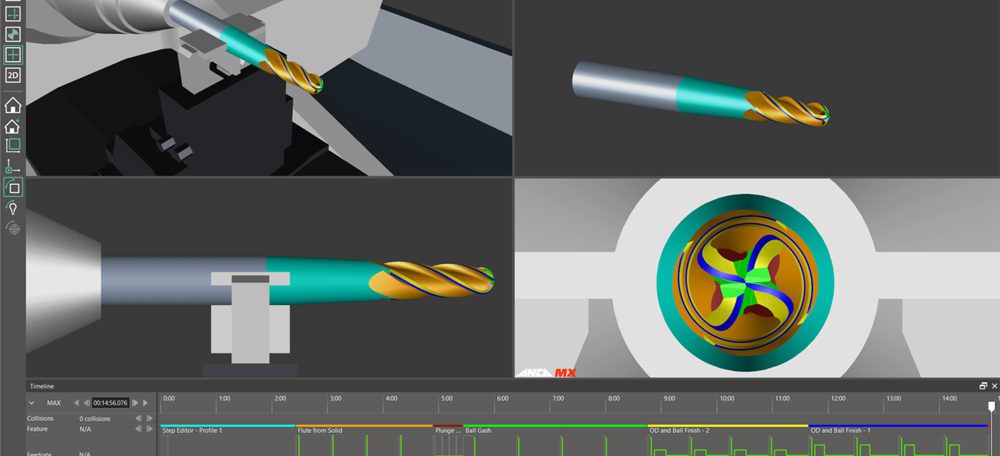
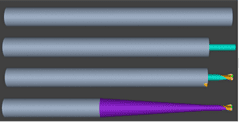
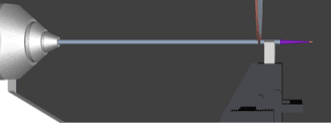
ANCA‘s advanced grinding solutions offer seamless finished tool grinding in a single setup, including blank preparation. This setup features the P-axis Arobotech, which supports blanks at the grind point, enabling the efficient production of various tools with a surface finish below 0.2 Ra. This process significantly reduces cycle time while boosting productivity. The 3000 RPM headstock on the MX7 platform further enhances performance, allowing the tool to spin at optimal speeds for this application.
The MX7 platform, equipped with six wheel packs as recommended by ANCA’s application team, supports the grinding of various tool shapes in a single setup, eliminating the need for wheel changes. Depending on the tool’s shape and geometry, grinding can be performed at either the 3 or 12 o’clock position. Additionally, a specially designed hydraulic pump controls the clamping pressure based on diameter, including up/down pressure, to achieve faster cycle times.
Key benefits include:
This application is versatile, working not only with sized blanks but also with bar stock loading.
Bar stock loading, commonly known as “blanket grinding,” involves the automatic loading and grinding of multiple tools from a single blank. This process is ideal for batch production of endmills, drill heads, and similar tools. Its uniqueness lies in the ability to part off completed tools from the blank and then extend the blank from the collet to grind subsequent tools.
ANCA’s LoaderMate software is designed to manage the number, location, and length of blanks in the pickup pallet, allowing for varying blank diameters per row. It also features a used bar report, detailing the number of tools ground and the total length of bar to be scrapped for each blank.
For more information, visit www.anca.com or contact your local ANCA representative.
For further information, please contact:
Amanda Bakun
Marketing & Communications Manager – Americas
248-497-1168
amanda.bakun@anca.com
ANCA is a market leading manufacturer of CNC grinding machines. It was founded in 1974 in Melbourne, Australia where the company still has its global headquarters. ANCA has offices in the UK, Germany, China, Thailand, India, Japan, Brazil, Korea and the USA as well as a comprehensive network of representatives and agents worldwide.
ANCA CNC grinders are used for manufacturing precision cutting tools and components across a diverse range of competitive industries including cutting tool manufacture, automotive, aerospace, electronics and medical.